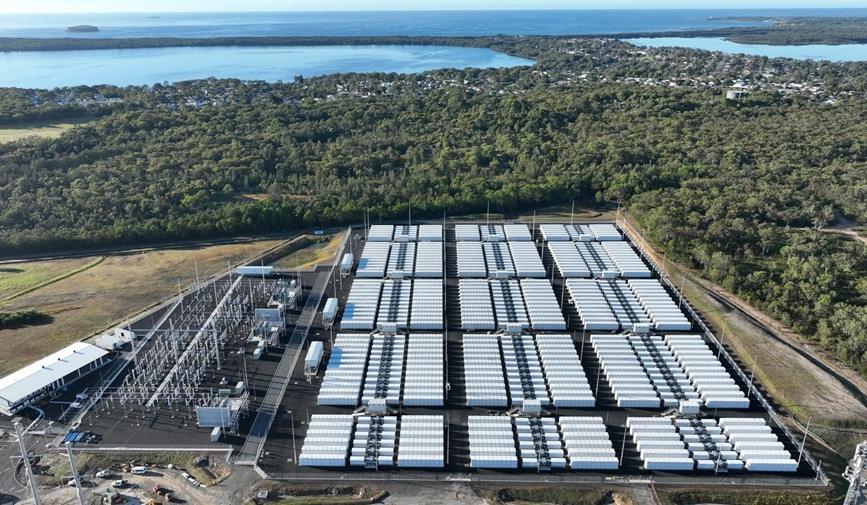
The recent announcement of Akaysha Energy, a BlackRock-backed battery energy storage systems (BESS) developer, securing a A$300 million (USD$197 million) corporate debt facility marks a significant capital injection into the burgeoning energy transition sector. This substantial financing, aimed at accelerating Akaysha’s BESS project pipeline across Australia, the U.S., Japan, and Germany, underscores a strategic shift in investment priorities that traditional oil and gas investors cannot afford to overlook. While immediate market volatility continues to command attention, this move by a major financial player like BlackRock signals a deepening commitment to the long-term infrastructure required for a decarbonized energy future, creating both challenges and opportunities for those historically focused on fossil fuels.
Capital Influx into Energy Storage Amidst Oil Market Volatility
The successful closing of Akaysha’s $197 million debt facility, a three-year “borrowing base loan” supported by a syndicate of major banks including BNP Paribas, Deutsche Bank, ING, SMBC, and Westpac, represents a powerful vote of confidence in the energy storage sector’s growth trajectory. This innovative financing structure, a first of its kind in the Australian renewables market, provides Akaysha with the flexibility to scale its funding as its portfolio of BESS assets expands. This commitment to long-term, scalable infrastructure development stands in stark contrast to the immediate pressures observed in the traditional energy markets. As of today, Brent crude trades at $90.38 per barrel, a notable decline of 9.07% within the day, having ranged from $86.08 to $98.97. Similarly, WTI crude is at $82.59, down 9.41%, with its daily range spanning $78.97 to $90.34. This sharp downturn reflects a broader trend, with Brent having shed $20.91, or 18.5%, over the past 14 days alone. Such volatility highlights the inherent risks and rapid shifts in commodity markets, making the stability and growth potential of energy transition infrastructure an increasingly attractive proposition for institutional capital.
Energy Storage: The Indispensable Backbone of the New Energy Grid
The strategic importance of battery energy storage systems cannot be overstated in the context of the global energy transition. As renewable energy sources like wind and solar become more prevalent, their intermittent nature necessitates robust storage solutions to ensure grid stability and continuous power supply. Akaysha Energy, founded in 2021 and acquired by BlackRock’s Climate Infrastructure business in 2022, is at the forefront of this critical infrastructure build-out. The company recently brought online the initial 350 MW of its 850 MW Waratah Super Battery in Australia, which it asserts is the world’s most powerful battery in terms of power and energy storage capacity. This kind of large-scale deployment is essential to manage growing grid demand, driven by trends like transport electrification and the energy-intensive needs of AI computing. For oil and gas investors, understanding the scale and pace of this infrastructure development is crucial, as it directly influences the long-term demand profile for traditional fuels and identifies areas of potential diversification or strategic investment in the broader energy ecosystem.
Investor Focus: Navigating Commodity Fluctuations vs. Structural Shifts
Our proprietary reader intent data reveals a clear dichotomy in investor concerns: immediate commodity price movements versus longer-term strategic positioning. A dominant theme among investor queries this week revolves around the future of oil prices, with questions such as “what do you predict the price of oil per barrel will be by end of 2026?” and “What are OPEC+ current production quotas?” These questions underscore the ongoing focus on short-term market dynamics and the influence of geopolitical and supply-side factors. However, the substantial capital flowing into ventures like Akaysha Energy represents a different investment thesis entirely – one focused on structural, long-term energy transition plays. While the allure of swift returns from commodity price swings remains strong, the stability and predictable revenue streams associated with critical energy infrastructure, particularly those backed by institutional giants like BlackRock, present a compelling alternative. Investors must weigh the immediate volatility of crude markets, reflected in today’s significant declines for Brent and WTI, against the consistent growth trajectory of renewable energy infrastructure. The success of companies like Akaysha could well impact how traditional oil and gas players, such as Repsol, adapt their own portfolios to remain competitive and relevant in an evolving energy landscape.
Upcoming Events and Their Strategic Implications
While Akaysha’s financing is a forward-looking investment in energy infrastructure, investors in the broader energy sector must remain vigilant regarding immediate market catalysts. The upcoming OPEC+ Joint Ministerial Monitoring Committee (JMMC) meeting tomorrow, April 18th, followed by the full Ministerial meeting on April 19th, are pivotal events that could inject further volatility into crude markets. Any announcements regarding production quotas will directly impact global supply and price expectations, influencing trading strategies for the coming weeks. Furthermore, the API Weekly Crude Inventory reports on April 21st and 28th, along with the EIA Weekly Petroleum Status Reports on April 22nd and 29th, will provide crucial insights into U.S. supply and demand dynamics. These events, combined with the Baker Hughes Rig Count on April 24th and May 1st, represent the ongoing pulse of the traditional oil and gas industry. For investors, the Akaysha financing, while distinct from these short-term drivers, highlights the growing capital allocation towards projects that offer a hedge against commodity price fluctuations and position portfolios for the inevitable long-term shift towards a more diversified and sustainable energy matrix. The continued flow of capital into BESS projects, even as oil prices fluctuate, suggests a deepening conviction that energy storage is not just a complementary technology but a fundamental pillar of future energy security and a significant long-term investment opportunity.


