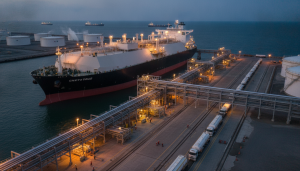
The global energy landscape continues its dynamic shift, and few developments underscore this more clearly than the steadfast partnership between India and Russia in the hydrocarbon sector. Despite escalating tariff threats from the United States, New Delhi and Moscow have not only reaffirmed their commitment to extensive bilateral trade but have explicitly moved to secure and expand Russian oil flows to the Indian market. For oil and gas investors, this resilient strategic alliance presents both a stabilizing force in turbulent geopolitical waters and a signal of evolving global supply dynamics that warrant close attention. Our proprietary data pipelines confirm significant market movements, and understanding this geopolitical anchor is crucial for navigating future volatility and identifying potential opportunities.
The Enduring India-Russia Energy Axis: A Strategic Imperative
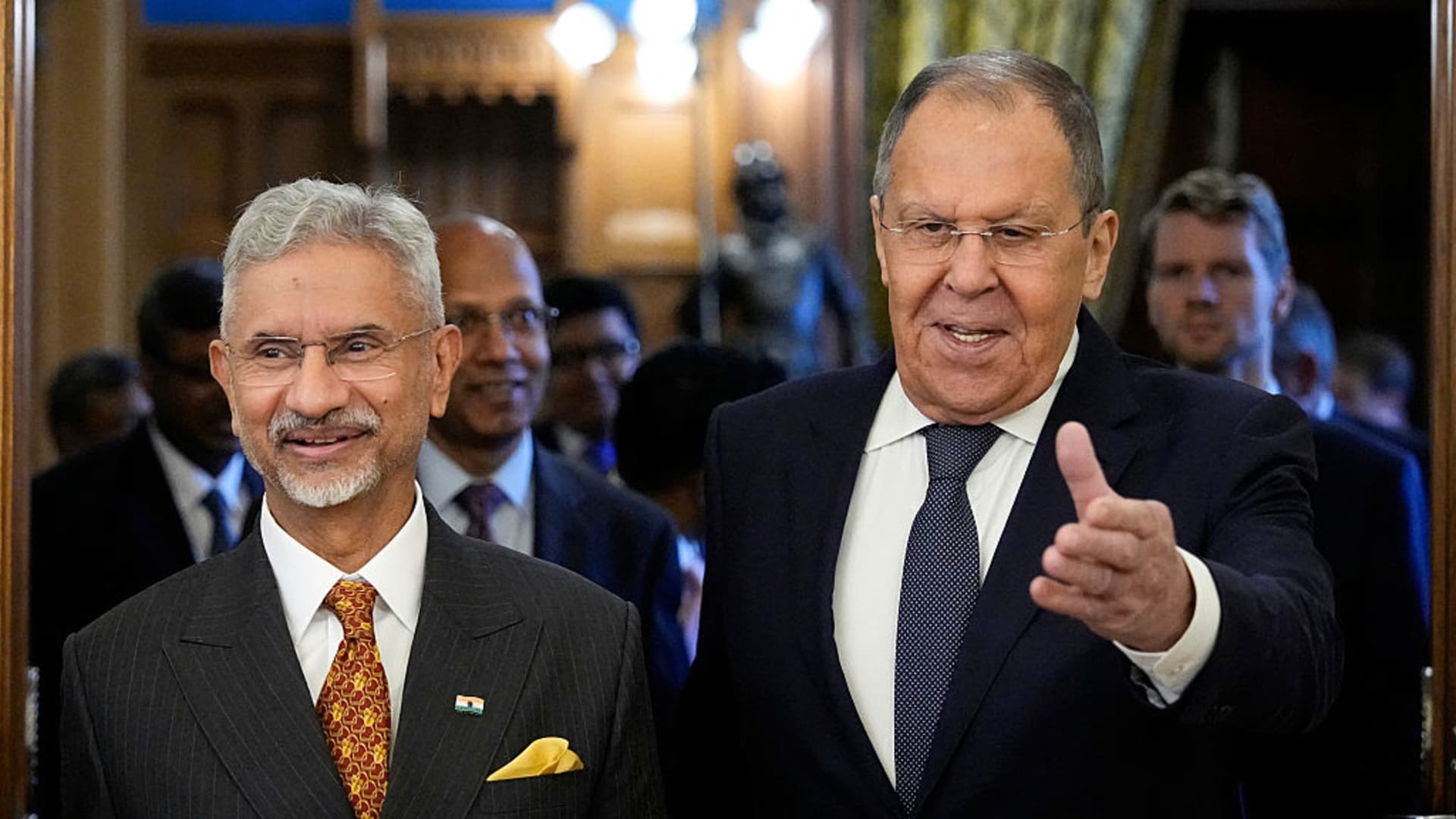
India and Russia’s relationship, rooted in decades of strategic cooperation, is proving remarkably resilient to external pressures. The recent high-level meetings between their respective foreign ministers in Moscow highlighted a shared resolve to deepen economic ties, particularly in energy. Russia’s Foreign Minister Sergei Lavrov explicitly noted the “wide strides” being made in hydrocarbon sector cooperation and oil shipments, a sentiment echoed by India’s Foreign Minister Subrahmanyam Jaishankar, who emphasized the partnership’s contribution to regional security and stability. This isn’t just about current purchases; both nations are committed to implementing joint energy production projects, including in the Russian Far East and Arctic shelf, signaling a long-term strategic alignment that goes beyond transactional oil trades.
The numbers speak volumes: bilateral trade between New Delhi and Moscow soared to a record $68.7 billion for the year ended March 2025. While India’s substantial increase in Russian oil imports drove a significant $59 billion deficit for India, it simultaneously underscored the critical role this energy supply plays in India’s economic strategy. This robust trade relationship, fortified by historical bonds, suggests that India views Russian energy not merely as a discounted commodity but as a reliable, strategic resource essential for its growth and energy security. For investors, this signals a durable demand base for Russian crude, insulated to a degree from Western sanctions and geopolitical maneuvering.
Navigating US Tariff Threats and Geopolitical Realignment
The United States has responded to India’s substantial Russian oil imports with additional tariffs, imposing duties of up to 50% on various Indian goods. However, instead of deterring New Delhi, this pressure appears to be solidifying India’s resolve to diversify its economic partnerships and assert its independent foreign policy. Indian officials have publicly pushed back on US criticism, pointing out that the purchases were, in part, requested by the US administration itself to maintain market calm, and highlighting continued Western trade with Russia. Experts like Daniel Balazs suggest that the Trump administration’s tariff threats may even act as a “catalyst,” pushing India closer to Russia and potentially encouraging New Delhi to engage in Moscow-sought trilateral meetings that could include China.
This dynamic illustrates a broader trend of geopolitical realignment in energy trade. As traditional alliances face new strains, nations are increasingly prioritizing energy security and economic stability over purely political allegiances. India’s stance underscores a growing multipolar world where major economies are less swayed by unilateral pressure. For energy investors, understanding these shifting alliances is paramount, as they can create new supply corridors, alter demand patterns, and introduce unforeseen risks or opportunities in shipping, refining, and exploration.
Market Volatility and Investor Insights Amidst Geopolitical Shifts
The current market snapshot reveals a landscape shaped by both geopolitical undercurrents and fundamental supply-demand dynamics. As of today, Brent Crude trades at $90.38 per barrel, experiencing a notable 9.07% decline within the day, with a range between $86.08 and $98.97. Similarly, WTI Crude is priced at $82.59, down 9.41%, trading in a day range of $78.97 to $90.34. Gasoline prices have also seen a dip, currently at $2.93, down 5.18% on the day. This recent downturn follows a broader trend, with Brent having fallen from $112.78 on March 30, 2026, to $91.87 on April 17, 2026, representing a significant 18.5% drop.
This market volatility, characterized by sharp declines, prompts investors to seek clarity. A recurring question from our readers this week is: “What do you predict the price of oil per barrel will be by end of 2026?” While a precise figure remains elusive, the India-Russia dynamic provides a crucial lens. The continued, secure flow of Russian oil to a major consumer like India, despite Western pressure, contributes to global supply stability. However, the current price weakness suggests that other factors, possibly related to demand concerns or inventory builds, are currently outweighing this geopolitical stability. Investors should consider how the assured demand from India for Russian crude could act as a floor during periods of oversupply or as a consistent demand driver that tightens the market when other factors push prices higher.
Forward Outlook: OPEC+ Decisions and Inventory Signals
Looking ahead, the next two weeks are packed with critical energy events that will undoubtedly influence crude price trajectories. Our calendar highlights key dates for investors to monitor. This Saturday, April 18, the OPEC+ Joint Ministerial Monitoring Committee (JMMC) convenes, followed by the full OPEC+ Ministerial Meeting on Sunday, April 19. A prominent question from our reader community this week is, “What are OPEC+ current production quotas?” These meetings will be pivotal in determining whether the alliance adjusts production levels in response to the recent price declines and global demand outlook. Any decision to cut production could quickly reverse the current downward trend, while a decision to maintain or increase output could further pressure prices.
Beyond OPEC+, we also have the API Weekly Crude Inventory report on April 21 and April 28, and the EIA Weekly Petroleum Status Report on April 22 and April 29. These reports will offer vital insights into US supply and demand dynamics, including inventory levels, refinery utilization, and product supplied. Coupled with the Baker Hughes Rig Count on April 24 and May 1, which indicates drilling activity, these data points will provide a comprehensive picture of the market’s physical balance. The sustained India-Russia trade, ensuring significant demand for a major producer’s output, provides a foundational element against which to assess these weekly data releases, offering a degree of predictability in an otherwise fluid market.
Diversification Beyond Crude: A Broader Trade Horizon
While oil remains the centerpiece of the India-Russia partnership, both nations are actively working to diversify and deepen their trade relationship. India aims to significantly increase its exports of pharmaceuticals, agriculture, and textiles to Russia, seeking to reduce the substantial $59 billion trade deficit. Furthermore, plans are underway to send Indian workers with skills in IT, construction, and engineering to help address Russia’s labor shortages. This expansion into non-energy sectors provides a broader economic foundation for the strategic partnership, making it even more robust against external pressures.
For investors, this diversification suggests that the India-Russia relationship is not a temporary marriage of convenience but a long-term strategic alliance with multifaceted economic ties. While our focus remains on oil and gas, understanding the broader context of this deepening trade helps to solidify the underlying stability of their energy relationship. The commitment to joint energy production projects, coupled with this broader trade expansion, paints a picture of growing economic interdependence that will continue to shape global energy flows for years to come.