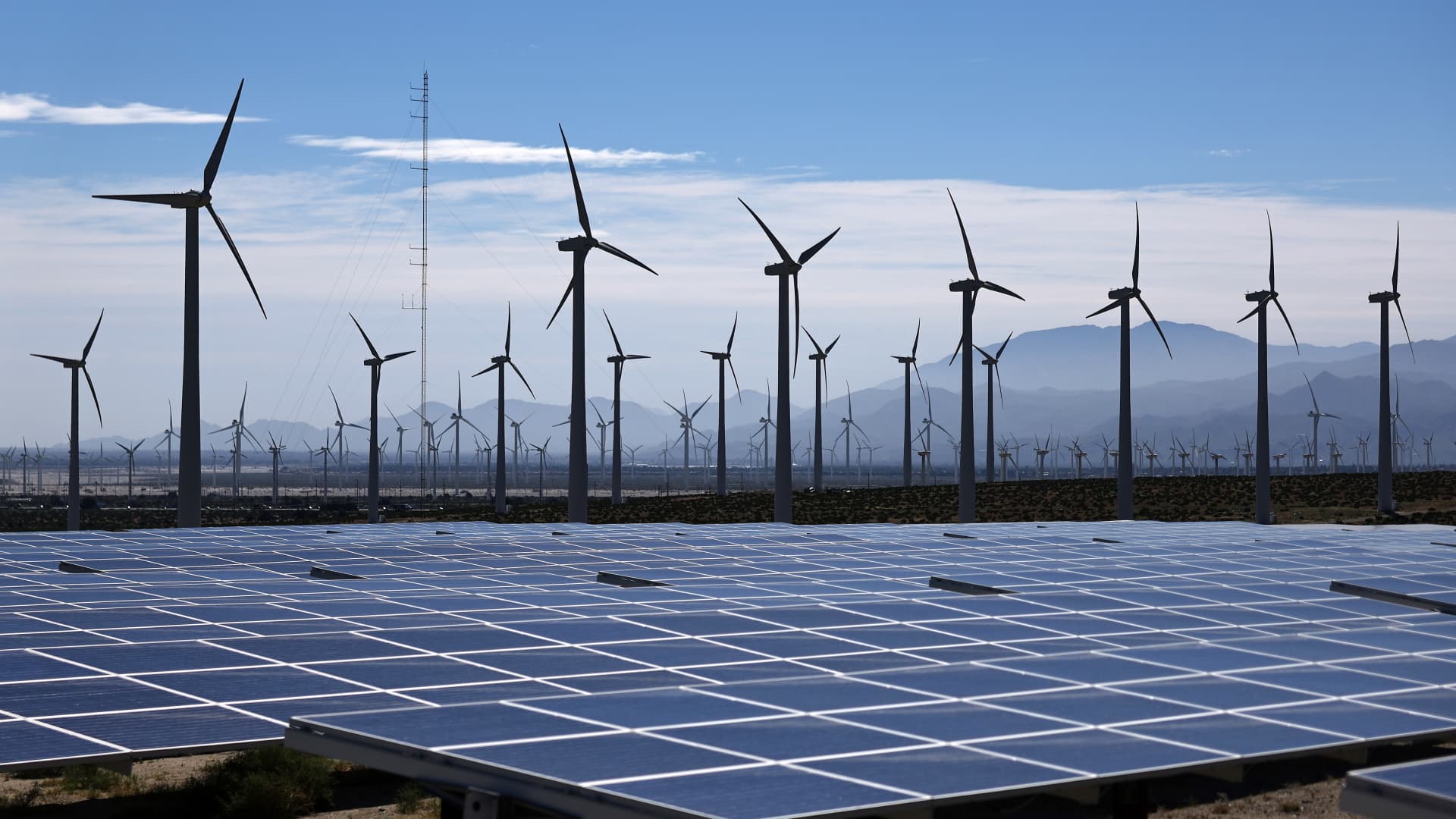
The landscape of U.S. energy policy is facing a significant shake-up, presenting both challenges and opportunities across the investment spectrum. Recent pronouncements from former President Donald Trump, signaling an outright rejection of new solar and wind power projects should he return to office, directly challenge the prevailing narrative of an energy transition. This stance, coupled with a tightening of federal permitting for renewables and existing measures like the termination of key tax credits and the imposition of tariffs, creates a discernable tailwind for traditional oil and gas sectors. For investors navigating this evolving environment, understanding the implications of these potential policy shifts on supply, demand, and market fundamentals is paramount.
Policy Shifts and Crude Market Dynamics
President Trump’s declaration that his administration “will not approve wind or farmer destroying Solar” projects, alongside his criticism of renewables for rising electricity prices, marks a clear pivot away from the incentivization of green energy. This rhetoric is not new, but its re-emphasis, coming after a recent tightening of federal permitting for renewables under Interior Secretary Doug Burgum’s office, signals a concrete policy direction. Such a stance has immediate implications for the energy sector, particularly for crude oil and natural gas.
As of today, Brent Crude trades at $90.38 per barrel, reflecting a significant decline of 9.07% within the day’s range of $86.08-$98.97. Similarly, WTI Crude stands at $82.59, down 9.41% from its daily high, fluctuating between $78.97 and $90.34. This recent dip follows a broader trend; Brent has fallen from $112.78 on March 30th to $91.87 just yesterday, an 18.5% reduction over two weeks. Despite this short-term volatility, the long-term policy outlook articulated by Trump could underpin a more stable, and potentially higher, price floor for crude by curbing domestic competition from alternative energy sources. Investors are keenly observing if these policy signals can counterbalance prevailing market headwinds and influence the trajectory of oil prices towards the end of 2026, a question frequently posed by our readers.
The Investment Landscape: O&G Tailwinds Emerge
The proposed halt on new renewable projects, combined with existing policy levers, positions the oil and gas sector for a potentially favorable investment climate. The centralization of the permitting process for renewables, which previously saw a more normal course of business, now introduces significant uncertainty and delays for solar and wind developers. Furthermore, the “One Big Beautiful Bill Act” aims to terminate investment and production tax credits for wind and solar by the end of 2027, credits that have been instrumental in the expansion of renewable energy across the U.S. Compounding these challenges are steel and copper tariffs, which directly increase the cost of renewable project development, further tilting the economic scales towards traditional energy sources.
The U.S. Department of Agriculture’s recent decision to end its support for solar on farmland further underscores a coordinated governmental effort to deprioritize renewable deployment. For investors, this creates a clearer runway for capital allocation into upstream, midstream, and downstream oil and gas assets. Companies involved in exploration, production, refining, and transportation of hydrocarbons could see increased demand and reduced regulatory friction. This scenario addresses a core investor concern: “What do you predict the price of oil per barrel will be by end of 2026?” While numerous global factors influence crude prices, a domestic policy environment explicitly favoring oil and gas could provide a significant bullish impetus, supporting higher price forecasts than might otherwise be expected.
Addressing the Grid: The Unmet Demand Challenge
President Trump’s assertion that renewables are responsible for rising electricity prices merits closer examination, especially in the context of critical grid stability. The nation’s largest grid, PJM Interconnection, covering 13 states across the Mid-Atlantic, Midwest, and South, recently saw prices for new power capacity jump 22% compared to last year. This surge is attributed to rapidly growing demand from data centers and other industries, juxtaposed against a tight power supply as coal plants are retired. While renewables often bear the brunt of political blame, data from Lawrence Berkeley National Laboratory indicates that solar and battery storage actually constitute the overwhelming majority of projects queued to connect to the grid, and critically, are the power sources that can most quickly ease the supply and demand gap.
If these quick-to-deploy renewable projects are stalled or outright rejected due to policy, the existing and projected electricity demand will inevitably turn to conventional sources for relief. This creates an urgent, practical demand for natural gas and, to a lesser extent, oil for power generation. For oil and gas companies, this translates into a robust domestic market, particularly for natural gas producers and infrastructure providers. Investors should consider firms with strong natural gas portfolios and those positioned to capitalize on increased demand for baseload and dispatchable power generation, as the grid struggles to keep pace with industrial expansion without new renewable capacity.
Upcoming Events and Investor Outlook
The coming weeks are packed with critical energy events that will shape market sentiment and potentially amplify the impact of these domestic policy discussions. This weekend, the OPEC+ Joint Ministerial Monitoring Committee (JMMC) meets on Saturday, followed by the full Ministerial Meeting on Sunday. These gatherings are crucial as our readers frequently ask about “OPEC+ current production quotas” and their potential adjustments. Any decision by the cartel regarding output levels will directly interact with U.S. domestic supply dynamics, particularly if American renewable development slows. A cut by OPEC+ could further tighten global supply at a time when U.S. policy is implicitly favoring domestic hydrocarbon production.
Beyond OPEC+, investors will keenly watch weekly data releases. The API Weekly Crude Inventory report on Tuesday, April 21st, followed by the EIA Weekly Petroleum Status Report on Wednesday, April 22nd, will provide vital snapshots of U.S. crude, gasoline, and distillate stocks, as well as refining activity. These reports will offer immediate insights into current supply-demand balances. With gasoline prices currently at $2.93, down 5.18% for the day, and domestic consumption patterns evolving, inventory levels will be closely scrutinized. Further data from the Baker Hughes Rig Count on April 24th will indicate drilling activity trends, offering a forward look at potential U.S. production responses to these shifting policy winds. These events, combined with the longer-term policy outlook, provide a complex but potentially lucrative environment for focused oil and gas investment.