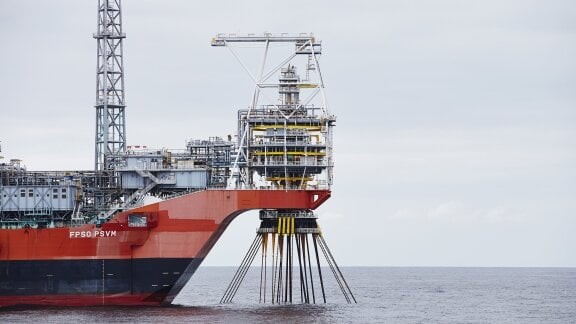
The race to unlock Namibia’s significant hydrocarbon potential is intensifying, with major players like Azule Energy, a joint venture between BP and Eni, aggressively positioning themselves to bring the nation’s burgeoning oil discoveries to market. While TotalEnergies and Shell have been pioneers, Azule’s recent Capricornus discovery and ambitious development timeline signal a fierce competition for the coveted “first oil” title in this highly prospective frontier basin. For investors, understanding the strategic maneuvers, market context, and upcoming catalysts is crucial to evaluate the long-term value creation in this new energy hotspot.
The Accelerated Push for Namibian First Oil
Azule Energy, formed in 2022 and already a significant player in Angola, is moving with remarkable speed in Namibia. Following its negotiation of a stake in block 2914A from operator Rhino Resources, the joint venture announced a significant oil find at the Capricornus well in April. Azule’s CEO, Adriano Mangini, has articulated an aggressive target: a final investment decision (FID) on the project by the end of next year, potentially paving the way for production to commence as early as 2029. This timeline puts Azule squarely in contention with TotalEnergies’ own development plans, which also anticipate production around the same period. The strategic imperative for early entry is clear: securing a dominant position in a new basin offers substantial long-term advantages, from infrastructure ownership to preferential access to future exploration acreage.
The urgency from Azule is underscored by the competitive landscape. Rhino Resources CEO Travis Smithard has also expressed an ambition to be the first to produce oil in Namibia, highlighting the high stakes involved. While initial discoveries by TotalEnergies and Shell three years ago ignited excitement around Namibia, the path to development has not been without hurdles. Shell, for instance, reported a $400 million writedown due to technical and geological challenges following a string of recent exploration misses. This starkly contrasts with Mangini’s confidence in the Capricornus discovery, asserting Azule’s readiness to commit to Namibia for many years. The potential for Azule to assume operatorship during the development phase, a point currently under discussion, further emphasizes their long-term strategic intent and commitment to bringing these resources online efficiently.
Market Dynamics Fueling Frontier Development
The current energy market provides a compelling backdrop for the accelerated development in Namibia. As of today, Brent crude trades at $98.87, representing a robust 4.15% gain over the past 24 hours, with WTI crude similarly strong at $90.76. This significant daily rebound follows a noticeable softening in prices over the past two weeks, during which Brent experienced a 12.4% decline, dropping from $108.01 on March 26th to $94.58 yesterday. This volatility underscores the persistent need for diversified and stable long-term supply sources.
Investors are keenly asking for a base-case Brent price forecast for the next quarter, signaling heightened awareness of market fluctuations and their impact on project economics. While short-term price movements can be sharp, the underlying demand trends and geopolitical landscape continue to support high-cost, long-lead-time developments like those in Namibia. The prospect of new, high-quality crude coming online from a geopolitically stable region like southern Africa is highly attractive. Current gasoline prices, at $3.08 and showing a 2.66% increase today, further highlight the strong consumer demand for refined products, reinforcing the economic incentive for producers to bring new crude supplies to market efficiently.
Upcoming Catalysts and Forward-Looking Analysis
The long lead times inherent in deepwater projects mean that today’s market signals and future policy outlooks directly influence multi-billion dollar FID calculations. Looking ahead, the next two weeks hold several pivotal events that will shape the investment landscape for projects like Azule’s in Namibia, even with a 2029 production target. On April 17th and again on April 24th, the Baker Hughes Rig Count will offer insights into global drilling activity, a key indicator of industry confidence and capital expenditure trends. A robust rig count can signal a healthy supply chain and availability of services crucial for complex deepwater operations.
More critically, the OPEC+ Joint Ministerial Monitoring Committee (JMMC) meeting on April 18th, followed by the full Ministerial Meeting on April 20th, will dictate global supply policy. Any decisions on production quotas will directly impact future price decks, influencing the economic models for projects targeting first oil towards the end of the decade. For instance, a decision by OPEC+ to constrain supply further could elevate long-term price expectations, making capital-intensive projects like Capricornus more attractive. Additionally, weekly data releases such as the API Crude Inventory on April 21st and 28th, and the EIA Weekly Petroleum Status Report on April 22nd and 29th, will provide real-time snapshots of the global supply-demand balance. These reports, while short-term in focus, contribute to the broader market sentiment and help shape the longer-term Brent consensus forecasts that investors are actively seeking.
Investor Sentiment and Strategic Positioning
Given the persistent investor interest in consensus 2026 Brent forecasts and the broader outlook for global energy supply, the progress in Namibia offers a glimpse into future supply dynamics. For BP and Eni, through Azule, securing a significant position in a promising new basin like Namibia represents a strategic imperative. It offers diversification away from more mature assets, provides a pathway for long-term resource replacement, and aligns with the industry’s drive to identify and develop new, high-quality reserves. The confidence expressed by Azule’s leadership, particularly in contrast to some of the challenges faced by peers, suggests a strong belief in the geological potential and economic viability of their discoveries.
The strategic move to potentially take over operatorship during the development phase further underscores Azule’s commitment to maximizing efficiency and control over the project’s execution. This active management approach, combined with the significant capital backing of BP and Eni, positions Azule as a formidable contender in Namibia. For investors tracking the evolution of global oil supply, Namibia represents a critical growth story. The speed at which Azule is moving, coupled with the competitive environment and the supportive long-term market fundamentals, suggests that the southern African nation is poised to become a significant contributor to global crude markets by the end of the decade, reshaping investment portfolios focused on future energy security.


