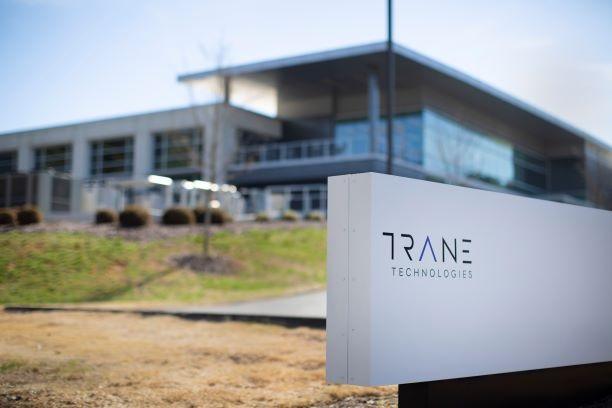
The energy landscape is in constant flux, driven by geopolitical forces, economic cycles, and increasingly, technological innovation. While much of the oil and gas investment discourse rightly centers on supply dynamics and macroeconomic shifts, a critical, often underestimated, factor is the evolution of energy demand. A recent strategic move by Trane Technologies, a leader in HVAC and climate control, to launch the BrainBox AI Lab, signals a significant acceleration in applying artificial intelligence to building energy management. For oil and gas investors, this initiative is more than just a tech headline; it’s a bellwether for fundamental shifts in energy consumption patterns that will inevitably ripple through demand forecasts for crude oil, natural gas, and refined products.
AI as a Demand Attenuator: Reshaping Future Energy Consumption
Trane’s investment in the BrainBox AI Lab, following its acquisition of BrainBox AI, represents a concerted effort to advance autonomous control systems, predictive models, and algorithms aimed at drastically reducing emissions through smarter energy use in buildings. By focusing on evolving fields like agentic AI and physics-informed neural networks, the goal is to transform the built environment into a highly efficient, decarbonized ecosystem. For oil and gas investors, this translates directly into a long-term demand attenuator. As buildings become more intelligent and energy-efficient, the overall demand for electricity – much of which is generated by natural gas or, less directly, influenced by broader energy prices – will see its growth trajectory flattened or even reduced. Our proprietary reader intent data consistently shows investors are keenly focused on building a base-case Brent price forecast for the next quarter and understanding the consensus 2026 Brent outlook. These forecasts must increasingly incorporate such technological advancements. While immediate impacts may be marginal, the cumulative effect of widespread AI-driven efficiency across millions of commercial and residential buildings could significantly alter the demand side of the energy equation, challenging traditional growth assumptions and adding a new layer of complexity to long-term price models.
Navigating Volatility: Short-Term Market Swings vs. Long-Term Efficiency Trends
The immediate market picture highlights the inherent volatility investors face. As of today, Brent crude trades at $99.56, marking a robust 4.88% gain, while WTI sits at $91.43, up 3.74%. Gasoline prices also saw a bump, trading at $3.08, a 2.66% increase. This daily surge, however, comes against a backdrop of significant recent volatility; the 14-day trend saw Brent shed $13.43, or 12.4%, from $108.01 on March 26th to $94.58 on April 15th. Such fluctuations are often driven by immediate supply concerns, geopolitical tensions, or short-term economic data. Yet, beneath this dynamic surface, structural shifts are underway. Trane’s AI initiative, while not directly influencing today’s crude prices, is a powerful example of a long-term trend towards greater energy efficiency that will incrementally chip away at overall demand growth. Investors must consider how these efficiency gains will modulate the impact of supply shocks or economic booms in the future, potentially capping upside potential in a world where demand is increasingly optimized. The premium placed on sustainability and operational cost reduction, as highlighted by Trane’s Chief Digital Officer, Riaz Raihan, underscores a fundamental shift in corporate and consumer behavior that will persist regardless of daily price movements.
Strategic Implications for Upstream and Midstream Investment Portfolios
For upstream and midstream oil and gas companies, the expansion of AI in energy management presents both challenges and opportunities. A future with lower energy intensity in the built environment implies a slower growth rate for global energy demand, pushing producers to maintain cost efficiency and scrutinize capital allocation even more rigorously. Companies focused on natural gas, which plays a pivotal role in electricity generation, will need to closely monitor how AI-driven building efficiency impacts power demand curves. Midstream players might see shifts in regional demand profiles as efficiency gains are not uniform. However, this also opens avenues for diversification and innovation within the O&G sector itself. Companies that can leverage AI for optimizing their own operations – from drilling efficiency to pipeline integrity and emissions reduction – will gain a competitive edge. Furthermore, the expertise gained in developing intelligent energy solutions for buildings could inspire new ventures or partnerships in areas like carbon capture, renewable energy integration, or even smart grid technologies, where O&G companies’ infrastructure and engineering capabilities could be leveraged. The strategic imperative is clear: embrace efficiency and innovation, or risk being left behind by an evolving energy landscape.
Upcoming Catalysts and the Persistent Demand Question
The near-term outlook for oil markets is always shaped by a series of critical events. In the coming weeks, investors will closely watch the Baker Hughes Rig Count reports on April 17th and 24th for signals on future supply. More crucially, the OPEC+ Joint Ministerial Monitoring Committee (JMMC) meeting on April 18th, followed by the full Ministerial Meeting on April 20th, will provide vital clues on production policy. Alongside these, the API Weekly Crude Inventory (April 21st, 28th) and EIA Weekly Petroleum Status Report (April 22nd, 29th) offer insights into immediate supply-demand balances. While these events are paramount for short-term price discovery, they operate within a broader context of structural change. The consistent investor interest in “Chinese tea-pot refinery runs” and “Asian LNG spot prices,” as indicated by our reader intent data, speaks to the global and interconnected nature of energy demand. However, the underlying assumption of ever-increasing demand, particularly for traditional energy sources, is being incrementally challenged by technologies like Trane’s AI Lab. These efficiency innovations act as a subtle, persistent force, shaping the long-term demand curve and influencing the impact of every OPEC+ decision or inventory report. Investors need to integrate both the immediate market catalysts and the slower-moving, but ultimately transformative, technological trends into their investment theses to truly capture the future direction of energy markets.


