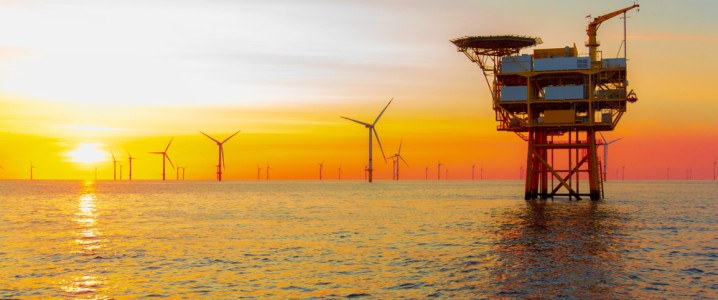
The recent announcement by Ørsted, a global leader in offshore wind development, seeking a substantial $9.4 billion capital injection through a rights issue, sends a powerful signal across the entire energy investment landscape. While the move addresses company-specific challenges, it fundamentally underscores escalating pressures within the energy transition sector. This situation demands close attention from oil and gas investors, as it highlights a critical divergence in capital market conditions and risk perception between the capital-intensive world of large-scale renewables and the often more robust, though volatile, traditional hydrocarbon markets. For investors, this moment necessitates a re-evaluation of where genuine value and sustainable returns lie amidst macroeconomic headwinds, policy shifts, and supply chain disruptions impacting various energy segments.
Offshore Wind’s Capital Conundrum and Wider Market Implications
Ørsted’s need for a 60 billion Danish crowns capital raise stems from what it terms an “extraordinary situation,” largely driven by adverse developments in the U.S. offshore wind sector. Specifically, the company cited difficulties in securing favorable terms for the partial divestment and non-recourse project financing for its Sunrise Wind project. This failure is a direct consequence of evolving policy landscapes, including accelerated phase-out deadlines for renewable projects, which have fundamentally altered project economics and investor appetites for risk in the sector. Furthermore, prior decisions, such as the discontinuation of the Hornsea 4 offshore wind project in the UK due to surging costs and interest rates, point to a systemic challenge. Developing large-scale offshore wind assets is inherently capital-intensive, demanding immense upfront investment and extended lead times. When the cost of capital rises, supply chains face disruption, and policy frameworks become unpredictable, the financial viability of these ambitious projects quickly deteriorates. Even with the Danish state’s commitment to subscribe for its 50.1% pro rata share, the sheer scale of this rights issue reveals the profound capital strain on even the most established players, prompting investors to scrutinize the capital efficiency and risk profiles of all major energy projects, regardless of their energy source.
Hydrocarbon Markets: Resilience Amidst Price Swings
In stark contrast to the capital pressures facing some renewable projects, the traditional hydrocarbon market continues to exhibit a complex interplay of volatility and underlying strength. As of today, Brent crude trades at $90.38 per barrel, reflecting a significant daily decline of 9.07% from its previous close. WTI crude mirrors this trend, currently priced at $82.59, down 9.41% from yesterday’s close. These immediate movements, while notable, are part of a broader trend: Brent has seen an 18.5% drop from its 14-day peak of $112.78 just two weeks prior. Despite these rapid price adjustments, the fundamental demand for hydrocarbons remains robust, often providing clearer investment pathways and potentially more immediate cash flow compared to the complex, long-duration development cycles of major renewable ventures. Even gasoline prices, currently at $2.93 per gallon, show a 5.18% daily decline, reflecting the broader market softness, but these prices remain at levels that support continued upstream profitability for many producers. This juxtaposition is crucial for energy investors: while short-term price volatility is inherent to crude markets, the underlying resilience of demand, coupled with more mature project development cycles, often presents a compelling risk-reward profile when compared against the capital-intensive and policy-sensitive environment of developing new large-scale renewable infrastructure.
Upcoming Catalysts and Investor Focus Areas
The near-term outlook for oil and gas markets will be heavily influenced by several critical upcoming events, which our reader intent data shows are top of mind for investors. Many are asking about current OPEC+ production quotas and what these mean for future supply. The next 14 days include key gatherings that could significantly shape market sentiment and price trajectories. This weekend, the OPEC+ Joint Ministerial Monitoring Committee (JMMC) meets on Saturday, April 18th, followed by the full OPEC+ Ministerial Meeting on Sunday, April 19th. These meetings are pivotal as they will address current production levels and potentially set new quotas, directly impacting global supply. Any unexpected shifts could introduce significant volatility, impacting everything from the price of oil per barrel by the end of 2026 – a question frequently posed by our readers – to the performance of integrated energy companies like Repsol, whose April 2026 performance is another key investor inquiry. Beyond OPEC+, investors will closely monitor weekly data releases: the API Weekly Crude Inventory on April 21st and 28th, and the EIA Weekly Petroleum Status Report on April 22nd and 29th, provide crucial insights into U.S. supply and demand dynamics. Furthermore, the Baker Hughes Rig Count on April 24th and May 1st offers a pulse on drilling activity and future production capacity. These events provide tangible catalysts and essential data points that investors use to refine their strategies, emphasizing the need for active monitoring in a rapidly evolving market.
Re-evaluating Capital Allocation in a Divergent Energy Landscape
The Ørsted situation serves as a powerful reminder that not all energy investments carry the same risk profile, even within the broad “energy” sector. For oil and gas investors, this underscores the importance of scrutinizing capital allocation strategies. While the long-term energy transition remains an overarching theme, the immediate financial viability and returns on investment for capital-intensive projects, particularly those in nascent or policy-dependent sectors, are under increasing pressure. Investors are increasingly seeking assets with strong free cash flow generation, shorter payback periods, and a proven ability to navigate volatile macroeconomic conditions. The challenges faced by offshore wind developers highlight the advantages of traditional energy companies that often benefit from established infrastructure, more predictable regulatory environments in producing regions, and a direct response to global demand. This doesn’t signal a halt to energy transition efforts, but rather a more pragmatic assessment of risk premiums and return expectations. The capital markets are signaling a flight to quality and tangible, reliable returns, pushing investors to re-evaluate where their capital can be most effectively deployed to generate sustainable value in the coming years.


