The United States has aggressively pursued a strategy of expanding its energy exports, particularly liquefied natural gas (LNG), positioning itself as a critical global supplier amidst geopolitical shifts and evolving energy demand. However, a recent, seemingly ancillary policy aimed at rebuilding domestic shipbuilding capacity threatens to create a significant bottleneck, potentially undermining these ambitious export goals. This U.S. Trade Representative (USTR) mandate, requiring a growing percentage of U.S. LNG and crude exports to be carried on U.S.-flagged and eventually U.S.-built vessels, presents a complex challenge for investors, energy companies, and global energy markets alike. As the nation aims to solidify its position as a major exporter, the practical realities of its current maritime fleet and industrial capacity cast a long shadow over the feasibility of these commitments.
The Looming Mandate: Export Ambitions Meet Maritime Reality
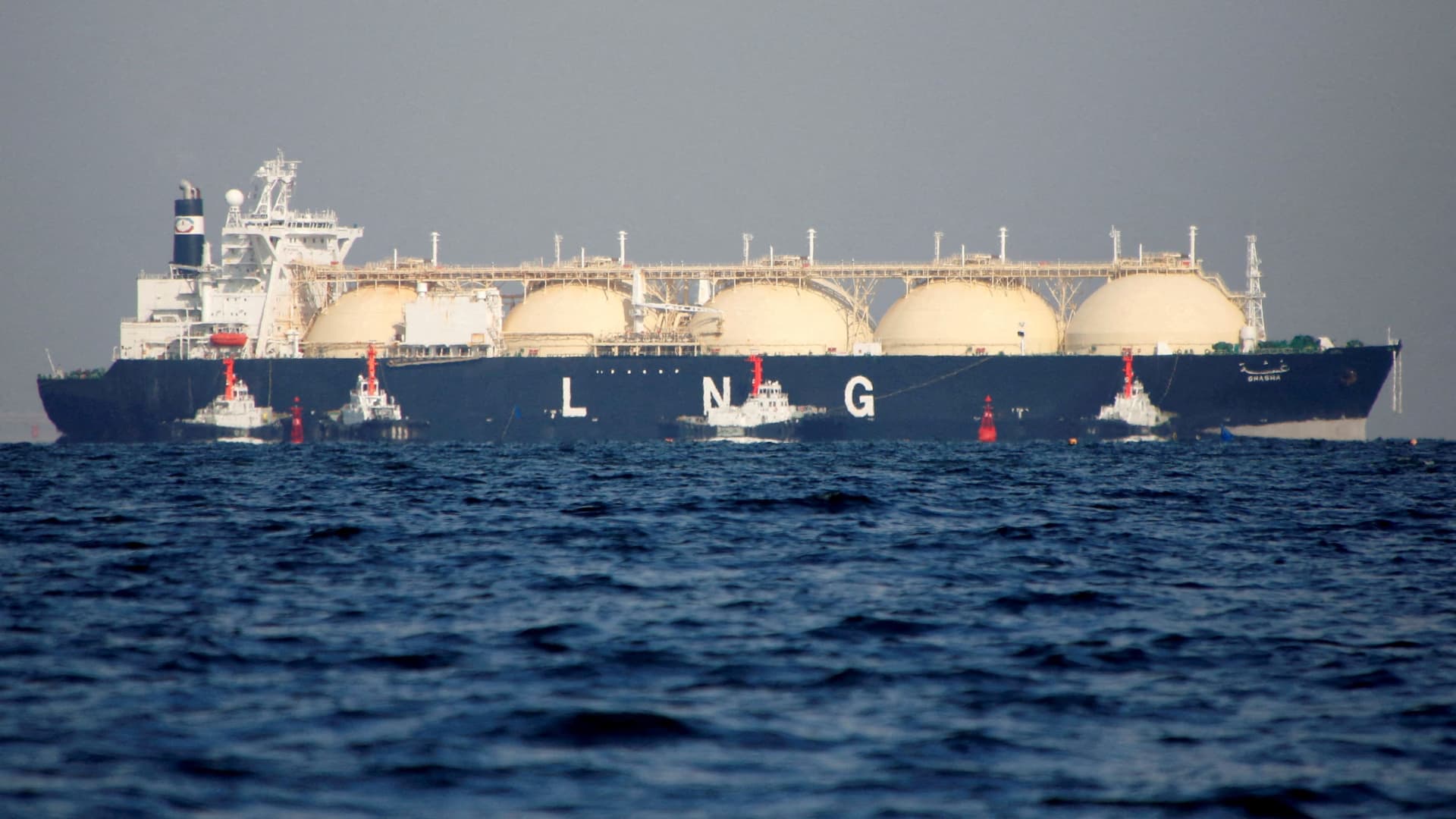
The USTR policy introduces a phased requirement that begins modestly but escalates dramatically over decades. By April 2028, 1% of U.S. LNG exports must be transported on U.S.-flagged ships. A year later, this same 1% must transition to U.S.-built vessels. Subsequent annual increases of 1% will push this requirement to 15% of U.S. LNG exports needing U.S.-built transport by 2047. This mandate, spurred by national security concerns and an investigation into China’s dominance in global shipbuilding, aims to revitalize a critical domestic industry. However, the current state of the U.S. LNG fleet reveals a stark discrepancy. Out of 682 LNG carriers operating globally, only one, Crowley’s American Energy, is U.S.-flagged, and it was built in France in 1994, entering service in March 2025 for domestic routes to Puerto Rico. Crucially, only one LNG vessel, the LNG Aquarius (built in 1977 and now sailing under an Indonesian flag), was ever built in the U.S. This policy creates a significant disconnect between the U.S.’s aspirations as an energy exporter and its current logistical capabilities.
A Decades-Long Gap: The U.S. Shipbuilding Deficit
The scale of the challenge for investors in the energy shipping sector is immense. Industry experts estimate that by 2047, the U.S. would require approximately 45 LNG carriers to meet the 15% USTR guideline. Yet, out of 331 LNG vessels currently on global order books, only one is slated for U.S. construction. This gap highlights a severe deficiency in U.S. shipbuilding capacity, particularly for specialized vessels like LNG carriers. China, by contrast, commands an overwhelming 75-80% of the global freight fleet manufacturing market. This disparity means the U.S. is not merely facing a shortage of ships, but a fundamental lack of the industrial infrastructure and skilled labor required to build them on the necessary scale. The timeline for constructing these complex vessels typically spans several years, making the 2028 and even 2047 targets incredibly ambitious given the current starting point. The current administration’s focus, as evidenced by a January 2025 report on shipbuilding recommendations, underscores the long-term strategic nature of this issue.
Investor Concerns: Navigating Future Supply Chains Amidst Volatility
Investors are actively seeking clarity on the future trajectory of oil prices and the stability of global energy supply. Many of our readers are asking about long-term oil price predictions for late 2026 and beyond, and the implications of OPEC+ production quotas. This underscores a market highly sensitive to supply-side dynamics. As of today, Brent crude trades at $90.38, down 9.07% from its daily open of $98.97, with WTI crude similarly declining to $82.59, down 9.41% from its high of $90.34. This dramatic single-day movement reflects the inherent volatility in global energy markets, a trend exacerbated by a 14-day Brent slide from $112.78 on March 30th to $91.87 on April 17th. In such an environment, the reliability and cost-effectiveness of U.S. energy exports become paramount. Any policy that introduces friction or increased costs into the export supply chain directly impacts the competitiveness of U.S. LNG and crude, potentially limiting market penetration and affecting long-term asset valuations for companies involved in export terminals and upstream production. The USTR mandate, while driven by national security, implicitly introduces a new layer of supply chain risk that investors must now factor into their models for U.S. energy projects.
Legislative Efforts and the Road Ahead for U.S. Energy Exports
Recognizing the substantial gap, legislative efforts are underway to support the rebuilding of America’s shipbuilding industry. Bipartisan support has emerged in Congress, with the introduction of the Shipbuilding and Harbor Infrastructure for Prosperity and Security (SHIPS) for America Act. This bill, championed by figures like Senators Mark Kelly (D-AZ) and Todd Young (R-IN), aims to provide programs to close the gap with international builders. However, the timeline for such initiatives to yield a significant fleet of LNG carriers is extensive, far exceeding the immediate requirements of the USTR mandate. Investors should monitor these legislative developments closely, as their success or failure will directly influence the feasibility of U.S. energy export growth under the new shipping requirements. In the near term, key market events like the upcoming OPEC+ Joint Ministerial Monitoring Committee (JMMC) meeting on April 18th, followed by the Full Ministerial Meeting on April 19th, will dictate global supply strategies. While these events focus on production quotas, the broader context of U.S. export capacity and its long-term reliability against a backdrop of domestic shipping mandates will be a crucial factor in how global supply dynamics evolve over the coming years. Furthermore, consistent monitoring of EIA Weekly Petroleum Status Reports and Baker Hughes Rig Counts will offer ongoing insights into domestic production trends against the backdrop of these evolving export logistics.
Strategic Imperative vs. Operational Hurdles: A Balancing Act for Investors
The USTR’s shipbuilding mandate represents a powerful strategic imperative for the U.S. to bolster its industrial base and enhance national security. However, the operational hurdles for the energy sector are substantial. The policy places U.S. energy exporters in a precarious position, requiring them to utilize a non-existent domestic fleet for a growing portion of their shipments. For investors, this creates a unique set of risks and opportunities. Companies with exposure to U.S. LNG terminals or export infrastructure will need to closely evaluate the long-term implications for their shipping costs and market access. Conversely, companies positioned to benefit from a revitalized U.S. shipbuilding industry, or those offering innovative logistical solutions, could see new avenues for growth. The coming decades will be a critical test of whether the U.S. can successfully reconcile its ambitions as a leading global energy exporter with its desire to rebuild a domestic maritime industry, or if these two critical objectives will ultimately collide, creating significant disruption in the global energy trade.