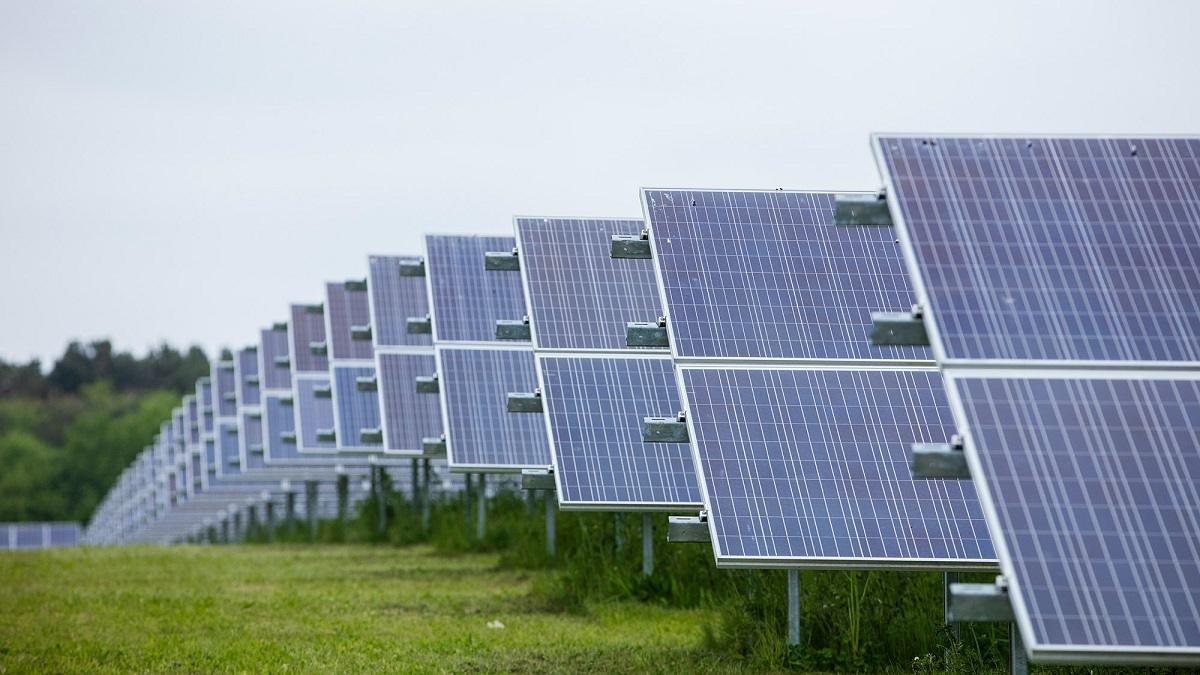
Australia is rapidly emerging as a pivotal battleground for global energy capital, as its government’s strategic pivot towards clean energy actively reshapes investment landscapes. The recent, substantial expansion of the Capacity Investment Scheme (CIS) is not merely an incremental policy adjustment; it signals a robust, de-risked commitment to accelerating the energy transition that demands immediate attention from oil and gas investors. By targeting an additional 40 GW of renewable energy and storage capacity by 2030, a significant uplift from its previous 32 GW goal, Australia is laying a clear runway for massive private sector engagement. This move carries profound implications for capital allocation across the entire energy sector, prompting a re-evaluation of traditional oil and gas investment priorities in favor of more stable, policy-backed green opportunities.
Australia’s Green Energy Ascent: A De-Risked Investment Horizon
The Australian government’s expanded Capacity Investment Scheme (CIS) is a powerful catalyst for renewable generation and dispatchable capacity, aiming to achieve an ambitious 82% renewable electricity by 2030. This commitment is underpinned by a new total capacity target of 40 GW, a notable increase that includes 26 GW specifically for renewable generation, predominantly wind and solar, and a critical 14 GW for dispatchable capacity such as battery storage. This sharp rise from prior objectives reflects a sophisticated understanding of the need for both generation uplift and robust grid stability as the nation’s energy mix rapidly transforms. The financial commitment supporting this transition is equally impressive, projected to unlock approximately A$73 billion in new investments. Of this, A$21 billion is earmarked for vital storage solutions, while A$52 billion will be directed towards advancing solar and wind technologies. Critically, the CIS de-risks these investments through competitive tender bids for underwriting contracts, providing long-term revenue certainty. This mechanism is paramount for attracting capital at the scale required, mitigating financial uncertainties often associated with nascent or rapidly evolving energy sectors. With six tenders already contributing towards 18 GW of projects and auctions continuing through 2027, the pipeline for green energy investment in Australia is robust, clearly defined, and offers a predictable environment for capital deployment.
Navigating the Oil & Gas Vortex: A Stark Contrast in Volatility
The strategic push into de-risked renewable energy in Australia offers a stark contrast to the persistent volatility characterizing global oil and gas markets. As of today, April 18, 2026, Brent crude trades at $90.38 per barrel, reflecting a sharp 9.07% decline within the day, with an intraday range spanning from $86.08 to $98.97. Similarly, WTI crude has plummeted to $82.59, down 9.41% today, experiencing a daily range of $78.97 to $90.34. The instability extends to refined products, with gasoline prices falling to $2.93, a 5.18% drop today. This intraday swing is not an isolated incident but indicative of broader market jitters. Our proprietary data reveals that Brent crude has shed $20.91, or 18.5%, over the past 14 days alone, falling from $112.78 on March 30, 2026, to $91.87 just yesterday, April 17, 2026. Such dramatic price movements underscore the inherent risks in conventional oil and gas investments, where geopolitical events, supply-demand imbalances, and speculative trading can erode value rapidly. For investors seeking stable, predictable returns, the contrast with Australia’s de-risked green energy opportunities could not be more pronounced.
Investor Concerns and the Future of Oil Prices: Signals from Our Readers
The pronounced volatility in crude markets has naturally fueled significant investor anxiety, a sentiment clearly reflected in the questions our readers are posing this week. A recurring theme is the urgent need for clarity on future price trajectories, with many asking, “what do you predict the price of oil per barrel will be by end of 2026?” This query underscores a deep-seated uncertainty about the long-term stability of oil investments. Furthermore, investors are closely monitoring supply-side dynamics, evidenced by questions like “What are OPEC+ current production quotas?” These questions highlight the market’s dependence on cartel decisions and the lack of transparent, long-term stability. The answers to these critical questions will be heavily influenced by upcoming calendar events. The OPEC+ Joint Ministerial Monitoring Committee (JMMC) and the Full Ministerial Meeting, both scheduled for this weekend on April 18th and 19th respectively, are crucial for setting the tone for global oil supply. Any adjustments to production quotas will directly impact price predictions for the rest of 2026. Further market signals will emerge from the API and EIA Weekly Crude Inventory reports on April 21st, 22nd, 28th, and 29th, providing insights into immediate supply-demand balances. The Baker Hughes Rig Count on April 24th and May 1st will offer an indication of future production capacity. These ongoing data points and high-stakes meetings create a continuous cycle of speculation and reaction in the O&G sector, a stark juxtaposition to the policy-backed certainty offered by Australia’s green energy initiatives.
Capital Reallocation: The Strategic Imperative for O&G Investors
Australia’s aggressive pivot towards a de-risked green energy future is more than just a new frontier for renewables; it represents a significant strategic imperative for oil and gas investors globally. The substantial A$73 billion investment unlocked by the expanded CIS, specifically targeting 40 GW of clean energy and storage by 2030, sets a precedent for how governments can actively steer capital flows. For diversified energy portfolios, this presents a compelling argument for reallocating capital from inherently volatile conventional fossil fuel assets to opportunities with government-backed revenue certainty. The current environment, characterized by daily Brent price swings exceeding 9% and an 18.5% drop in just two weeks, amplifies the appeal of stable, long-term green projects. Oil and gas companies, particularly those with significant Australian footprints or global ambitions for portfolio diversification, must now critically assess their investment strategies. The focus is shifting from purely extractive endeavors to integrated energy solutions that encompass renewables and storage. Investors are increasingly prioritizing ESG criteria and seeking assets that align with global decarbonization trends. Australia’s commitment not only offers a blueprint for other nations but also pressures traditional O&G entities to accelerate their own energy transition roadmaps. Those who fail to adapt to this evolving capital landscape risk being left behind, as investor preference for stability and sustainability continues to grow.


