The financial landscape for energy and industry is undergoing a profound transformation, and a recent announcement from Lloyds Bank signals a clear acceleration in this shift. The bank’s Business and Commercial unit has established a new center of excellence dedicated to Voluntary Carbon and Nature Markets (VCNM), a move that holds significant implications for investors navigating the complex currents of the global energy transition. This isn’t merely a boutique initiative; it’s a strategic deepening of their commitment to sustainable finance, positioning a major financial institution at the forefront of a burgeoning, yet often opaque, market. For seasoned oil and gas investors, understanding the drivers and potential impacts of such developments is crucial, as they hint at evolving capital allocation, regulatory pressures, and new avenues for both risk and return.
Lloyds’ Strategic Pivot: Capitalizing on the Carbon Imperative
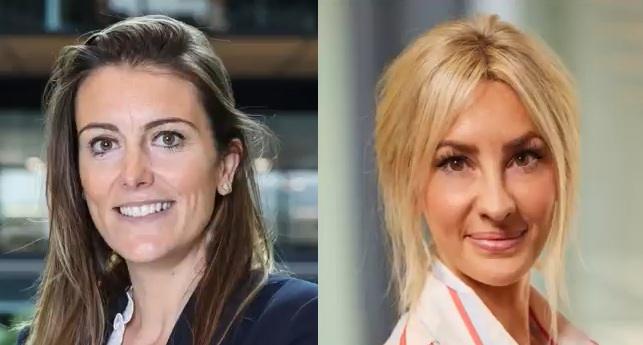
Lloyds’ decision to launch a dedicated VCNM center, based in London and integrated into its Sustainability & Client Advisory division, underscores a growing recognition of the strategic importance of carbon and nature-based solutions. This division, initially formed in 2021, has rapidly expanded its remit to guide large corporate clients through their sustainability objectives. The appointment of Emily Martin and Gabriella Carden, both seasoned experts in sustainable finance, as co-Heads of the new unit, speaks volumes about the bank’s intent to bring deep expertise to this complex domain. Hannah Simons, Head of Sustainability for Lloyds Corporate Markets, emphasized that these appointments reflect a commitment to “supporting clients as they pursue their sustainability objectives,” highlighting the VCNM as a “growing part of the UK’s clean growth strategy.”
From an investment perspective, this move signifies several key trends. Firstly, it indicates increasing demand from corporations, including those in heavy industries like oil and gas, for structured guidance and credible pathways to achieve decarbonization targets. Voluntary carbon markets offer a mechanism for companies to offset unavoidable emissions, while nature markets provide avenues for investing in biodiversity and ecosystem services. Secondly, the involvement of a major bank like Lloyds promises to bring greater standardization, transparency, and liquidity to these markets, which have historically faced challenges related to verification and integrity. Investors should view this as a positive step towards de-risking participation in VCNMs, potentially attracting a wider pool of institutional capital and driving innovation in carbon credit development and trading.
Navigating Volatility: Traditional Energy and Emerging Carbon Markets
While financial institutions are increasingly focusing on carbon and nature finance, the traditional energy markets continue to exhibit their inherent volatility, a constant backdrop for any investment thesis. As of today, Brent Crude trades at $94.85, showing a marginal dip of 0.08% within a day range of $94.42-$94.91. WTI Crude mirrors this trend, standing at $91.19, down 0.11%, oscillating between $90.52 and $91.5. Gasoline prices also reflect slight softening at $2.99, down 0.33%. This stability, however, comes after a period of significant fluctuation; the 14-day Brent trend reveals a notable decline from $108.01 on March 26th to $94.58 on April 15th, representing a substantial 12.4% drop. This kind of price movement serves as a stark reminder that even as the world transitions, the demand for conventional fuels remains robust, yet sensitive to geopolitical shifts and economic data.
The juxtaposition of this crude market volatility with Lloyds’ VCNM initiative is critical for investors. Fluctuating energy prices impact the financial capacity of corporations to invest in decarbonization efforts, including the purchase of carbon credits. When traditional energy is cheaper, the economic incentive to reduce reliance on it or offset its emissions might seem less urgent in the short term, though long-term regulatory and societal pressures persist. Conversely, higher, sustained oil prices could accelerate interest in VCNMs as companies seek to hedge against future carbon liabilities or enhance their ESG profiles. This interplay means that investment strategies must now consider both the traditional energy commodity cycle and the parallel development of financial instruments designed to mitigate its environmental impact.
Investor Focus: Bridging Forecasts and Future Strategies
Our proprietary reader intent data reveals a clear focus among investors on fundamental energy market questions, such as building a “base-case Brent price forecast for next quarter” and seeking a “consensus 2026 Brent forecast.” These queries highlight the enduring importance of traditional commodity price discovery. However, the rise of VCNM initiatives, exemplified by Lloyds, provides a new lens through which to interpret these forecasts. While the immediate drivers of crude prices remain supply-demand fundamentals, OPEC+ decisions, and inventory levels, the long-term outlook for fossil fuels is increasingly influenced by the accelerating pace of the energy transition and the financial mechanisms supporting it.
Investors are also keenly interested in regional dynamics, with questions arising about “how Chinese tea-pot refineries are running this quarter” and “what’s driving Asian LNG spot prices this week.” These demonstrate a continued emphasis on global demand centers. However, these same regions are also increasingly under pressure to decarbonize, making the VCNM a relevant component of their future energy strategies. For instance, a Chinese refinery seeking to expand operations might simultaneously explore carbon credit purchases to meet national or international sustainability benchmarks. The emergence of robust carbon markets, facilitated by major banks, suggests that companies with strong ESG credentials and clear decarbonization pathways – potentially utilizing VCNMs – may attract more favorable capital and achieve greater long-term resilience, even within traditional energy sectors.
Anticipating Catalysts: Calendar Events and Carbon Market Growth
Looking ahead, the next two weeks present a series of critical energy events that will undoubtedly influence market sentiment and, by extension, the strategic importance of initiatives like Lloyds’ VCNM center. The Baker Hughes Rig Count reports on April 17th and 24th will offer insights into North American production trends, while the API and EIA Weekly Crude Inventory reports on April 21st, 22nd, 28th, and 29th will provide a snapshot of U.S. supply and demand dynamics. More critically, the OPEC+ Joint Ministerial Monitoring Committee (JMMC) meeting on April 18th, followed by the Full Ministerial OPEC+ Meeting on April 20th, could introduce significant shifts in global oil supply policy.
These traditional energy market catalysts interact directly with the emerging carbon finance landscape. For example, if OPEC+ decides on production cuts that drive crude prices higher, it could simultaneously increase the pressure on consuming nations and corporations to accelerate decarbonization efforts, potentially boosting demand for credible carbon offsets. Conversely, a bearish outcome might free up corporate capital for sustainability investments, including VCNM participation. Investors should monitor these events not only for their direct impact on commodity prices but also for their indirect influence on the pace and direction of the energy transition. The growth of robust VCNMs, supported by institutions like Lloyds, is creating a parallel financial system that will increasingly inform, and be informed by, the physical energy markets. This interdependency means that understanding upcoming supply-side decisions and inventory levels is now also key to anticipating trends in the carbon market, making a holistic investment approach more vital than ever.


