The Corporate Energy Transition: A Macro Shift with Micro Implications
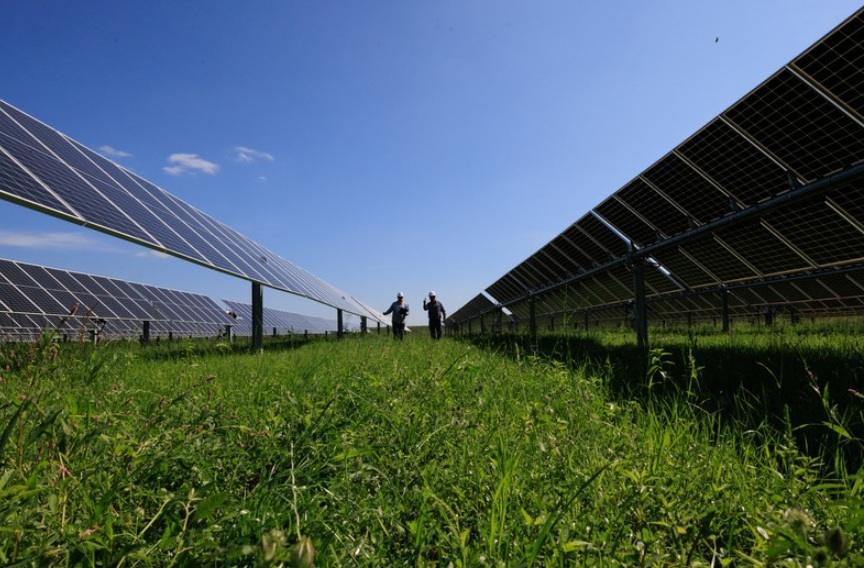
The recent announcement of Meta’s long-term contract with Enbridge, securing 100% of the renewable energy generated from a new 600 MW solar facility in Texas, is far more than a simple power purchase agreement. It stands as a potent symbol of the accelerating corporate energy transition, a force reshaping investment landscapes across both traditional oil & gas and burgeoning renewable sectors. For energy investors, this deal underscores a critical duality: while the immediate future of crude oil remains volatile and subject to geopolitical currents, the long-term strategic pivot by major corporations towards decarbonization is undeniable and increasingly impactful. Understanding this shift, and how companies like Enbridge are adapting, is paramount for navigating future market opportunities.
Blue-Chip Demand Driving Renewable Infrastructure Investment
Meta’s commitment to the Clear Fork solar facility near San Antonio, a project anticipated to cost Enbridge approximately $900 million and enter service by summer 2027, highlights the robust demand from technology giants for clean energy. This isn’t an isolated incident; Meta had already achieved 100% renewable energy for its operational needs in 2020 and plans to add a staggering 9.8 GW of renewable energy to U.S. grids by the end of 2025, ultimately targeting net-zero emissions across its value chain by 2030. This aggressive pursuit of green power from “blue-chip companies” like Meta creates a compelling investment thesis for renewable infrastructure. For diversified energy firms like Enbridge, traditionally a midstream powerhouse, such projects represent a strategic expansion into high-growth, contract-backed clean energy assets. Investors should recognize this trend as a foundational element of long-term capital allocation strategies for both tech consumers and energy producers alike.
Navigating Crude Volatility Amidst Strategic Diversification
While the long-term energy transition gathers pace, the short-to-medium term remains firmly anchored in the realities of the traditional oil market. As of today, Brent crude trades at $94.85, showing a marginal dip of 0.08% within a tight daily range of $94.42-$94.91. WTI crude follows a similar pattern at $91.19, down 0.11%, oscillating between $90.52 and $91.50. This recent stability, however, comes on the heels of a significant correction, with Brent falling from $108.01 on March 26th to $94.58 by April 15th – a substantial 12.4% decline over just two weeks. Gasoline prices, currently holding around $2.99, also reflect a market seeking equilibrium. Our proprietary data indicates that investors are keenly focused on building a base-case Brent price forecast for the next quarter, with significant interest in the consensus 2026 Brent forecast. This persistent demand for crude price clarity underscores that even as companies like Enbridge pivot into renewables, the profitability and valuation of many energy portfolios remain heavily influenced by the oil market’s immediate gyrations. The challenge for investors is to reconcile the immediate volatility of crude with the longer-term, structural shifts towards cleaner energy sources and the strategic diversification efforts of key players.
Upcoming Catalysts and Forward-Looking Analysis for the Energy Sector
The immediate horizon holds several critical data points that will shape near-term sentiment and provide crucial context for energy investment decisions. The Baker Hughes Rig Count, scheduled for April 17th and again on April 24th, will offer fresh insights into North American drilling activity and potential supply trajectories. More critically, the upcoming OPEC+ meetings – beginning with the Joint Ministerial Monitoring Committee (JMMC) on April 18th, followed by the Full Ministerial meeting on April 20th – loom large. Given the recent 12.4% drop in Brent prices, the market will be scrutinizing these meetings for any indication of changes to production quotas. Will the cartel maintain its current output cuts to support prices, or might internal pressures lead to hints of a gradual increase? These decisions will directly impact crude price stability and the profitability of upstream operators. Furthermore, the API Weekly Crude Inventory reports (April 21st, 28th) and the EIA Weekly Petroleum Status Reports (April 22nd, 29th) will provide essential updates on U.S. demand, refining activity, and inventory levels, offering a snapshot of the world’s largest consumer market. Investors must factor these near-term supply-demand signals into their models, understanding that while corporate energy transition initiatives like Meta’s solar deal represent multi-year strategic plays, these upcoming events will dictate the market’s pulse for the coming weeks and months.
Investment Implications: Balancing Tradition and Transition
The strategic moves by Meta and Enbridge encapsulate the dual mandate facing energy investors today. On one hand, the deep-seated demand for traditional hydrocarbons continues to drive significant market movements, necessitating a keen eye on supply-side decisions from OPEC+ and demand indicators from reports like the EIA’s. On the other, the accelerating push by global corporations towards decarbonization is creating new avenues for growth and diversification within the energy sector itself. Companies like Enbridge, by investing in utility-scale solar, demonstrate a proactive approach to evolving their business models beyond their historical core competencies. For investors, this means a nuanced approach is required: evaluating the strength of traditional oil and gas assets while simultaneously assessing the credible growth prospects within renewable energy portfolios. The corporate energy transition is not merely an environmental initiative; it is a significant re-allocation of capital with profound implications for long-term shareholder value across the entire energy spectrum.


