The global oil market is a complex web of supply-demand fundamentals, macroeconomic trends, and critically, geopolitical flashpoints. Among these, the strategic ambitions of North Korea often present a unique, albeit frequently misunderstood, source of potential volatility. Conventional wisdom frequently posits that Pyongyang’s ultimate goal is the international acceptance of its status as a nuclear weapons state. However, a closer examination of its historical actions and consistent negotiating positions reveals a more nuanced, and perhaps more impactful, set of priorities: regime survival and sustained economic prosperity.
This misinterpretation of North Korea’s core drivers can lead to flawed risk assessments within the energy sector. Understanding that nuclear weapons are a means to an end – a bargaining chip for security guarantees and economic engagement – rather than the ultimate objective, allows investors to better gauge the potential for de-escalation or escalation, and consequently, the shifts in the geopolitical risk premium embedded in crude prices. For oil and gas investors, discerning Pyongyang’s true “wants” is not merely an academic exercise; it’s a critical component of informed decision-making in an increasingly interconnected global market.
Rethinking North Korea’s Strategic Imperatives for Oil Market Stability
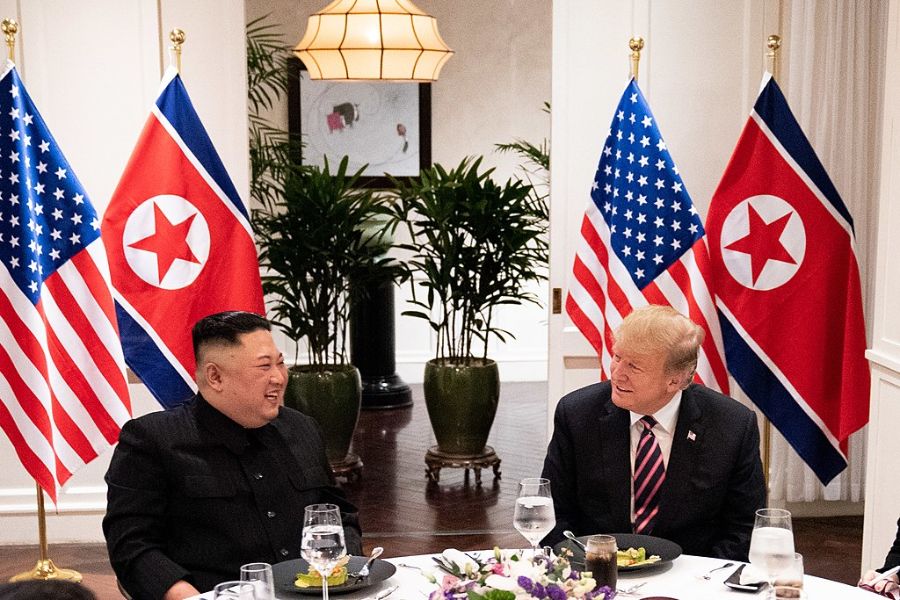
For decades, North Korea’s nuclear program has been viewed through the lens of a nation obsessed with its nuclear arsenal as a definitive end. Yet, a deeper dive into its engagement history reveals a consistent pattern: nuclear advancements are primarily a lever for survival and economic development, not an intrinsic goal. Consider the 1994 Agreed Framework, where North Korea consented to halt its nuclear program in exchange for progress towards full normalization of political and economic relations. Similarly, at the Six-Party Talks in 2005, Pyongyang committed to abandoning nuclear weapons and rejoining international safeguards, contingent on the United States affirming it had “no intention to attack or invade” with nuclear or conventional means. Even at the 2018 summit, Chairman Kim Jong-un reaffirmed a commitment to complete denuclearization, provided security guarantees for peace and prosperity were extended.
These historical precedents underscore that North Korea’s nuclear program is a strategic tool to ensure its long-term survival and foster economic growth, rather than simply seeking de facto acceptance of its nuclear status. This distinction is crucial for oil investors. When Pyongyang perceives its survival or economic aspirations as threatened, it tends to escalate, driving up geopolitical tensions. Conversely, genuine diplomatic pathways offering security and economic benefits could lead to de-escalation. Misjudging these motivations means underestimating the potential for either extreme, directly impacting the perceived risk of instability in a region vital to global energy trade and, by extension, the geopolitical risk premium on crude oil.
Current Market Dynamics and the Geopolitical Risk Premium
The broader oil market currently reflects a complex interplay of forces. As of today, Brent crude trades at $94.64, registering a slight decrease of 0.31% within a day range of $94.42 to $94.91. WTI crude similarly saw a dip to $90.9, down 0.43%, fluctuating between $90.52 and $91.5. Gasoline prices also mirrored this trend, standing at $2.99, down 0.67%. This recent stability, however, masks a significant preceding adjustment: Brent has declined by $13.43, or 12.4%, over the past 14 days, falling from $108.01 on March 26th to $94.58 on April 15th.
This downward trend suggests that other fundamental factors, such as demand outlook or supply expectations, have been dominant. However, the persistent geopolitical tensions emanating from the Korean Peninsula, even without direct supply disruptions, maintain an underlying risk premium. Any unexpected North Korean provocations – be it a missile test or heightened rhetoric – can swiftly inject volatility, causing sharp, albeit often short-lived, price spikes. While the market might not be pricing in immediate catastrophe, the inherent uncertainty contributes to higher insurance costs for shipping, influences investment decisions in regional energy projects, and generally elevates the cost of doing business in a critical global economic hub. Investors must recognize that while current prices might reflect broader market dynamics, the North Korean variable remains a potent, albeit latent, catalyst for sudden shifts.
Investor Focus: Navigating Forecasts Amidst Geopolitical Volatility
OilMarketCap.com readers are keenly focused on understanding the future, frequently asking for a “base-case Brent price forecast for next quarter” and the “consensus 2026 Brent forecast.” Providing accurate forecasts requires not only an understanding of supply-demand fundamentals but also a robust assessment of geopolitical risks. North Korea’s strategic calculus plays a critical, if indirect, role here. If Pyongyang’s priority truly lies in survival and economic development, then any perceived threat to these objectives could trigger escalatory actions, immediately impacting risk premiums and, consequently, crude prices.
Looking ahead, several key events will shape the market’s baseline, against which geopolitical shocks will be measured. The upcoming OPEC+ Joint Ministerial Monitoring Committee (JMMC) meeting on April 18th, followed by the Full Ministerial meeting on April 20th, could signal shifts in production policy that directly influence global supply. Furthermore, the regular API Weekly Crude Inventory reports (April 21st, 28th) and EIA Weekly Petroleum Status Reports (April 22nd, 29th) will provide crucial insights into U.S. supply-demand dynamics. While these events establish the market’s fundamental trajectory, any unexpected North Korean action could serve as a “black swan” event, instantly challenging base-case forecasts by introducing a significant and unpredictable risk premium. Investors must therefore integrate a nuanced understanding of North Korea’s motivations into their forward-looking models, recognizing that the pursuit of economic stability by Pyongyang, or its disruption, can profoundly impact global oil price volatility.
Implications for Long-Term Energy Security and Investment
North Korea’s relentless pursuit of “survival,” encompassing not just regime longevity but also sustained economic development and prosperity, has profound implications for long-term energy security and investment. While North Korea itself is not a major oil producer or consumer in the global scheme, its actions reverberate through the Asia-Pacific region, a cornerstone of global energy trade. Instability in this region directly impacts crucial shipping lanes, potentially driving up insurance costs for tankers and disrupting the timely delivery of crude and refined products to major demand centers, including the “Chinese tea-pot refineries” that our readers often inquire about, and influencing “Asian LNG spot prices.”
For investors, this means that North Korean geopolitical developments are far from peripheral. A “bad deal” that fails to address Pyongyang’s fundamental needs for security and economic progress could lead to a cycle of renewed provocations, heightened regional tensions, and a sustained elevation of the geopolitical risk premium across the energy complex. Conversely, a diplomatic breakthrough that genuinely addresses North Korea’s survival and development needs could foster greater regional stability, potentially easing risk premiums and encouraging long-term investment in energy infrastructure and trade routes. Savvy investors must therefore monitor North Korea’s strategic trajectory not just as a political headline, but as a critical factor influencing the long-term risk and return profile of their energy portfolios.