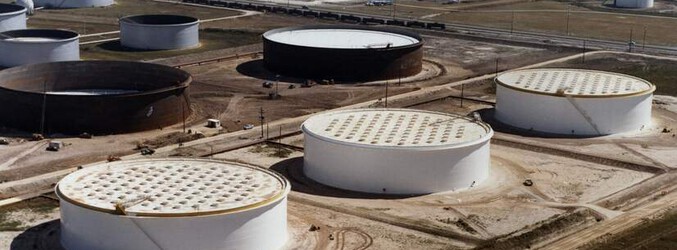
The U.S. Department of Energy (DOE) has once again intervened in volatile global crude markets, announcing the loan of 8.48 million barrels (MMbbl) from the Strategic Petroleum Reserve (SPR) to four key industry players: Gunvor USA, Phillips 66, Trafigura Trading, and Macquarie Commodities Trading. This latest strategic release, part of a broader effort to stabilize oil prices amidst ongoing geopolitical tensions and supply concerns related to the conflict with Iran, signals a continued proactive stance by the U.S. government. While designed to provide a short-term buffer, investors must weigh these tactical maneuvers against the backdrop of persistent supply-demand imbalances, escalating global risks, and a dynamic production landscape. Today’s market reaction, with Brent crude surging, underscores the deep sensitivity of prices to perceived supply shifts, even as the longer-term outlook remains complex and multi-faceted.
Strategic Reserves Deployed: The Mechanics of Market Stability
This 8.48 MMbbl allocation represents the second tranche of emergency crude releases, following an initial round last month where approximately 45.2 MMbbl were lifted by companies, roughly half of the volume initially offered. The DOE had made up to 10 MMbbl available in this particular offering, indicating a measured, targeted approach to market intervention. Importantly, these are structured as loans rather than outright sales. Recipient companies are obligated to return the borrowed crude volumes, plus an additional premium in barrels, ensuring no direct cost to taxpayers while supporting market liquidity. This mechanism aims to temporarily augment supply without permanently depleting national reserves, though the SPR currently holds around 413 MMbbl, a level not seen since the mid-1980s.
Looking ahead, the DOE is not slowing its pace, having already announced a third offering of 30 MMbbl of sweet crude from the West Hackberry storage site in Louisiana, with bids anticipated in the coming days. This continuous deployment is part of a much larger, coordinated international strategy. The U.S. government plans to release up to 172 MMbbl from the SPR through 2027, contributing to a global coordinated release of approximately 400 MMbbl by members of the International Energy Agency (IEA). Such significant, multi-year commitments highlight the perceived gravity of the current supply environment, driven largely by geopolitical disruptions impacting key export routes.
Geopolitical Headwinds and Crude Volatility: A Price Snapshot
The decision to tap the SPR comes at a critical juncture for global oil markets, which remain highly susceptible to supply disruptions stemming from the ongoing conflict in the Middle East. These tensions have constrained crucial shipping lanes and fueled elevated price levels. As of today, Brent Crude trades at $95.48 per barrel, marking a significant 5.64% increase on the day, demonstrating the market’s immediate sensitivity to supply-side news and geopolitical shifts. Similarly, WTI Crude has climbed to $87.32 per barrel, up 5.73%, reflecting a broad-based rally in the crude complex. Retail gasoline prices are also feeling the pressure, with average prices at $3.04 per gallon, up 3.75%.
While today’s session shows a strong upward momentum, it’s crucial for investors to place this in recent context. Our proprietary market data reveals a notable correction in the preceding two weeks, with Brent crude having fallen by nearly 20% from a high of $112.78 on March 30th to $90.38 just three days ago on April 17th. This sharp rebound today, despite the SPR release, underscores the persistent underlying bullish sentiment driven by supply risk premiums. The SPR loans are designed to inject liquidity and calm fears, yet the market’s immediate reaction suggests that while the loans provide a tactical buffer, the fundamental geopolitical risks, particularly those impacting supply routes, continue to command a significant premium.
Navigating Supply-Demand Dynamics: Investor Concerns and Future Catalysts
Our proprietary reader intent data indicates that investors are keenly focused on the immediate trajectory of crude prices, with many asking about the outlook for WTI and broader market trends through the end of 2026. This reflects a broader anxiety about market direction, especially given the current geopolitical landscape. While the SPR is at its lowest level since the mid-1980s, it’s important to contextualize this against the significant increase in U.S. domestic production capacity, positioning the country as the world’s largest oil producer. This duality — strategic reserves being drawn down while domestic output soars — presents a complex picture for supply security.
Looking forward, the market will be closely watching a series of key events in the coming days and weeks. The OPEC+ Joint Ministerial Monitoring Committee (JMMC) meeting today, April 20th, along with the full OPEC+ Ministerial Meeting on April 25th, will be critical. Any signals on production policy from these gatherings will directly impact global supply expectations, potentially amplifying or mitigating the effects of SPR releases. Investors should also pay close attention to the API Weekly Crude Inventory reports on April 21st and 28th, and the EIA Weekly Petroleum Status Reports on April 22nd and 29th, which provide crucial insights into U.S. supply and demand fundamentals. Furthermore, the Baker Hughes Rig Count on April 24th and May 1st will offer a glimpse into future drilling activity and production trends. These events, combined with evolving geopolitical developments, will be paramount in shaping the near-term and long-term price trajectory for crude.
Strategic Implications for Energy Portfolios
For energy investors, the U.S. SPR loan serves as a clear signal of government commitment to mitigating extreme price volatility driven by external shocks. However, it also highlights the fragility of global supply chains in the face of persistent geopolitical risks. While the 8.48 MMbbl loan, and the broader 172 MMbbl planned release by 2027, offer a temporary supply cushion, they do not resolve the underlying tensions that continue to exert upward pressure on prices. The market’s strong positive reaction today, despite the added supply, underscores the deep-seated fear of further disruptions.
Investors should view these strategic releases as a tactical response within a much larger, dynamic energy landscape. The interplay between coordinated reserve releases, OPEC+ production decisions, U.S. shale output, and ongoing geopolitical developments creates a challenging environment for forecasting. Diversification across energy sub-sectors and a keen eye on macroeconomic indicators, alongside these critical supply-side catalysts, will be essential. Understanding how these factors converge and diverge will be key to positioning portfolios effectively in the coming months, as the market continues to grapple with both short-term interventions and long-term structural shifts.