Rakhine Corridor: Geopolitical Volatility and Regional Energy Exposure
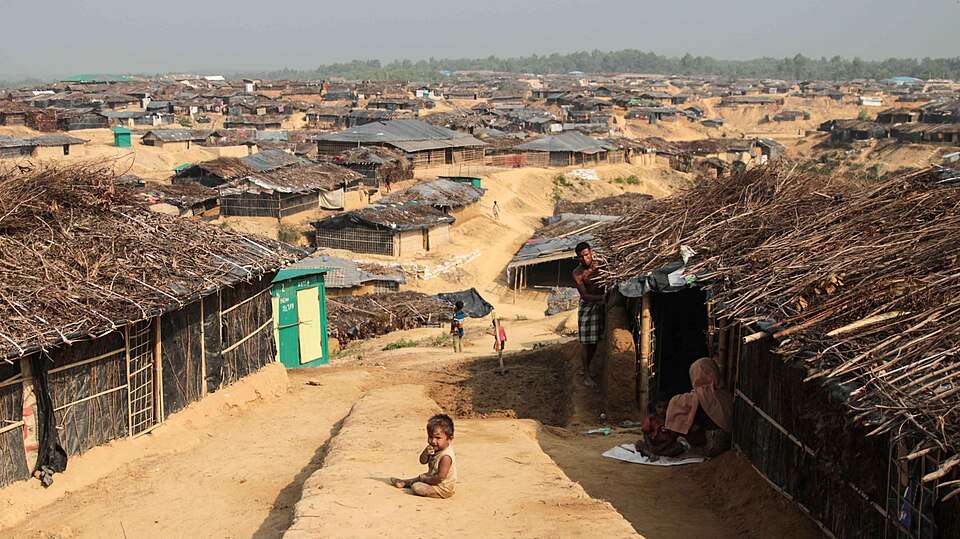
The proposed humanitarian corridor from Bangladesh into Myanmar’s volatile Rakhine State, aimed at facilitating aid and repatriating nearly one million displaced Rohingya, presents a complex web of geopolitical and security risks with significant implications for regional energy markets and investor confidence. As the Rohingya crisis enters its eighth year, the humanitarian imperative clashes directly with the harsh realities of a region engulfed in civil conflict, making this initiative a critical focal point for assessing energy security and investment stability in Southeast Asia.
For energy investors and market watchers, the stability of this strategic corridor, or lack thereof, casts a long shadow over the Bay of Bengal’s energy potential and vital transit routes. Rakhine State is not merely a humanitarian challenge; it is a linchpin in regional energy infrastructure, notably serving as the starting point for the critical China-Myanmar oil and gas pipelines. Any escalation of conflict or expansion of instability in this area directly threatens the reliability of these energy conduits and future resource development.
Bangladesh’s Security Dilemma and Energy Resilience
While driven by humanitarian intent, the prospect of a corridor deeply concerns Dhaka. Bangladesh faces substantial unforeseen consequences, both domestically and internationally. Security threats loom large, including the potential for increased drug trafficking and other cross-border crimes. More critically, armed groups operating within Myanmar, including non-state actors, could exploit such a corridor, drawing Bangladesh into the protracted civil war next door. This scenario could lead to heightened political instability and social unrest within Bangladesh itself, factors that directly impact investor sentiment and the nation’s economic outlook.
Bangladesh, a nation with burgeoning energy demands and a growing reliance on imported fuels, cannot afford disruptions to regional stability. Its own energy security is intrinsically linked to the peace and predictability of its borders. An unstable Rakhine State could complicate potential cross-border energy projects, deter foreign direct investment, and ultimately increase the cost of energy for Bangladeshi consumers and industries. For investors eyeing the country’s promising growth trajectory, these geopolitical headwinds warrant close monitoring, demanding a higher political risk premium on future ventures.
Rakhine: An Epicenter of Conflict and Energy Transit Risk
The concept of a humanitarian corridor, while straightforward in theory, becomes fraught with danger when navigating a region as volatile as Rakhine. This state stands as the epicenter of Myanmar’s ongoing civil war, a highly militarized and unstable territory since the 2021 military coup. Here, ethnic armed groups, most notably the Arakan Army (AA), are locked in active and often brutal conflict with Myanmar’s military junta. Any humanitarian operation, including aid convoys, officials, or repatriating refugees, would be exposed to considerable peril within this war zone.
The energy sector’s exposure here is profound. Rakhine State hosts significant offshore natural gas fields, such as the Shwe field, which supplies both Myanmar and China. The crucial China-Myanmar oil and gas pipelines originate from Kyaukpyu in Rakhine, transporting crude oil from the Middle East and Africa, alongside natural gas, directly to China’s Yunnan province. This infrastructure represents a strategic energy artery for Beijing. Any conflict-induced damage or sustained operational disruption to these pipelines or offshore facilities would not only impact Myanmar’s energy supply but could also send ripples through regional energy markets, affecting crude prices and gas availability.
Major Powers and the Proxy Competition for Influence (and Energy)
The lack of robust international consensus further compounds the risks. China’s deepening involvement in Rakhine, characterized by its consistent support for Myanmar’s junta and its role as a mediator in past repatriation talks, contrasts sharply with Western nations’ backing for humanitarian efforts and their imposition of sanctions against the military regime. This divergence of interests, particularly concerning a region vital for energy transit, could transform the humanitarian corridor into a flashpoint for proxy competition among global powers.
The ongoing civil war in Myanmar is not a localized affair; it involves various regional and global players including China, India, the United States, and European nations. Each holds vested interests in Myanmar, often tied to its strategic location and resource potential. China’s long-standing ties with the military establishment are partly driven by its need to secure its energy supply routes through the China-Myanmar pipelines, bypassing the congested Malacca Strait. Western powers, while advocating for human rights and democracy, also watch regional stability closely, understanding its impact on broader geopolitical balances and investment climates.
India, another significant regional player, has its own strategic interests in Myanmar, including connectivity projects and efforts to counter China’s growing influence. The instability in Rakhine could impede these initiatives and create new security challenges along its own northeastern border. For energy investors, understanding this intricate web of competing interests is paramount. The actions and reactions of these major powers will significantly influence the operational viability and long-term security of any infrastructure, including energy assets, within and around Rakhine State.
Investment Outlook Amidst Rising Geopolitical Risk
The convergence of a protracted humanitarian crisis, an active civil war, and the divergent strategies of global powers creates an exceptionally challenging environment for foreign direct investment, particularly in the energy sector. The high political and security risks translate into elevated operational costs, increased insurance premiums, and a pervasive uncertainty that deters new capital inflow. Projects in the region will face intense scrutiny regarding their environmental, social, and governance (ESG) compliance, adding another layer of complexity for investors.
For those monitoring global oil and gas markets, the situation in Rakhine serves as a potent reminder of how localized conflicts can quickly attain regional, and even global, energy significance. The stability of the China-Myanmar energy corridor is directly linked to the dynamics in Rakhine. Any disruption here could lead to rerouting costs, price volatility, and a reassessment of supply chain resilience across Asia. Investors must carefully evaluate the evolving political risk landscape and factor these geopolitical considerations into their portfolio strategies for energy assets in Southeast Asia.