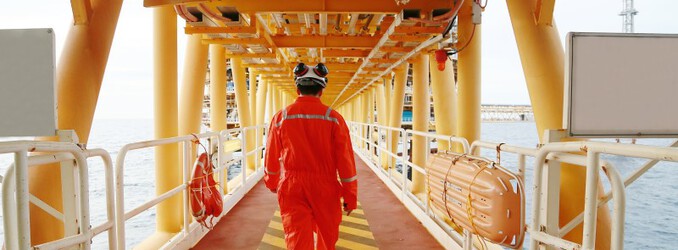
Petralon Energy’s recent achievement in boosting Nigerian crude production by 2,500 barrels per day (bpd) from its Dawes Island field marks a significant milestone for indigenous operators and the broader Nigerian upstream sector. This development not only underscores the country’s drive to maximize value from its vast hydrocarbon resources but also highlights the strategic expansion plays by key African exploration and production (E&P) companies. For investors, this move signals a growing maturity and ambition within the continent’s energy landscape, demanding closer scrutiny of local champions and their capacity to deliver tangible output growth amidst evolving market dynamics.
Petralon’s Dawes Island Boost: A Testament to Indigenous Growth
The successful completion of a new well at the Dawes Island field, situated in Petroleum Prospecting License (PPL) 259, is set to add an immediate 2,500 bpd to Nigeria’s crude output. This increase, a direct result of Petralon Energy’s focused drilling activities, exemplifies the instrumental role indigenous companies are playing in unlocking domestic oil resources. Petralon, through its subsidiary Petralon 54 Limited, has demonstrated a long-term commitment to the Dawes Island asset, investing $25 million in development initiatives between 2014 and 2022. This dedication culminated in the company securing a 100% stake in PPL 259 following the implementation of Nigeria’s Petroleum Industry Act (PIA) in 2021, a legislative framework designed to incentivize local participation and streamline operations. The added production, while modest in global terms, is strategically significant for Nigeria, contributing to overall national output targets and fostering a more diversified upstream ecosystem. Future drilling activities planned by Petralon are expected to further solidify its position and contribute additional volumes, demonstrating a clear growth trajectory for this key indigenous player.
Expanding Horizons: Portfolio Diversification and Strategic Mergers
Petralon’s strategic vision extends well beyond the Dawes Island field, encompassing a robust portfolio of non-operated interests in major deep offshore assets. The company holds stakes in Prime Oil & Gas, which in turn commands an 8% interest in Oil Mining License (OML) 127 and a 16% stake in OML 130. These are not minor holdings; OML 127 hosts the prolific Agbami field, while OML 130 contains the significant Akpo, Egina, and Preowei fields. From the producing Akpo, Egina, and Preowei fields alone, net production averages an impressive 51,000 bpd. Furthermore, these deep offshore assets boast substantial gross 2P reserves, with OML 127 holding 270 million barrels and OML 130 containing 638 million barrels. This diversified exposure to high-value, high-reserve assets provides Petralon with significant revenue generation potential and long-term growth prospects, insulating it from single-asset risks. Investors should note the company’s recent strategic maneuver to strengthen its ownership stakes across the African upstream industry. Petralon now holds an indirect equity interest in Prime Oil & Gas, which recently finalized its merger with Africa Oil Corp. This transaction has resulted in Petralon emerging with a 4.24% stake in the newly expanded entity. This strategic consolidation not only strengthens Petralon’s balance sheet but also grants it exposure to a more diversified portfolio, including deepwater assets in Nigeria alongside ventures in Namibia, South Africa, and Equatorial Guinea, positioning the company for broader regional growth and enhanced capital market visibility.
Navigating Market Dynamics: Crude Prices and Investor Sentiment
The investment thesis for upstream projects like Petralon’s Dawes Island expansion is inherently tied to global crude oil prices and prevailing market sentiment. As of today, Brent Crude trades at $94.77 per barrel, reflecting a slight intraday dip of 0.02% within a day range of $91 to $96.89. WTI Crude mirrors this trend, standing at $90.93 per barrel, down 0.38%. This current pricing, while robust, sits against a backdrop of recent volatility. Over the past 14 days, Brent has seen a notable decline, dropping approximately 8.8% from $102.22 on March 25 to $93.22 on April 14. Such price movements are critical for evaluating the profitability and viability of new production, especially from offshore fields where development costs can be substantial. Investors are keenly focused on where Brent prices are headed, with many asking for a base-case Brent price forecast for the next quarter and the consensus 2026 Brent forecast. While short-term fluctuations are inevitable, the current price environment generally supports continued investment in high-quality assets. Petralon’s expansion in Dawes Island, coupled with its interests in established deepwater fields like Agbami and Egina, suggests a confidence in the medium-to-long-term stability and profitability of Nigerian crude, even as global supply-demand balances remain fluid. The strategic merger with Africa Oil Corp further enhances its ability to withstand price swings through a strengthened balance sheet and a diversified asset base across multiple African jurisdictions.
Upcoming Events and the Forward Outlook for African E&P
Looking ahead, the next few weeks will bring several key events that could influence global oil markets and, by extension, the investment landscape for African E&P companies like Petralon. Critically, the OPEC+ Joint Ministerial Monitoring Committee (JMMC) is scheduled to meet on April 18, followed by the full OPEC+ Ministerial Meeting on April 20. Decisions made during these gatherings regarding production quotas will have a direct impact on crude supply and, consequently, global prices. Any move towards deeper cuts or an extension of current curbs could provide tailwinds for prices, benefiting Petralon’s expanded output and future projects. Conversely, an unexpected shift in policy could introduce new volatility. Beyond OPEC+, weekly data releases such as the Baker Hughes Rig Count on April 17 and April 24, along with the API Weekly Crude Inventory (April 21, April 28) and EIA Weekly Petroleum Status Report (April 22, April 29), will offer real-time insights into drilling activity and inventory levels in key markets. These indicators help shape market sentiment and provide context for global supply-demand dynamics. For Petralon, the focus remains on leveraging Nigeria’s favorable regulatory environment, particularly the PIA, to unlock further value. The company’s participation as a Platinum Partner at the African Energy Week (AEW) in Cape Town from September 29 to October 3, 2025, underscores its commitment to fostering investment and partnerships across the continent. Such platforms are vital for indigenous players to attract capital, share expertise, and align with broader energy transition goals while maximizing hydrocarbon value. The strategic moves by Petralon, from boosting local output to consolidating stakes in major deepwater projects and expanding its regional footprint through mergers, paint a picture of an agile and ambitious company positioned for sustained growth within a dynamic African energy sector.