The global oil and gas landscape is witnessing a notable shift in North Africa, as major international players like BP and Shell signal a determined return to Libya. After more than a decade of civil conflict and underinvestment following the 2011 overthrow of Muammer Gaddafi, the resource-rich nation is once again drawing significant attention from energy giants. These recent agreements, which see BP and Shell enter into MoUs with Libya’s National Oil Corporation (NOC) to assess new opportunities, underscore a calculated bet on the country’s vast untapped potential and its ambitious production targets. For investors monitoring global supply dynamics and seeking long-term growth vectors, Libya’s re-emergence represents a compelling, albeit complex, strategic play that could reshape future energy market equations.
Libya’s Ambitious Resurgence and Major Player Re-entry
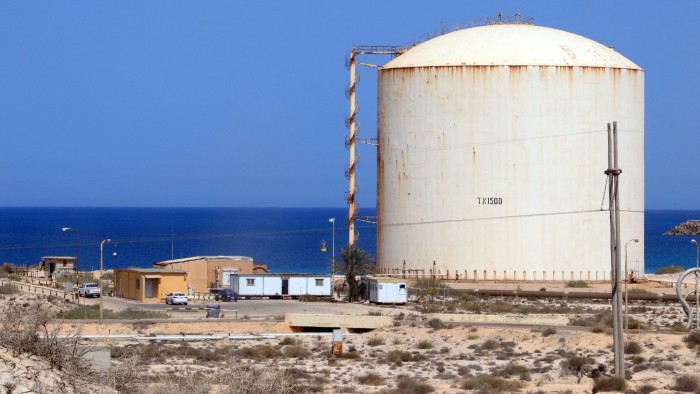
Libya, home to some of Africa’s largest oil and gas reserves, has long been hampered by geopolitical instability. Despite its challenges, it remains a significant producer, currently pumping around 1.3 million barrels per day (b/d). The NOC harbors an ambitious long-standing goal to elevate this output to 2 million b/d, a level that would comfortably surpass its 2006 peak of 1.75 million b/d. This target is now gaining traction, catalyzed by renewed international interest.
BP’s latest move involves signing a memorandum of understanding with NOC to evaluate the redevelopment potential of the giant Sarir and Messla oilfields in the Sirte basin, alongside exploring adjacent areas. This marks a deeper engagement for BP, which had a historical presence in Libya dating back to the 1950s, through nationalization in 1971, and a previous return in 2007 before suspending operations in 2011. While BP sold half its interest in a separate venture to Eni in 2022, its current focus on Sarir and Messla represents a significant new addition to its Libyan portfolio. Simultaneously, Shell has also confirmed an MoU with NOC to study oil and gas production opportunities, including the al-Atshan field. These developments follow the lead of other international firms like Eni, OMV, and Repsol, which resumed exploration activities last year, collectively signaling a broader industry consensus on Libya’s improving operational environment and its vast resource potential.
Market Realities and the Libyan Supply Variable
The timing of this renewed interest is critical, aligning with a global energy market that remains acutely sensitive to supply shifts. As of today, Brent crude futures trade at $94.81, showing resilience with only a marginal 0.02% increase, after experiencing a broader decline of nearly 9% over the past three weeks from $102.22. WTI crude follows at $90.97, down slightly by 0.34%. This price environment, where Brent has shown a daily range between $91 and $96.89, underscores the market’s sensitivity to supply-side news. The potential for Libya to add significant new barrels to the global ledger could act as a crucial stabilizing or even softening factor for crude prices in the medium to long term, influencing the risk premium inherent in current trading.
Investors are consistently building base-case Brent price forecasts for the coming quarters, and the re-emergence of Libyan capacity will necessitate adjustments to these models. The market is constantly weighing factors from demand centers like China, where the operational status of “tea-pot” refineries remains a key indicator for Asian demand, against global supply. A successful ramp-up of Libyan production, even if gradual, would introduce a new, substantial variable into this complex supply-demand equation, potentially easing tightness and impacting long-term price equilibrium.
Forward Outlook: Geopolitical Crossroads and Investor Catalysts
Looking ahead, the successful realization of Libya’s production ambitions hinges on both operational execution and the delicate geopolitical balance within the country. While the nation remains divided between the UN-backed government in the west and a rival administration in the east, the ability of NOC to facilitate these agreements suggests a degree of stability conducive to investment. For energy investors, the next few weeks offer critical insights into global supply management, with several key events on the calendar.
With upcoming critical events like the OPEC+ JMMC meeting on April 18th and the full Ministerial meeting on April 20th, market participants will be closely watching for any signals regarding supply management. The potential for Libya to significantly ramp up production, potentially reaching its 2 million b/d goal, introduces a new variable into these discussions, impacting the delicate supply-demand balance that OPEC+ aims to maintain. Although Libya is an OPEC member, its production has often been exempted from quota cuts due to internal instability, making its output trajectory particularly impactful. Further data points from the API Weekly Crude Inventory (April 21st, 28th) and the EIA Weekly Petroleum Status Report (April 22nd, 29th) will provide ongoing snapshots of global stockpiles, which will eventually reflect any sustained increases in Libyan exports. These reports, alongside the bi-weekly Baker Hughes Rig Count, offer essential context for evaluating the broader health of the industry and the absorption capacity for new supply.
Navigating Risks and Long-Term Value Creation
While the prospect of unlocking Libya’s vast reserves is compelling, investors must acknowledge the inherent risks. The country’s political fragmentation and a history of operational disruptions underscore the need for a cautious, long-term perspective. Despite the current positive momentum, the path to achieving NOC’s ambitious 2 million b/d target will likely be fraught with challenges. The agreements signed by BP and Shell are, at this stage, memoranda of understanding – commitments to evaluate and study, rather than immediate, large-scale investment. This phased approach reflects the prudent stance required when operating in such complex environments.
However, for companies like BP, which have faced investor pressure to boost performance after strategic pivots towards greener energy, a successful foray into Libya’s mature fields and exploration areas offers a significant opportunity to bolster their conventional oil and gas portfolios. Similar to its recent deal in Iraq focusing on Kirkuk, BP’s strategy appears to be leveraging its expertise in redeveloping mature assets to unlock substantial value. For investors willing to tolerate the geopolitical risks, the long-term potential for significant production increases from Libya represents a substantial upside, positioning these companies to capitalize on a critical and under-tapped resource base in the coming decade.