Mexico’s ambitious $20 billion Olmeca Refinery, often hailed as a critical step towards national energy self-sufficiency, is finally ramping up operations along the Gulf coast. Conceived by the previous administration as a “dream come true” to shield the nation from volatile international energy markets and reduce heavy reliance on US imports, this mega-project represents a significant investment in Mexico’s downstream capacity. However, the path to energy independence is fraught with challenges, including substantial budget overruns, critical infrastructure gaps, and a fundamental mismatch with the country’s declining upstream crude production. For investors eyeing the Latin American energy landscape, understanding the intricate dynamics behind Mexico’s refining push, its economic viability, and its alignment with global energy trends is paramount.
The Costly Pursuit of Energy Self-Sufficiency
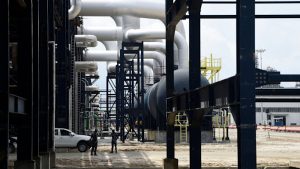
The Olmeca Refinery, now the largest new facility of its kind in the Americas, has been positioned as the cornerstone of Mexico’s energy independence strategy. Yet, the project’s execution has been anything but smooth. Initial estimates were dramatically surpassed, with the final cost spiraling to over $20 billion – more than double the original budget. Furthermore, the refinery, nestled amidst the mangroves, reportedly still lacks essential pipeline connections, raising questions about its operational efficiency and ability to distribute refined products effectively across the nation. Mexico’s motivation for this massive investment stems from a desire to reduce its substantial energy import bill; the nation currently imports roughly half its petrol, one-third of its diesel, and over 60 percent of its natural gas, with the vast majority originating from the United States. This dependency, particularly in a climate of escalating geopolitical tensions and trade disputes, has fueled a strong political will to domesticate fuel production, a policy the current administration has vowed to continue.
Refining Economics in a Volatile Market
The economic rationale for expanding refining capacity is heavily influenced by global crude prices and refined product margins. As of today, Brent crude trades at $94.81 per barrel, showing a marginal daily increase of 0.02%, while WTI crude is at $90.97, down 0.34%. Gasoline futures are up 0.67% to $2.99. These figures provide a snapshot of the current environment in which Olmeca must operate. Over the past two weeks, we’ve observed a notable downtrend in Brent, slipping from $102.22 on March 25th to $93.22 by April 14th – a significant $9 or 8.8% decline. This recent volatility underscores the very price fluctuations Mexico aims to mitigate through domestic refining. While lower crude prices could reduce feedstock costs for Olmeca, the project’s massive capital expenditure and ongoing operational inefficiencies mean it will need sustained favorable refining margins to demonstrate economic viability. Investors must critically assess whether the facility can generate sufficient returns to justify its bloated cost, especially given the ongoing need for substantial imports of crude and natural gas to meet national demand.
Mexico’s Supply-Side Headwinds and Future Implications
A central critique of Mexico’s energy strategy is its apparent “cart before the horse” approach. While significant capital has been poured into downstream refining, the upstream sector faces daunting challenges. The International Energy Agency (IEA) projects that Mexico’s crude production is set to decline more than any other country by 2030. This trajectory suggests Mexico could become a net crude importer for the first time since the 1950s, a stark contradiction to the goal of energy self-sufficiency through increased refining. A refinery, no matter how large, requires a consistent and cost-effective supply of crude feedstock. If domestic crude production continues its decline, Olmeca will increasingly rely on imported crude, potentially negating some of the strategic benefits of domestic refining and exposing Mexico to the same international price risks it sought to avoid. For investors, this fundamental imbalance presents a critical risk factor, questioning the long-term sustainability and strategic value of the refinery in isolation from a robust upstream investment strategy.
Navigating Global Supply: Key Events and Investor Outlook
The broader global energy market context will continue to shape the success and implications of Mexico’s energy strategy. Many investors are currently asking for a base-case Brent price forecast for the next quarter, and a consensus 2026 Brent forecast, recognizing that these price levels will dictate the profitability of refining operations and the cost of Mexico’s remaining fuel imports. Upcoming calendar events will offer crucial insights into global supply-demand dynamics. The OPEC+ Joint Ministerial Monitoring Committee (JMMC) meeting on April 18th, followed by the Full Ministerial Meeting on April 20th, will be closely watched for any changes in production quotas that could impact global crude supply and, consequently, prices. Furthermore, the weekly API and EIA crude inventory reports, scheduled for April 21st, 22nd, 28th, and 29th, will provide real-time indicators of market balance. These events directly influence the economic environment in which Olmeca operates, affecting everything from feedstock costs to the competitive landscape for refined products. Investors should consider how these global supply decisions and inventory trends will interact with Mexico’s domestic refining capacity, particularly in light of its declining crude output and persistent import needs.
Strategic Imperatives and Investor Considerations
Mexico’s $20 billion Olmeca Refinery represents a bold, albeit costly, gambit for energy security. While the political will to reduce foreign dependence is clear, the economic and logistical realities present significant hurdles. For investors, the project’s substantial budget overruns and incomplete infrastructure are red flags. The fundamental challenge of declining domestic crude production against an expanding refining capacity creates a structural dependency on crude imports, potentially undermining the very goal of self-sufficiency. As global crude prices continue to fluctuate and major producers like OPEC+ determine future supply, the profitability and strategic value of Olmeca will remain under intense scrutiny. Investors in the Mexican energy sector, or those assessing broader emerging market energy plays, must look beyond the rhetoric of independence and evaluate the integrated energy strategy – or lack thereof – to accurately assess the long-term prospects and risks associated with Mexico’s energy transition efforts.