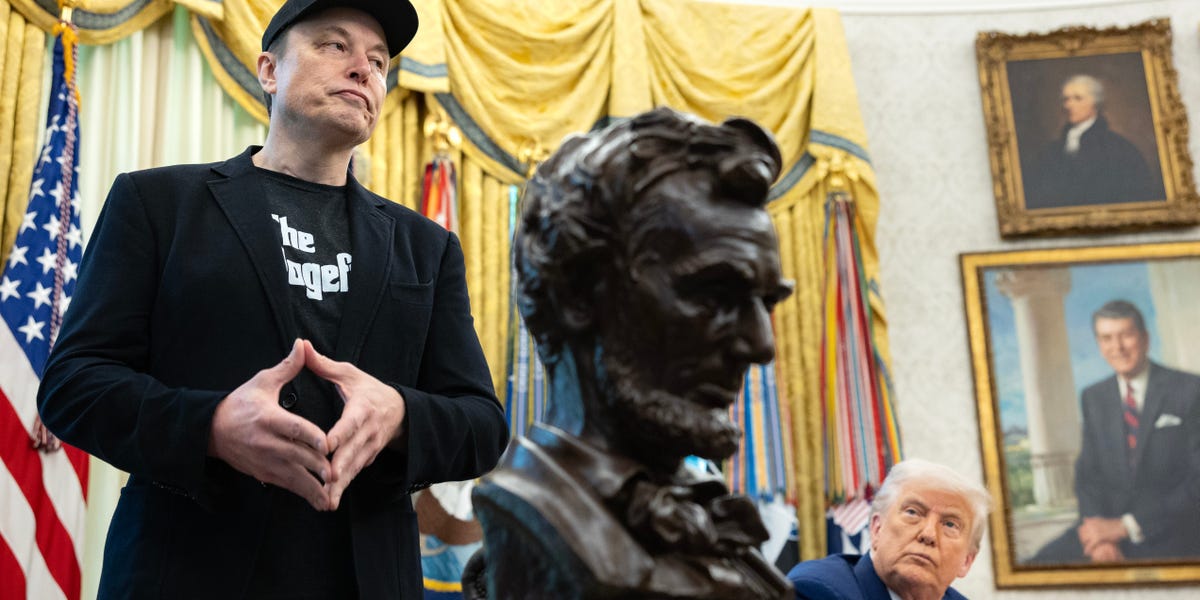
Elon Musk’s latest venture into the political arena, with plans for a new “America Party” aimed at the “80% in the middle,” introduces a fresh layer of uncertainty and potential disruption for the oil and gas sector. Known for his unwavering drive to identify significant problems and engineer solutions regardless of the odds, Musk’s “playbook” has historically upended established industries. From electric vehicles with Tesla to commercial space travel with SpaceX and even infrastructure with The Boring Company, his ventures often challenge the status quo. Now, as he turns his disruptive gaze towards the two-party system, oil and gas investors must consider how this new political variable could impact future energy policy, regulatory frameworks, and market stability.
The Disruptor’s Political Playbook and Energy Policy
Musk’s foray into politics is consistent with his pattern of identifying a perceived systemic failure – in this case, the political impasse in the United States – and attempting to fix it with a novel, often unconventional, approach. His stated aim to represent the political middle and break gridlock could manifest in several ways that directly affect energy policy. Historically, energy policy has been a battleground between entrenched ideological positions, leading to regulatory swings and investment uncertainty. A political force advocating for pragmatic, middle-ground solutions, however long a shot it may be, could either stabilize policy by fostering compromise or introduce entirely new, unpredictable shifts. For instance, Musk has been critical of excessive government spending; a party focused on fiscal prudence could scrutinize energy subsidies, infrastructure projects, or even the funding mechanisms for renewable energy initiatives, thereby indirectly influencing the competitive landscape for traditional oil and gas.
Navigating Market Realities Amidst Policy Uncertainty
The potential for policy disruption arrives at a time when energy markets are already exhibiting dynamic shifts. As of today, Brent crude trades at $94.81, showing a marginal daily gain of 0.02%, within a day range of $91 to $96.89. WTI crude, meanwhile, is at $90.97, down 0.34%, fluctuating between $86.96 and $93.3. Gasoline prices stand at $2.99, up 0.67%. These daily movements are part of a broader trend; our proprietary data indicates Brent crude has seen a notable decline over the past 14 days, falling from $102.22 on March 25th to $93.22 on April 14th – a significant drop of nearly 8.8%. This volatility underscores the importance of stable policy frameworks. An emergent political party, even if a long shot, injecting new dynamics into policy debates around carbon pricing, environmental regulations, or domestic production incentives, could exacerbate price volatility or create unexpected tailwinds or headwinds for different segments of the oil and gas value chain. Investors must now factor in not just traditional supply/demand fundamentals and geopolitical risks, but also the potential for policy shifts driven by a non-traditional political agenda.
Investor Focus: Forecasting in a New Political Climate
Our proprietary intent data reveals that investors are actively seeking clarity, with prominent questions focusing on base-case Brent price forecasts for the next quarter and consensus 2026 Brent forecasts. This heightened interest in forward-looking price discovery highlights the inherent challenges of long-term planning in the current environment. The introduction of a “Musk playbook” in politics, with its potential for disruptive problem-solving, adds another layer of complexity to these forecasts. Will a new political force push for an accelerated energy transition, or will it advocate for a more technology-agnostic approach that could benefit natural gas as a bridge fuel? These are critical questions for investors. Against this backdrop, several key upcoming energy events bear close watching. The OPEC+ Joint Ministerial Monitoring Committee (JMMC) meeting on April 18th, followed by the Full Ministerial OPEC+ Meeting on April 20th, will provide crucial signals on global supply strategy. Additionally, the weekly API Crude Inventory reports (April 21st, April 28th) and EIA Weekly Petroleum Status Reports (April 22nd, April 29th) will offer insights into U.S. supply and demand dynamics. Any hints of future policy direction, even from a nascent political movement, could amplify or dampen the impact of these traditional market catalysts.
The Long Shadow of a “Long Shot”
While history shows the immense difficulty of breaking the two-party system – Theodore Roosevelt’s Progressive Party garnered 27% in 1912, and Ross Perot took 19% in 1992 – Musk’s relentless pursuit of “important enough” challenges cannot be dismissed lightly. His track record demonstrates a unique ability to capture public imagination and mobilize resources towards ambitious goals. For the oil and gas sector, even if his political party doesn’t immediately achieve widespread electoral success, the mere presence of a highly visible, disruptive figure advocating for a new political direction could shift the Overton window for energy policy discussions. This could lead to increased scrutiny of existing regulations, a push for new technological solutions (e.g., advanced carbon capture and storage), or a re-evaluation of the role of fossil fuels in the national energy mix, potentially moving away from purely ideological stances towards more technologically or economically driven solutions. Investors should therefore monitor the emergence of this new political dynamic not as a distant possibility, but as a subtle yet significant factor influencing the long-term investment landscape for oil and gas.


