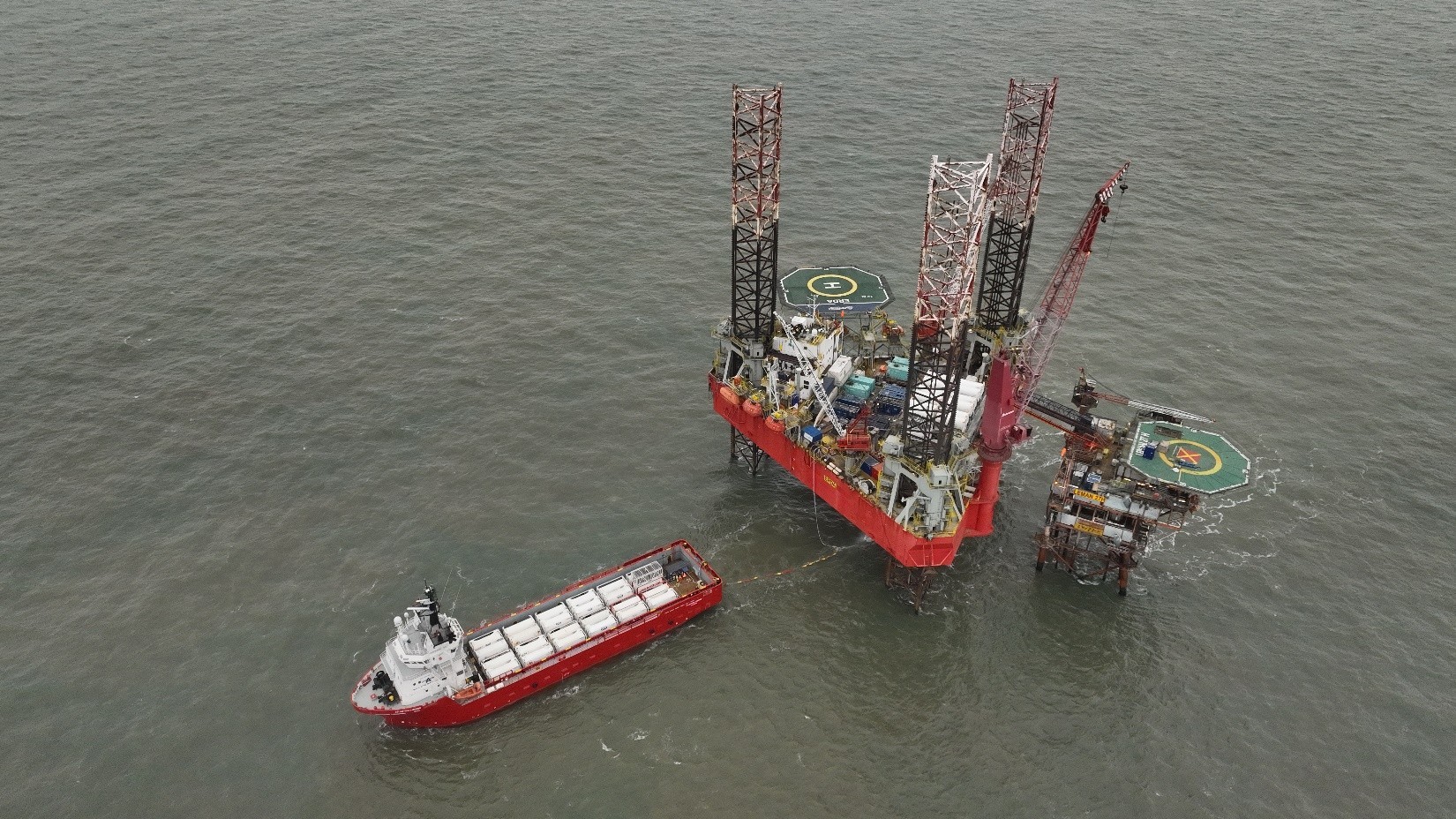
The United Kingdom has marked a pivotal moment in its energy transition journey with the successful completion of its first offshore CO2 injection test for carbon capture and storage (CCS) in the North Sea. This trailblazing project, undertaken at the depleted Leman natural gas reservoir, signals a significant step forward for the Poseidon CCS joint venture and the broader decarbonization efforts of the global oil and gas industry. For investors navigating a complex energy landscape, this development offers a compelling look into how legacy infrastructure is being repurposed and how innovative technologies are creating new avenues for sustainable value creation within traditional energy portfolios.
The UK’s North Sea: A New Frontier for Carbon Storage
The successful CO2 injection at the Leman gas field, utilizing Petrodec’s ERDA rig – the first in the UK to achieve an approved safety case for CCS operations – represents a landmark achievement. This project, a collaborative effort between Perenco UK, Carbon Catalyst Ltd, and Harbour Energy, demonstrates the tangible progress being made in establishing a viable carbon storage industry. The North Sea, with its vast network of depleted oil and gas reservoirs and extensive existing infrastructure, is uniquely positioned to become a global hub for CCS. The 15 injection cycles and 11 offshore batch refills performed during the test phase provide crucial operational data, validating the technical feasibility and safety protocols required for large-scale carbon sequestration. This repurposing of existing assets not only offers a cost-effective solution for carbon management but also extends the economic life of key energy regions, fostering job creation and technological innovation.
Market Dynamics and the Imperative for Decarbonization
As of today, Brent Crude trades at $94.8, showing a marginal increase of 0.01%, with a daily range between $91 and $96.89. WTI Crude stands at $90.87, down 0.45%, fluctuating between $86.96 and $93.3. While these robust prices reflect ongoing global demand for hydrocarbons, they also underscore the urgent need for effective decarbonization strategies. The 14-day trend for Brent, which saw prices decline from $102.22 on March 25th to $93.22 on April 14th, a drop of approximately $9 or 8.8%, illustrates the inherent volatility in crude markets. This backdrop of strong, yet fluctuating, commodity prices makes the economic viability of CCS projects increasingly attractive. For oil and gas companies, investing in CCS is not merely about environmental compliance; it’s about future-proofing their assets, diversifying revenue streams, and maintaining their social license to operate in an energy system increasingly focused on net-zero targets. The ability to manage emissions from ongoing production becomes a strategic advantage.
Investor Focus: Navigating the Energy Transition Landscape
Our proprietary reader intent data reveals that investors are keenly focused on understanding future market movements, with frequent queries such as “Build a base-case Brent price forecast for next quarter” and “What is the consensus 2026 Brent forecast?” While these short-term and medium-term price outlooks are critical for portfolio positioning, forward-thinking investors are also evaluating how the energy transition will reshape the long-term value proposition of energy companies. Projects like the Poseidon CCS initiative directly address this by offering a pathway for traditional oil and gas firms to evolve. Investing in CCS provides a hedge against future carbon taxes and increasingly stringent environmental regulations, enhancing a company’s ESG profile and potentially unlocking new capital sources. It allows companies to leverage their existing expertise in large-scale industrial projects, reservoir management, and offshore operations, transforming environmental challenges into economic opportunities within their core competencies.
Upcoming Events and the Future of CCS Investment
The energy calendar is packed with events that will shape the near-term oil and gas market, from the Baker Hughes Rig Count reports on April 17th and 24th to the crucial OPEC+ meetings (JMMC on April 18th and Full Ministerial on April 20th). We also anticipate the weekly API Crude Inventory and EIA Petroleum Status Reports on April 21st/22nd and April 28th/29th. While these events directly impact crude supply and demand dynamics, they indirectly influence the capital available and investor sentiment towards nascent technologies like CCS. A stable or upward-trending crude price environment, potentially influenced by OPEC+ decisions or inventory drawdowns, can free up capital for upstream players to allocate towards energy transition projects. As the UK’s first offshore injection test concludes successfully, the focus will now shift to scaling up these operations. Investors should monitor future announcements regarding funding mechanisms, regulatory frameworks, and new project proposals that will build upon this initial success, accelerating the deployment of CCS infrastructure across the North Sea and beyond. The next wave of investment will likely target full-scale project development, driven by clear policy signals and evolving carbon markets.
Safety and Technological Advancements Drive Scalability
A critical, often overlooked, aspect of the Leman project’s success is the meticulous attention to operational safety and the deployment of advanced gas monitoring technology. The project employed specialized gas detection solutions, including the Dräger X-zone for extensive area monitoring and the Dräger X-am 5000 for personal safety, ensuring a safe environment during CO2 transport and injection. This emphasis on preventing CO2 exposure, which poses serious health hazards far before asphyxiation risk, is paramount for building public and investor confidence in CCS. The ability to adapt existing offshore rigs and depleted reservoirs underscores the potential for rapid scalability and cost efficiency. By leveraging proven safety protocols and established offshore operational expertise, the industry can mitigate risks associated with new technologies. This foundational work on safety and engineering precision is essential for attracting the significant capital required to transition from pilot projects to a fully operational, large-scale carbon capture and storage industry capable of making a material impact on global emissions.


