Investors are closely watching developments in northern Mozambique, where French energy giant TotalEnergies is making a determined push to restart its monumental $20 billion liquefied natural gas (LNG) project. Despite acknowledging persistent security risks from a militant insurgency, the Mozambican government, led by President Daniel Chapo, is actively working with private partners to create the necessary conditions for construction to resume.
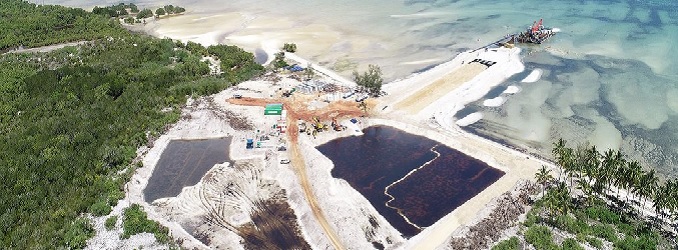
The Mozambique LNG project, situated in the gas-rich Cabo Delgado province, represents a cornerstone for the economic future of one of the world’s poorest nations. TotalEnergies initially halted work, evacuated personnel, and declared force majeure in 2021 following a significant escalation in attacks by militants linked to the Islamic State. This interruption has cast a long shadow over Mozambique’s aspirations to become a major global LNG exporter.
Navigating the Security Tightrope in Cabo Delgado
President Chapo recently conveyed a cautious optimism regarding the security situation in Cabo Delgado. Speaking from Seville, Spain, he noted that conditions are “relatively stable” compared to the preceding four years of intense conflict. However, he stressed that maintaining this stability requires a collective effort from the government and all stakeholders. Critically, Chapo underscored a pragmatic approach, stating that waiting for Cabo Delgado to become a “heaven” before lifting force majeure is not a viable strategy for project resumption.
The initial attempts by Mozambique to quell the violence using private military contractors proved insufficient. The tide began to turn with the deployment of Rwandan troops, mere months after TotalEnergies’ evacuation. These forces have demonstrated an effective response against the insurgency. Further solidifying this commitment, the European Council approved additional funding for the Rwanda Defence Force in November, aimed at bolstering their counter-insurgency operations. Yet, the long-term terms and duration of this critical deployment remain uncertain, adding a layer of complexity to future security planning. President Chapo himself admitted that the timeline for full security normalization is difficult to predict, as it hinges not only on local efforts but also on the broader dynamics of terrorism in the region.
Project Timelines, Financial Backing, and Investor Outlook
Should construction recommence, industry analysts estimate the onshore facility will require another four years to reach completion. The project aims to liquefy and export the vast natural gas reserves discovered off Mozambique’s northeast coast over 15 years ago. To date, only one floating LNG plant, operated by Italy’s Eni SpA, has successfully come online, underscoring the challenges and opportunities in this frontier energy market. Furthermore, investors are keenly awaiting a final investment decision (FID) on ExxonMobil’s ambitious $27 billion Rovuma LNG project, anticipated next year, which would further unlock Mozambique’s deepwater gas potential.
The prolonged delay in restarting TotalEnergies’ project has necessitated the renewal of critical financing agreements with various lenders. A significant milestone was achieved in March when the US Export-Import Bank approved a substantial $4.7 billion loan. This represents the single largest component of the project’s funding package and serves as a crucial signal of confidence for the eventual restart. TotalEnergies CEO Patrick Pouyanne affirmed in a recent interview that despite the pause in physical construction, engineering work has continued unabated. This ongoing progress positions the company to potentially commence LNG production by 2029, assuming a timely resumption of site activities.
The Path Ahead: Weighing Risk Against Transformative Potential
The Mozambican government is unequivocally pushing for a rapid resumption of work on the TotalEnergies project. They are actively evaluating various options to ensure adequate security, though officials acknowledge that no single solution offers guaranteed success. President Chapo expressed confidence that TotalEnergies will ultimately lift its force majeure declaration once sufficient security measures are firmly in place, though he refrained from providing a specific date for this pivotal decision.
For investors, the Mozambique LNG project represents a high-stakes proposition. The immense natural gas reserves offer transformative potential for both TotalEnergies’ portfolio and Mozambique’s national development. However, the persistent threat of insurgency introduces a significant risk premium. The delicate balance between ensuring worker safety, maintaining financial viability, and navigating complex geopolitical dynamics will dictate the project’s future. The commitment from both TotalEnergies and the Mozambican government, backed by international financial support, signals a strong intent to overcome these hurdles. The coming months will be critical in determining if the conditions on the ground can align with these ambitious aspirations, ultimately unlocking billions in future LNG revenues and solidifying Mozambique’s position on the global energy map.