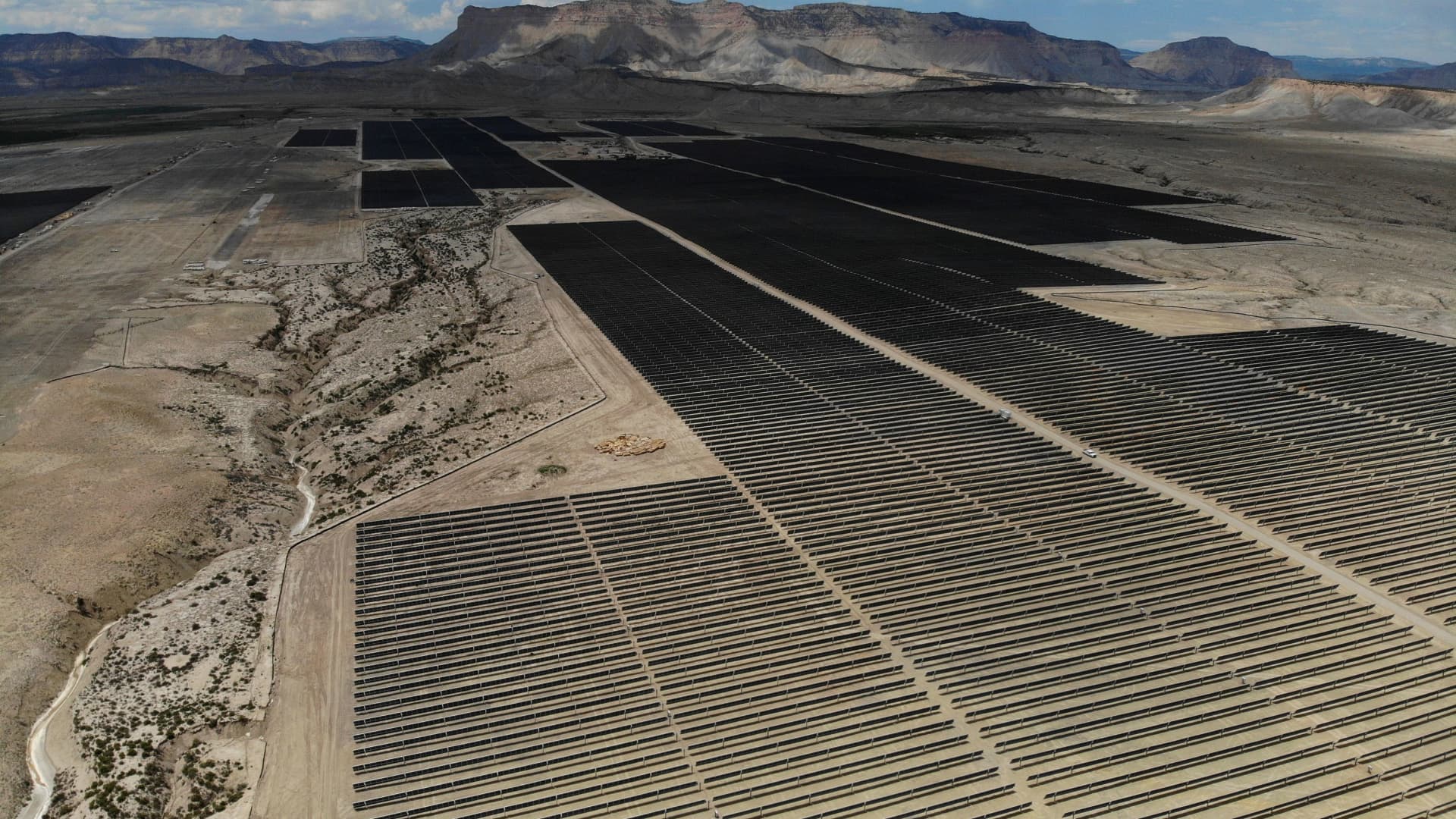
The landscape of energy investment witnessed a significant tremor this week as proposed legislative changes in the United States cast a shadow over the clean energy sector. A new draft bill, currently under consideration in the Senate, introduces a stringent tax on wind and solar projects utilizing Chinese components and drastically accelerates the phase-out of critical tax credits. This policy pivot immediately triggered a sell-off in renewable energy stocks, forcing investors to re-evaluate their portfolios and recalibrate future growth expectations in a sector previously lauded for its robust government support and long-term potential. For stakeholders across the broader energy spectrum, this development signals a complex interplay between policy, geopolitics, and market fundamentals, demanding a nuanced understanding of both immediate impacts and long-term strategic shifts.
The Legislative Hammer: Unpacking the New Clean Energy Policy
The core of the market’s unease stems from two pivotal changes within the latest Senate draft bill. Firstly, it proposes a direct tax on solar and wind projects that enter service after 2027 if they incorporate components manufactured in China. This move aims to bolster domestic manufacturing but introduces immediate cost and supply chain complexities for developers heavily reliant on existing global supply chains. Secondly, and perhaps more impactful, the legislation abruptly terminates the two most significant tax credits—investment and electricity production—for solar and wind projects placed in service after 2027. This marks a stark departure from previous versions, which offered a more flexible framework, allowing projects that merely began construction before 2027 to qualify for these incentives.
The market reaction was swift and pronounced. Major renewable developers and equipment providers saw significant declines in their share prices. NextEra Energy, a prominent force in US renewables, experienced a 4% drop. Companies specializing in solar technology, such as Array Technologies, Enphase, and Nextracker, faced even steeper declines, falling between 4% and 9%. Analysts quickly highlighted the implications, with one Bank of America expert noting the changes “compress project timelines and add significant execution risk.” This sentiment was echoed by Morgan Stanley, which characterized the draft as “more restrictive for most renewable players, moving toward a worst-case outcome for solar and wind.” The accelerated timeline means developers with substantial project pipelines for 2025 now face immense pressure to meet the new deadlines, risking potential delays or even the downsizing of planned investments.
Winners and Losers in the Policy Shift: A Nuanced View
While the initial market reaction was broadly negative for the clean energy sector, a closer look reveals specific segments and companies that appear to navigate the new legislative landscape more favorably. This distinction is crucial for investors seeking to identify resilient opportunities amidst the broader turbulence. The rooftop solar industry, for instance, emerged as a relative winner. Shares of Sunrun climbed over 7%, and SolarEdge traded more than 3% higher following the news. This positive movement is attributed to the legislation’s apparent allowance for tax credits on leased rooftop systems to remain in place through the end of 2027, a provision not explicitly clear in prior drafts.
Another notable outperformer was First Solar, whose shares surged over 7%. This manufacturer benefits from a structure within the legislation that seems to permit it to claim credits for both components and final products, effectively double-dipping on incentives. These specific carve-outs highlight a strategic intent within the policy to favor certain domestic manufacturing capabilities and consumer-facing solutions. The contrasting performance underscores the critical importance of supply chain localization and business model adaptability in the face of evolving policy. While the rhetoric often pits “industries of the past” against “industries of the future,” this legislative draft demonstrates that the future of clean energy investment is becoming increasingly complex, rewarding those with specific operational structures and domestic footprints.
Macro Implications and Evolving Energy Market Dynamics
The legislative headwinds facing the clean energy sector have broader implications for the entire energy market, particularly for traditional oil and gas. As investors frequently ask about the base-case Brent price forecast for the next quarter, this legislative pivot adds a layer of complexity. A slowdown in the deployment of new renewable capacity in the U.S. could imply a prolonged reliance on fossil fuels for electricity generation and transportation, potentially sustaining demand for crude oil and natural gas for longer than previously anticipated.
As of today, Brent Crude trades at $95.21, marking a 0.44% increase within a daily range of $91 to $96.89. WTI Crude stands at $91.76, up 0.53%, oscillating between $86.96 and $93.30. This stability, coupled with a slight uptick, contrasts with the broader Brent trend over the past two weeks, which saw prices decline by $9, or 8.8%, from $102.22 on March 25th to $93.22 on April 14th. If the proposed clean energy legislation indeed curtails renewable growth, it could provide underlying support for crude prices, potentially slowing any further downward trajectory and even contributing to a rebound. Our readers are keenly interested in Chinese refinery runs; a shift in their domestic energy mix due to these tariffs could indirectly impact their crude import requirements, influencing global benchmarks, especially if the U.S. demand profile for fossil fuels remains robust.
The potential for delayed or reduced renewable energy projects further solidifies the role of natural gas as a bridge fuel and could encourage continued investment in oil and gas exploration and production. While the world navigates the energy transition, policy interventions that slow the pace of renewable adoption invariably extend the runway for conventional energy sources, prompting a recalibration of long-term demand models and investment theses across the entire energy spectrum.
Forward Look: Navigating Upcoming Catalysts
For investors, the coming weeks will offer crucial insights into the evolving energy landscape, particularly as these policy shifts ripple through the market. The uncertainty introduced by the clean energy legislation amplifies the significance of scheduled industry events. The upcoming OPEC+ Joint Ministerial Monitoring Committee (JMMC) meeting on April 18th, followed by the Full Ministerial meeting on April 20th, will be under intense scrutiny. With clean energy growth potentially hampered in a major economy like the U.S., the global supply-demand balance for crude oil becomes even more critical. Any shifts in OPEC+’s production policy, whether maintaining current cuts or considering adjustments, could have an outsized impact on prices given the altered outlook for renewable deployment.
Domestically, weekly crude inventory data will provide crucial insights into US supply and demand dynamics. The API Weekly Crude Inventory reports on April 21st and 28th, alongside the EIA Weekly Petroleum Status Reports on April 22nd and 29th, will be closely watched. If alternative energy deployment slows, these reports could become even more sensitive indicators of US petroleum consumption and storage levels. Furthermore, the Baker Hughes Rig Count, released on April 17th and 24th, will offer a barometer of domestic drilling activity. If policy shifts create headwinds for renewables, capital might gradually flow back into conventional oil and gas, potentially boosting rig counts over time. Investors are consistently asking for consensus 2026 Brent forecasts. This legislative development, by potentially extending reliance on fossil fuels, could lead to an upward revision of those forecasts, underscoring the interconnectedness of policy, market data, and investment outlooks in this dynamic sector.