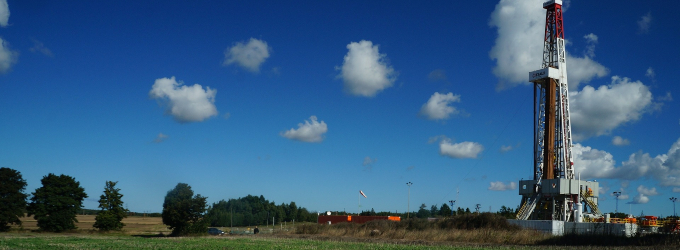
The global energy landscape continues to be a crucible of volatility, with recent geopolitical tensions in the Middle East once again sending shockwaves through crude markets. Yet, for U.S. shale oil producers, the prevailing sentiment is one of cautious restraint rather than an immediate rush to ramp up drilling. Despite calls for increased domestic output following recent military actions, our analysis indicates that financial discipline, driven by investor demands for consistent returns, remains the paramount concern. This strategic pivot marks a significant evolution for an industry once synonymous with aggressive, debt-fueled expansion, now favoring hedging and sustainable cash flow over volume growth.
Market Volatility Fails to Sway Shale’s Resolve
Recent events, including U.S. military strikes in Iran, initially spurred a rally in crude prices, only for that momentum to quickly dissipate. As of today, Brent Crude trades at $90.38, reflecting a significant 9.07% decline within the day, with its range spanning $86.08 to $98.97. West Texas Intermediate (WTI) mirrors this downward pressure, currently priced at $82.59, down 9.41% today, moving between $78.97 and $90.34. This immediate price reversal, following an earlier surge, underscores the inherent instability of the current market environment. Our proprietary data shows a broader trend of price erosion, with Brent crude having fallen from $112.78 on March 30th to $91.87 just yesterday, a substantial 18.5% drop over 14 days.
This pattern of sharp, short-lived price spikes followed by pullbacks has made shale producers wary. They remember being “caught naked” by previous downturns and are now prioritizing the sustainability of prices over fleeting rallies. While the U.S. boasts impressive production capabilities, currently at around 13.4 million barrels per day, and shale assets offer a relatively quick ramp-up time of 6 to 9 months, executives are signaling that sustained price levels over several months, not just days, are necessary to justify significant capital expenditure on new drilling. This cautious approach reflects a maturing industry focused on balancing supply with long-term financial health.
Hedging: The Cornerstone of Financial Discipline
In this volatile climate, hedging has emerged as the preferred strategy for U.S. shale producers. Rather than immediately commit to costly new drilling programs in response to temporary price bumps, companies are actively using hedging contracts to lock in future revenue. This allows them to secure a safety net for their output, mitigating the risk of future price declines and ensuring predictable cash flows for investors. Our reader intent data indicates a strong focus on financial stability, with questions like “How well do you think Repsol will end in April 2026?” reflecting investor demand for consistent performance.
The shift towards hedging is a direct consequence of lessons learned from past cycles, particularly the period before the COVID-19 pandemic when aggressive growth strategies, often debt-funded, left many producers vulnerable to market shocks. Post-pandemic, consolidation and a renewed focus on shareholder returns have fundamentally reshaped the industry. Today, investor demands for dividends, share buybacks, and robust balance sheets outweigh the historical imperative for unbridled production growth. This means capital budgets are not easily swayed by abrupt price movements; instead, they are meticulously planned to deliver consistent returns, making hedging an indispensable tool in managing market exposure.
Navigating Future Supply Signals and Investor Expectations
The coming weeks are packed with critical energy events that will undoubtedly shape market sentiment and, by extension, the strategic decisions of shale producers. This weekend, the OPEC+ Joint Ministerial Monitoring Committee (JMMC) and the full Ministerial meeting will convene, with their decisions on production quotas being closely watched by investors. Our readers are actively seeking insight into “What are OPEC+ current production quotas?” and “What do you predict the price of oil per barrel will be by end of 2026?” These questions highlight the market’s reliance on major producer group actions and the desire for long-term price stability.
Beyond OPEC+, the market will also closely monitor weekly data from the API and EIA on crude inventories (April 21st, 28th for API; April 22nd, 29th for EIA), alongside the Baker Hughes Rig Count (April 24th, May 1st). These reports provide crucial insights into supply and demand dynamics, as well as the actual activity levels of domestic producers. Should these reports signal sustained inventory draws and a tightening market, coupled with a consistent upward trend in crude prices that holds for several months, only then might we see a more pronounced shift in shale producers’ capital allocation towards increased drilling. Until then, the emphasis will remain on financial prudence, leveraging hedging, and delivering shareholder value, aligning with the industry’s evolved mandate for sustainable, profitable operations.