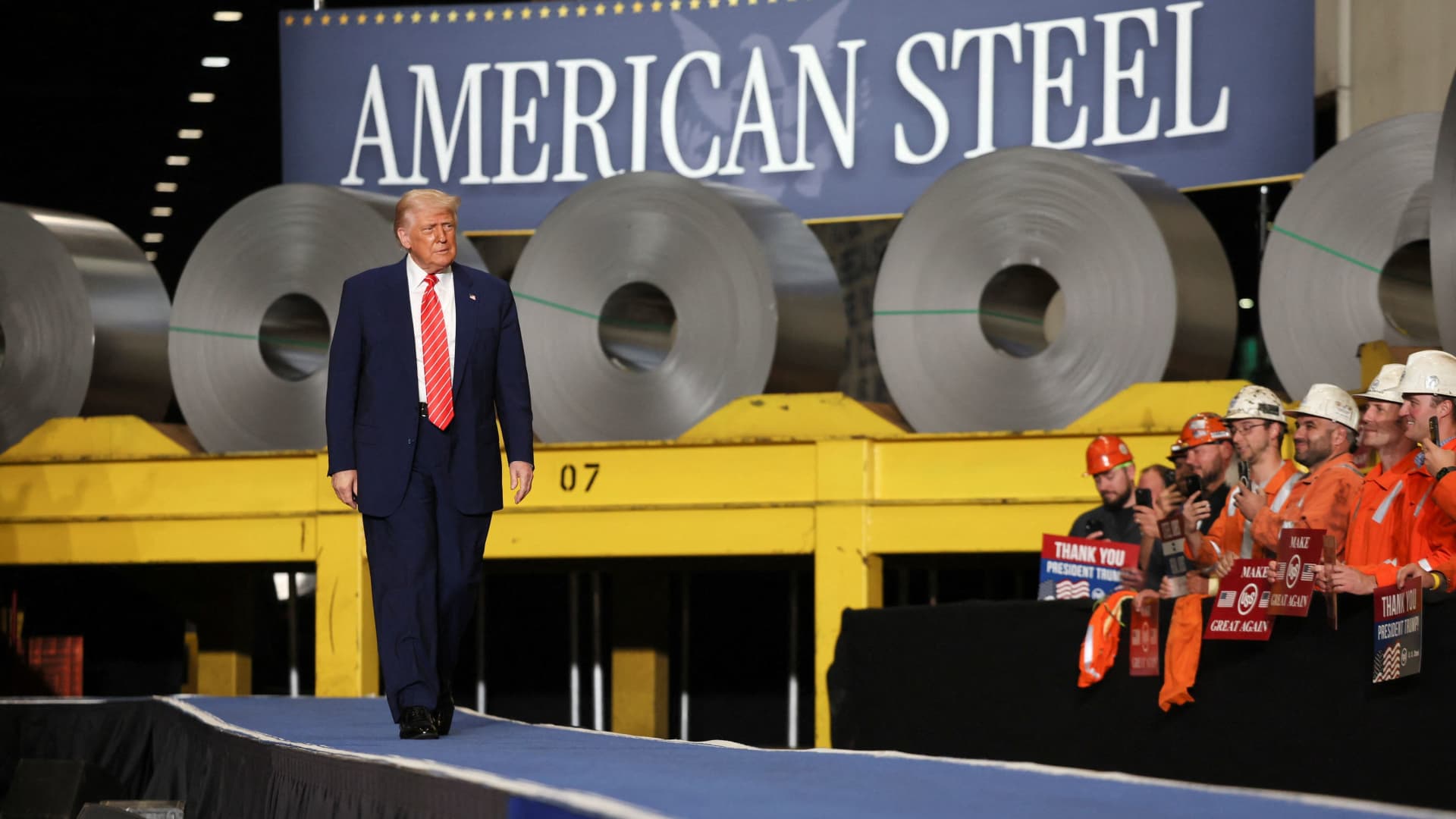
The recent approval of the U.S. Steel merger with Japan’s Nippon Steel, contingent on an unprecedented “golden share” held personally by President Trump and subsequently by the Treasury and Commerce Departments, has sent ripples of uncertainty through the investment community. This innovative, and some argue, highly interventionist, mechanism grants sweeping veto power over critical business decisions. For astute investors, particularly those navigating the complex landscape of oil and gas, this development is more than just a steel industry footnote; it establishes a significant precedent for governmental oversight in sectors deemed vital for national security, with potential implications for energy infrastructure, critical minerals, and even refining capacity.
The “Golden Share” and its Unprecedented Reach
The core of this arrangement is a “golden share” that bestows a unique level of government control over a private enterprise. Initially, this power rests directly with President Trump, a highly unusual personal prerogative for a sitting leader. After his term, the authority transitions to the Treasury and Commerce Departments, acting as federal representatives. This mechanism grants veto power over a broad spectrum of U.S. Steel’s strategic decisions. These include fundamental corporate identity changes like relocating headquarters from Pittsburgh or moving operations outside the U.S. More critically for long-term operational viability, the government can veto the closing, idling, or selling of production locations through 2035, and specifically the Granite City Works until 2027. Furthermore, the share dictates the ability to cut employee base salaries through 2030, and the power to reduce, waive, or delay a significant $10.8 billion in planned capital investments. Even M&A activity within the U.S. targeting competitors or suppliers of U.S. Steel falls under this governmental oversight. This direct and extensive control, as outlined in the SEC filing, represents a profound shift from traditional corporate governance, introducing a new layer of political risk into what would otherwise be purely commercial decisions. While U.S. Steel is now a wholly owned subsidiary of Nippon Steel North America and its shares ceased trading on June 18, with formal delisting expected by June 30, the implications of this regulatory framework extend far beyond this specific deal.
Market Volatility Meets Policy Uncertainty
In an environment already characterized by significant price swings, this new policy precedent adds another layer of complexity for investors. As of today, Brent crude trades at $90.38 per barrel, marking a sharp 9.07% decline within the day, with its range fluctuating from $86.08 to $98.97. Similarly, WTI crude has seen a substantial drop of 9.41% to $82.59, trading between $78.97 and $90.34. This daily volatility follows a significant downturn in the broader market, with Brent crude having fallen from $112.78 on March 30 to $91.87 just yesterday, representing an 18.5% decrease over 14 days. Such pronounced shifts underscore the inherent unpredictability of energy markets. Against this backdrop, investors are actively seeking clarity on future price trajectories, with many asking for predictions on the price of oil per barrel by the end of 2026. The introduction of mechanisms like the “golden share” complicates these forecasts by injecting non-market, political variables into the equation. While not directly impacting crude prices, such interventions could influence long-term investment in critical infrastructure, supply chain resilience, and even the strategic direction of major energy companies, thereby indirectly affecting supply and demand fundamentals down the line. The market’s current downward trend, evident in gasoline prices also dropping to $2.93, makes any additional source of uncertainty a significant concern for portfolio managers.
A Precedent for Strategic Energy Investments?
The “golden share” arrangement, while specific to U.S. Steel, immediately raises questions about its potential application to other sectors deemed critical for national security, including various facets of the energy industry. Investors are keenly observing whether this unprecedented level of governmental oversight could be extended to areas like strategic refining assets, critical energy infrastructure (e.g., pipelines, storage facilities), or even domestic production of critical minerals essential for the energy transition. The precedent set here suggests that future administrations, especially those prioritizing domestic industrial policy and national security, might consider similar mechanisms for foreign acquisitions or even significant domestic corporate changes in industries seen as vital. This adds a new dimension to M&A risk assessments and long-term capital planning for energy companies, particularly those with international ownership or global operations. For global players, a question often asked, such as the outlook for Repsol, might now need to factor in the potential for increased nationalistic industrial policies in key markets. The inherent difficulty in forecasting such political interventions highlights the growing importance of advanced analytical tools and comprehensive data sources, a topic frequently raised by investors seeking to understand the data foundations of their market intelligence platforms.
Navigating Future Catalysts and Regulatory Shifts
Looking ahead, the energy market faces several key catalysts in the coming days that will continue to shape investor sentiment, even as the “golden share” sets a long-term regulatory precedent. This weekend is particularly active, with the OPEC+ Joint Ministerial Monitoring Committee (JMMC) meeting scheduled for April 18, followed by the full OPEC+ Ministerial Meeting on April 19. These gatherings are crucial for understanding global supply intentions, with investors closely watching for any adjustments to current production quotas. Any unexpected decisions could significantly impact crude prices, adding to the market’s existing volatility. Domestically, the weekly API Crude Inventory report on April 21 and the EIA Weekly Petroleum Status Report on April 22 will provide vital insights into U.S. supply and demand dynamics, including inventory levels and refinery utilization. These reports, alongside the Baker Hughes Rig Count on April 24 and again on May 1, offer a granular view of domestic production trends. In a landscape where the government has demonstrated a willingness to exert direct control over corporate decisions, these fundamental data points become even more critical. Investors must not only track traditional supply/demand metrics but also remain highly attuned to the evolving regulatory environment. The “golden share” signals a potential for increased governmental involvement that could influence domestic energy production, refine capacity, or even the strategic direction of companies, making the interpretation of these upcoming market events more complex than ever before.


