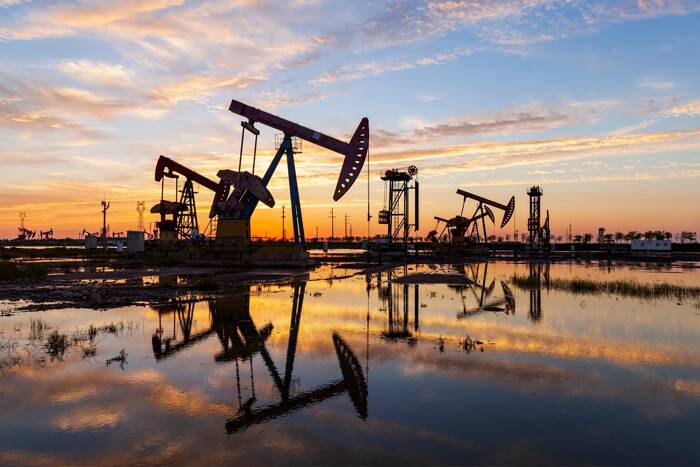
The global oil market stands at a critical juncture, exhibiting a confluence of powerful forces that historically precede significant price escalations. Investors observing the current landscape are confronted with a stark reality: the foundational elements for a sustained, explosive rally in crude prices are firmly in place. This isn’t merely a cyclical upturn; it’s a structural shift driven by a potent combination of intensifying geopolitical instability, persistent inflationary pressures, and an alarming global supply scarcity. The parallels to past periods of dramatic price surges are compelling, suggesting that the path towards $200 oil is becoming increasingly clear, presenting both formidable risks and unparalleled opportunities for the discerning investor.
Geopolitical Flashpoints Echo Past Surges
History offers a potent playbook for understanding how geopolitical events can rapidly reshape crude oil valuations. Consider the period between 2007 and 2008, when escalating military engagements in a critical oil-producing region propelled crude prices from $59 a barrel to over $146 – an astonishing gain of nearly 150% in just 18 months. Similarly, the 2011 NATO-led intervention in Libya erased 1.6 million barrels per day from global supply, triggering a swift climb from $91 to $133 per barrel within a mere three months. These historical precedents underscore the market’s acute sensitivity to supply disruptions stemming from conflict. Today, with threats to critical energy infrastructure mounting in key exporting regions, the potential for similar, or even more severe, supply shocks looms large. The current geopolitical friction is not an isolated incident but part of a broader trend of instability, directly threatening the continuity of global oil flows and laying the groundwork for substantial price appreciation.
Fundamentals Under Strain: The Vanishing Margin of Error
The market’s underlying fundamentals reveal a system operating with virtually no buffer against disruptions. Years of chronic underinvestment in exploration and production have severely constrained global supply capacity, leaving inventories critically low and spare capacity at historically tight levels. This structural fragility means that even minor supply interruptions can have outsized impacts on price. As of today, Brent Crude trades at $90.38, reflecting a significant daily decline of 9.07% from its intraday high of $98.97. WTI Crude mirrors this trend, standing at $82.59, down 9.41% from its daily peak of $90.34. While these daily dips might suggest a calming market, a broader look at the 14-day trend for Brent, which moved from $112.78 on March 30th to $91.87 on April 17th, highlights considerable volatility and a recent retracement. However, this temporary easing occurs against a backdrop of increasing structural scarcity. Gasoline prices, currently at $2.93 and down 5.18% today, also reflect this immediate market movement, but the underlying supply constraints suggest these reprieves may be fleeting. The long-term trajectory points towards a market where demand continues to press against a finite, increasingly difficult-to-expand supply base, making it highly susceptible to upward price shocks.
Inflationary Headwinds and Investor Focus
The resurgence of inflation is not just a monetary phenomenon; it is deeply intertwined with energy costs, forming the second leg of the triple threat pushing oil prices higher. As crude prices climb, the ripple effect on transportation, manufacturing, and consumer goods costs becomes undeniable, reigniting inflationary pressures across the broader economy. This dynamic presents a significant challenge for central banks, who were on the cusp of easing monetary policy. Higher energy prices could force a rethink, potentially extending periods of higher interest rates, which in turn impacts economic growth and investment decisions. Investors are keenly aware of these interconnected forces. Our proprietary data indicates a strong interest in forward price predictions, with many asking about the projected price of oil per barrel by the end of 2026. This reflects a desire to understand the long-term impact of current trends. Furthermore, specific queries about company performance, such as how Repsol might fare by April 2026, highlight investors’ pursuit of resilient opportunities within the energy sector, seeking companies well-positioned to navigate and profit from volatile market conditions and sustained high prices.
Navigating Upcoming Catalysts and Long-Term Scarcity
The immediate future holds several critical events that could serve as catalysts for further market shifts. The upcoming OPEC+ Joint Ministerial Monitoring Committee (JMMC) meeting on April 18th, followed by the Full Ministerial meeting on April 19th, will be paramount. Investors are closely scrutinizing these gatherings, particularly concerning OPEC+ current production quotas, a frequent query among our readership. Any decisions regarding supply adjustments will directly impact global crude availability and market sentiment. Following these, the API Weekly Crude Inventory reports on April 21st and 28th, alongside the EIA Weekly Petroleum Status Reports on April 22nd and 29th, will provide crucial real-time insights into U.S. supply and demand balances. These weekly data points offer granular views into inventory levels, refining activity, and product supplied, which are vital for short-term trading decisions. Furthermore, the Baker Hughes Rig Count on April 24th and May 1st will serve as an indicator of future drilling activity and potential production capacity in North America, offering a glimpse into the industry’s response to current price signals. Given the pervasive underinvestment and tightening supply, these events are not just routine updates; they are potential flashpoints that could confirm or exacerbate the existing scarcity. The convergence of these factors—geopolitical tensions, persistent inflation, and structural supply limitations—creates a compelling narrative for sustained upward pressure on crude oil prices, making the prospect of $200 oil less a speculative fantasy and more a tangible trajectory.


