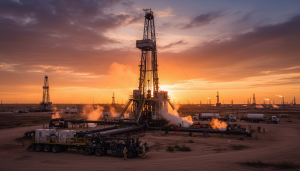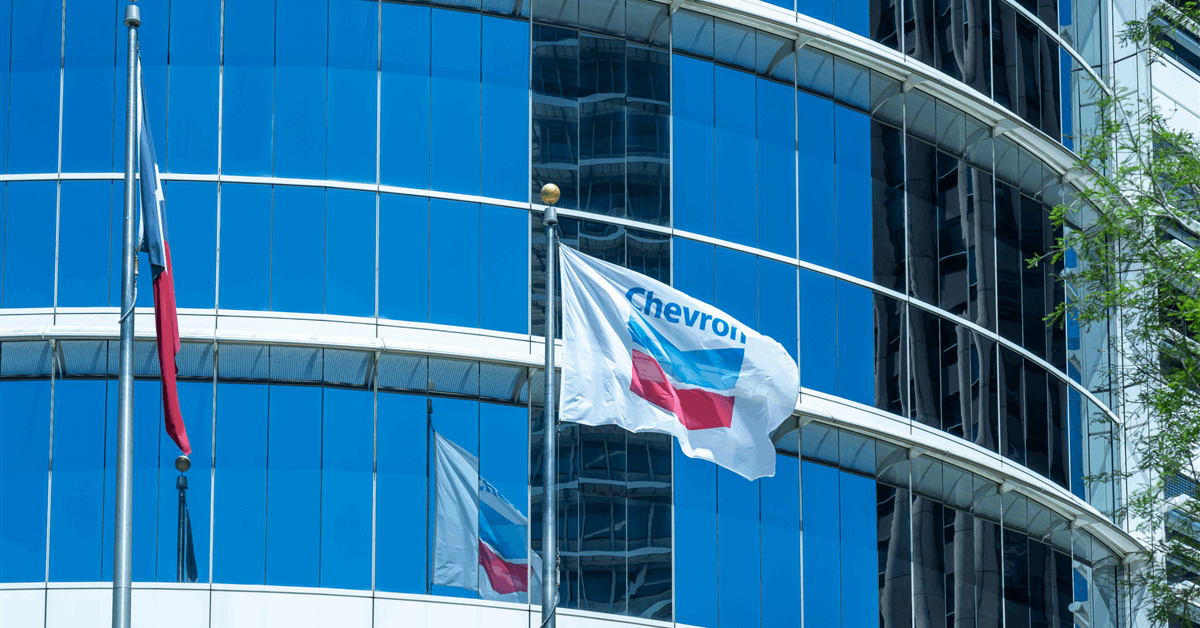
The energy market is currently navigating a complex landscape where significant operational advancements are often overshadowed by escalating geopolitical risks. A prime example is the Chevron Corp-led Leviathan natural gas consortium, which recently announced the completion of a critical third pipeline and platform upgrades, substantially boosting the field’s production capacity to approximately 14 billion cubic meters (Bcm) per year. This technical achievement, aimed at solidifying Israel’s role as a regional gas supplier, arrives paradoxically alongside a mandated production halt due to an emerging conflict with Iran, forcing the partners to declare force majeure. For investors, this creates a fascinating, albeit challenging, scenario: a high-potential asset demonstrating robust long-term growth prospects, yet immediately exposed to acute short-term instability. Understanding this duality is crucial for navigating positions in regional energy plays.
The Leviathan Paradox: Capacity Boost Meets Geopolitical Headwinds
The recent technical milestones at the Leviathan field represent a significant step forward for the project’s operational capabilities. The completion of the third gathering pipeline, a component of the initial Phase 1A, coupled with substantial platform upgrades, has effectively increased the field’s installed capacity to roughly 14 Bcm annually. This expansion was not without its challenges; the construction itself faced delays due to the earlier conflict following the October 2023 Hamas assault on Israel, with work suspended on October 7, 2024, against an original mid-2025 completion target. Yet, the consortium, comprising Chevron (39.66%), NewMed Energy (45.34%), and Ratio Energies (15%), successfully pushed through. However, this hard-won capacity increase has been immediately neutralized by a directive from Israel’s Energy and Infrastructure Ministry, ordering a complete suspension of production amidst the fresh conflict with Iran. This pause disrupts crucial gas supplies to domestic Israeli consumers, as well as export markets in Egypt and Jordan, underscoring the profound impact of regional instability on energy infrastructure, even for a field proven back in 2010 that began production in December 2019.
Navigating Volatility: Market Reaction and Investor Sentiment
The ongoing geopolitical tensions in the Middle East have cast a long shadow over global energy markets, and the Leviathan situation serves as a stark reminder of the immediate risks. While Leviathan primarily impacts natural gas flows, the broader market sentiment is highly sensitive to any disruption in the region. As of today, Brent Crude trades at $93.9 per barrel, reflecting a modest increase of 0.71% within a daily range of $93.52 to $94.21. However, this short-term rebound follows a significant downturn; over the past 14 days, Brent has shed nearly 20% of its value, plummeting from $118.35 on March 31st to $94.86 on April 20th. This sharp correction highlights how quickly market expectations can shift when geopolitical risk premiums are either priced in or suddenly unwound. Many investors are currently grappling with fundamental questions about market direction, with queries signaling intense focus on whether crude prices are set for further declines or a recovery by the end of 2026. The Leviathan pause, while specific to gas, exacerbates concerns about regional supply stability, potentially contributing to a ‘risk-off’ sentiment that could weigh on energy equities across the board, even those not directly impacted by the conflict.
Long-Term Growth Trajectory: Leviathan’s Ambitious Expansion Plans
Despite the immediate operational setback, the Leviathan consortium’s long-term vision for the field remains robust, promising substantial future capacity increases. In 2026, the partners made a $2.36 billion Final Investment Decision (FID) for Stage 1 of Phase 1B, an ambitious expansion targeting an increase in total gas production capacity to approximately 21 Bcm per year. This stage, expected to commence operations in the second half of 2029, involves drilling three additional production wells, integrating supplementary subsea systems, and further expanding the processing capabilities on the existing platform. Looking even further ahead, Stage 2 of Phase 1B aims to boost capacity to an impressive 23 Bcm per year. This subsequent stage, however, is contingent on securing additional regulatory approvals and a new investment agreement for a fourth pipeline between the field and the platform, along with more subsea installations. The consortium anticipates making an FID on Stage 2 in the coming years. For long-term energy investors, these expansion plans paint a picture of significant growth potential, positioning Leviathan as a cornerstone of regional energy supply for decades, assuming geopolitical stability can be re-established.
Key Events on the Horizon: Monitoring Regional Stability and Global Supply
The Leviathan situation underscores the critical need for investors to closely monitor not only specific project developments but also the broader geopolitical and macroeconomic landscape. The immediate future holds several key events that could significantly influence energy markets and, by extension, the outlook for assets like Leviathan once production resumes. The OPEC+ Joint Ministerial Monitoring Committee (JMMC) meeting on April 21st (Tuesday) could signal shifts in global crude supply policy, which, while not directly impacting Leviathan’s gas, will set the tone for overall energy sector confidence. Subsequent data releases, such as the EIA Weekly Petroleum Status Reports on April 22nd (Wednesday) and April 29th (Wednesday), and the API Weekly Crude Inventory reports on April 28th (Tuesday) and May 5th (Tuesday), will provide crucial insights into U.S. supply and demand dynamics. Perhaps most relevant for forward-looking analysis, the EIA Short-Term Energy Outlook (STEO) due on May 2nd (Saturday) will offer updated forecasts for crude and natural gas prices through the end of 2026, directly addressing investor concerns about long-term price trajectory. The resumption of Leviathan’s operations will depend heavily on de-escalation in the region, making every diplomatic development and security update as critical as technical progress reports.