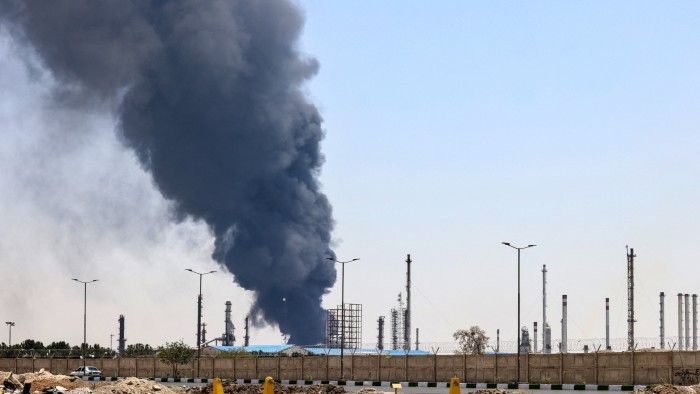
The global oil market is once again grappling with heightened geopolitical tensions in the Middle East, a recurring theme that historically has underpinned significant price volatility. While recent events have generated considerable headlines, the market’s response, at first glance, appears muted. Brent crude prices initially saw a modest increase of around $10 following the onset of the conflict, yet as of today, Brent trades at $95.01, a mere 0.23% gain, hovering within a day range of $91-$96.89. This current pricing suggests a market that has largely absorbed the initial shock, reflecting a belief that immediate supply disruptions are minimal. However, we contend that this calm is deceptive. Our analysis points to a fundamental underestimation of the medium to long-term risks emanating from the region, particularly concerning Iran, suggesting that investors should brace for a persistent geopolitical premium embedded in crude prices for years to come.
The Market’s Short-Sighted View of Geopolitical Risk
Despite the escalation of direct confrontation in the Middle East, the oil market has not exhibited the sustained, sharp rally many might expect. Following an initial push that saw Brent rise by approximately $10, we’ve observed a significant erosion of that premium. Over the past 14 days alone, Brent has trended downwards, falling from $102.22 on March 25th to $93.22 by April 14th, a notable decline of nearly 9%. While Brent currently sits at $95.01, with WTI crude at $91.56, up 0.23% and 0.31% respectively today, this recent trend suggests market participants are pricing in an absence of severe, immediate supply interruptions. A key factor dampening fears has been the accelerated unwinding of production cuts by the OPEC+ group, including major producers like Saudi Arabia and Russia. This strategic move has injected a sense of near-term supply comfort, allowing the market to overlook the deeper, more structural risks. However, for investors asking about a consensus 2026 Brent forecast, our assessment indicates that current market assumptions may be overly optimistic, failing to fully account for the simmering instability.
Iran’s Evolving Internal Dynamics and Long-Term Supply Implications
The immediate focus on whether Iran will directly target shipping in the Strait of Hormuz or US military assets misses the more profound, medium-term implications. While direct disruption of energy flows through the Strait remains a last resort for Iran, the potential for significant domestic political upheaval is a far more plausible and severe risk to global supply. The prospect of an intensified power struggle within Iran, potentially leading to the rise of hardline factions or even broader civil unrest among minority groups like the Kurds and Baloch, carries substantial downside for Iranian oil and gas production. History offers stark warnings: past periods of political instability in OPEC nations, such as the 1979 Iranian revolution, the 1991 Gulf War, the 2002 Venezuelan coup, and the 2011 Libyan civil war, led to multi-year, if not multi-decade, disruptions to oil output. These events highlight a consistent theme: political instability rarely resolves quickly, and its impact on production can linger for years, translating directly into sustained higher oil prices. The risk of Iran fragmenting or descending into a protracted internal conflict is a scenario that, while not immediate, would remove a significant volume of crude from the global market for an extended period, far beyond any short-term price spike.
Navigating Upcoming Supply-Demand Headwinds and OPEC+ Strategy
The potential for long-term Iranian supply disruptions emerges at a critical juncture for global energy markets. The broad OPEC+ alliance is already seeing its spare capacity diminish as members accelerate production increases this summer, aiming to meet recovering demand. This leaves the group with less flexibility to offset any major, sustained supply shock from a key producer. Furthermore, looking beyond the immediate horizon, US crude production is anticipated to peak around 2027, adding another layer of structural constraint to global supply growth. This confluence of factors paints a picture of a market that is becoming increasingly vulnerable to geopolitical disruptions. Investors asking for a base-case Brent price forecast for the next quarter must consider these dynamics. With upcoming calendar events including the Baker Hughes Rig Count on April 17th and 24th, and crucially, the OPEC+ JMMC meeting on April 18th followed by the Full Ministerial meeting on April 20th, the market will gain further insight into current production trends and future supply intentions. Any hawkish rhetoric or unexpected decisions from OPEC+ in light of Mideast tensions could quickly re-inject a risk premium, especially if the group signals a more cautious approach to unwinding cuts, recognizing the fragility of global supply.
Embedding a Durable Geopolitical Premium in Investment Strategies
For astute oil and gas investors, the current market calm presents a strategic opportunity to reassess long-term portfolio positioning. The years of Mideast geopolitical premium, which we anticipate, will not be a fleeting phenomenon but a persistent factor shaping investment returns. This means looking beyond daily price fluctuations, such as the current Brent trading at $95.01 or WTI at $91.56, and understanding the deeper structural shifts at play. Companies with robust balance sheets, diversified asset bases, and resilient operational strategies in less volatile regions may outperform. Exposure to midstream assets, which benefit from sustained high volumes and stable tariffs regardless of crude price volatility, could also be a compelling play. The potential for sustained higher crude prices, driven by an embedded geopolitical risk, will inevitably translate to higher gasoline prices, currently at $2.99 a gallon, impacting consumer spending and broader economic activity. Investors should adjust their long-term Brent price expectations upwards, factoring in not just the threat of immediate outages but the enduring risk of prolonged political instability impacting crucial supply sources. The era of cheap, abundant, and geopolitically unencumbered oil supply is increasingly behind us.