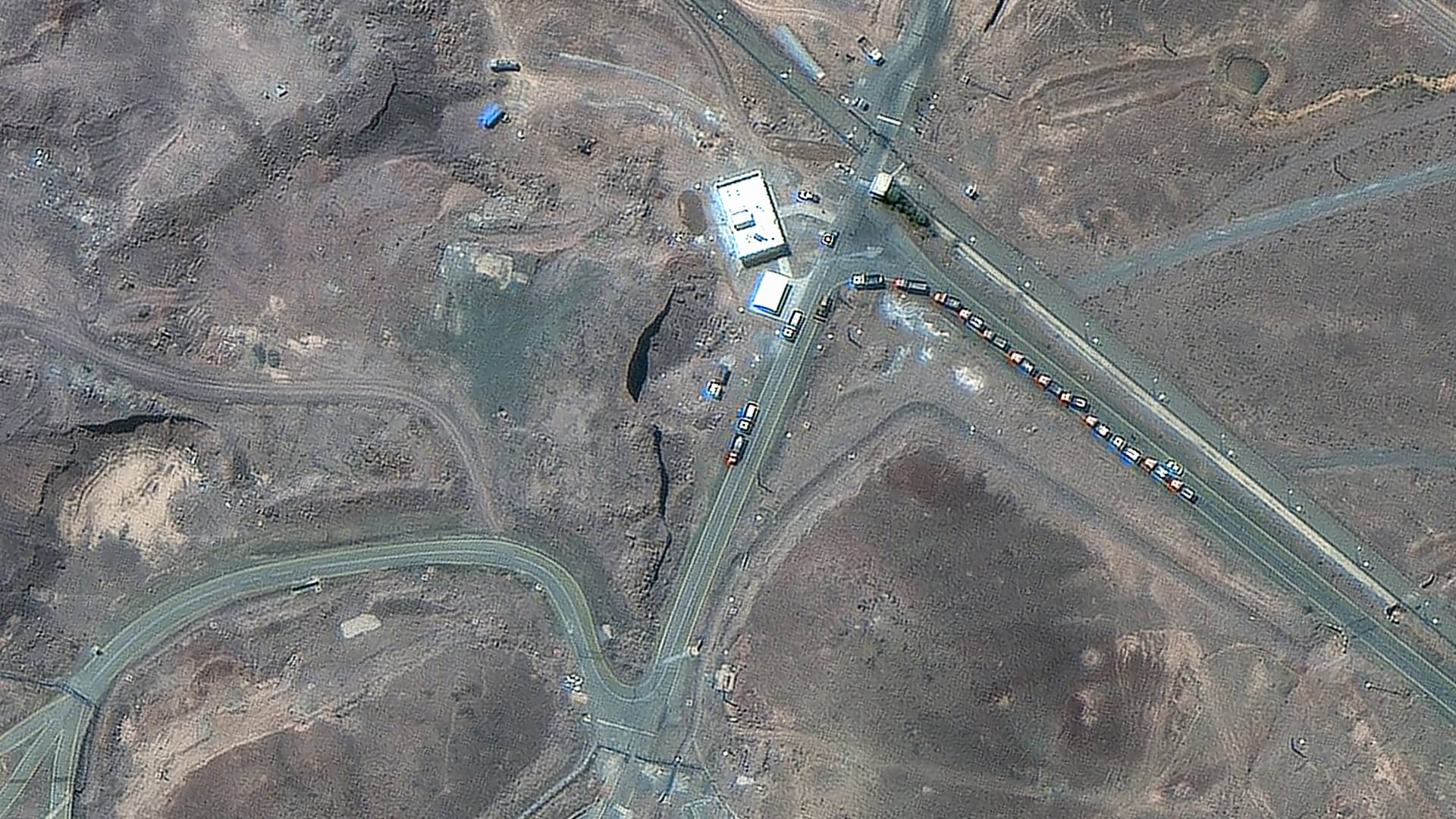
The strategic importance of Iran’s nuclear program has once again thrust the Middle East into the spotlight, following reports of heightened activity at the Fordo facility and subsequent US military strikes. Satellite imagery revealed vehicle movements near the underground complex, a site known for its advanced, deeply reinforced structure south of Tehran. While initial claims of the strikes’ complete success remain unconfirmed by independent bodies like the International Atomic Energy Agency, the escalating rhetoric and military actions underscore a significant uptick in geopolitical risk. For oil and gas investors, this scenario demands a nuanced understanding of how such tensions interact with broader market fundamentals, supply dynamics, and investor sentiment.
Geopolitical Escalation and the Oil Market’s Muted Response
The Fordo nuclear facility, situated 300 feet under a mountain with layers of concrete reinforcement, represents Iran’s most fortified and sophisticated nuclear site. Its operational status and any perceived advancements are therefore critical flashpoints. Reports indicate that Fordo, alongside other key nuclear sites at Natanz and Isfahan, was targeted in recent US military operations. While US President Trump described these actions as a “spectacular military success,” independent assessments, including those from the IAEA, reported no immediate radiation or contamination at the nuclear centers. This informational ambiguity adds a layer of complexity for market participants attempting to price in risk.
Intriguingly, despite this clear escalation in geopolitical tensions, the immediate reaction in crude markets has been counterintuitive. As of today, Brent crude trades around $90.38, reflecting a significant daily decline of over 9% from its opening, with a day range between $86.08 and $98.97. Similarly, WTI crude mirrors this downtrend, posting at $82.59, also down more than 9% for the day, having traded between $78.97 and $90.34. This recent downturn follows a broader bearish trend, with Brent having already shed over 18.5% from its late March high of $112.78 to yesterday’s close near $91.87. This suggests that while the geopolitical flashpoint is undeniable, broader macroeconomic concerns, particularly fears of slowing global demand or a perceived oversupply, are currently exerting a stronger influence on crude prices than an immediate war premium. Investors appear to be weighing potential demand destruction more heavily than immediate supply disruption risk from the Middle East.
Upcoming Supply Dynamics: OPEC+ and Inventory Watch
Against this backdrop of heightened geopolitical risk and a declining price trend, the upcoming energy calendar events become even more critical for investors seeking clarity on future supply dynamics. The market will be keenly watching the OPEC+ Joint Ministerial Monitoring Committee (JMMC) meeting on April 18th, followed swiftly by the full OPEC+ Ministerial Meeting on April 19th. These gatherings are pivotal. Given the current price decline and the simmering tensions in the Middle East, the group’s decisions regarding production quotas will be scrutinized for any signals of a shift in strategy. Will they maintain current cuts, or consider further adjustments to either stabilize prices or pre-empt potential supply disruptions should the geopolitical situation deteriorate further? Any hint of a policy change could significantly impact crude futures.
Beyond OPEC+, demand signals will be provided by key weekly data releases. Investors should closely monitor the API Weekly Crude Inventory reports on April 21st and April 28th, along with the EIA Weekly Petroleum Status Reports on April 22nd and April 29th. These reports offer vital insights into crude and product stock levels, providing a real-time pulse on market rebalancing and demand health in major consuming nations. Persistent builds could reinforce bearish sentiment, while unexpected drawdowns might offer some support. Furthermore, the Baker Hughes Rig Count on April 24th and May 1st will indicate the activity levels of North American producers, offering a forward look at potential future supply from non-OPEC sources, particularly the crucial US shale sector.
Navigating Uncertainty: Investor Concerns and Price Outlook
Our proprietary market intelligence indicates that investors are grappling with significant uncertainty, particularly regarding the future trajectory of crude oil prices. A prevalent question among our readership this week revolves around what to predict for the price of oil per barrel by the end of 2026. This reflects a broader anxiety about market volatility and the impact of geopolitical events on long-term price stability. The current situation, where escalating tensions coexist with a declining market, highlights the difficulty in forecasting. While the immediate focus is on the impact of US-Iran relations, the market is also balancing factors like global economic growth, central bank policies, and the pace of the energy transition.
Another frequently asked question concerns OPEC+’s current production quotas. This direct inquiry underscores the market’s reliance on the cartel’s policy to manage global supply. Any adjustments from the upcoming OPEC+ meetings could directly answer this question and provide a clearer picture of supply intentions. For investors, understanding these quotas is key to assessing the supply-side risks and opportunities. Furthermore, the interest in company-specific performance, such as how well Repsol might end April 2026, illustrates that individual E&P company fundamentals and resilience are paramount in an environment where the broader market direction remains contested. Companies with strong balance sheets, diversified asset bases, and efficient operations are better positioned to weather price fluctuations and geopolitical shocks.
Investment Implications for Oil & Gas Portfolios
For oil and gas investors, the current environment necessitates a cautious yet strategic approach. The rising US-Iran tensions introduce an undeniable layer of geopolitical risk that, while not immediately priced in by the market, could rapidly shift sentiment. Any direct disruption to Middle Eastern oil flows, particularly through critical chokepoints, would likely reintroduce a significant geopolitical risk premium, potentially reversing the current downtrend in crude prices. Conversely, a de-escalation of tensions would allow the market to refocus squarely on demand-side fundamentals and macroeconomic health.
Portfolio managers should consider scenarios ranging from continued diplomatic tension without direct supply disruption, to a more severe escalation. Diversification within energy portfolios, including exposure to companies with strong downstream operations or those less directly exposed to Middle Eastern supply chains, could mitigate risk. Furthermore, a focus on companies with robust free cash flow generation, disciplined capital allocation, and strong environmental, social, and governance (ESG) frameworks will be crucial for long-term resilience. While short-term price movements can be erratic, the underlying strength of an investment rests on sound fundamentals and adaptability to an evolving global energy landscape, where both geopolitical shocks and the energy transition narrative continue to shape opportunity and risk.