Close Menu
  • Home
  • Market News
    • Crude Oil Prices
    • Brent vs WTI
    • Futures & Trading
    • OPEC Announcements
  • Company & Corporate
    • Mergers & Acquisitions
    • Earnings Reports
    • Executive Moves
    • ESG & Sustainability
  • Geopolitical & Global
    • Middle East
    • North America
    • Europe & Russia
    • Asia & China
    • Latin America
  • Supply & Disruption
    • Pipeline Disruptions
    • Refinery Outages
    • Weather Events (hurricanes, floods)
    • Labor Strikes & Protest Movements
  • Policy & Regulation
    • U.S. Energy Policy
    • EU Carbon Targets
    • Emissions Regulations
    • International Trade & Sanctions
  • Tech
    • Energy Transition
    • Hydrogen & LNG
    • Carbon Capture
    • Battery / Storage Tech
  • ESG
    • Climate Commitments
    • Greenwashing News
    • Net-Zero Tracking
    • Institutional Divestments
  • Financial
    • Interest Rates Impact on Oil
    • Inflation + Demand
    • Oil & Stock Correlation
    • Investor Sentiment

Subscribe to Updates

Subscribe to our newsletter and never miss our latest news

Subscribe my Newsletter for New Posts & tips Let's stay updated!

What's Hot

Global oil prices may spike in next few days but calm down in longer term

March 2, 2026

India Boosts LPG Output as Strait of Hormuz Disruptions Threaten Global Energy Supplies, ETEnergyworld

March 2, 2026

Oil Prices Soar Amid Escalating Middle East Conflict

March 2, 2026
Facebook X (Twitter) Instagram Threads
Oil Market Cap – Global Oil & Energy News, Data & Analysis
  • Home
  • Market News
    • Crude Oil Prices
    • Brent vs WTI
    • Futures & Trading
    • OPEC Announcements
  • Company & Corporate
    • Mergers & Acquisitions
    • Earnings Reports
    • Executive Moves
    • ESG & Sustainability
  • Geopolitical & Global
    • Middle East
    • North America
    • Europe & Russia
    • Asia & China
    • Latin America
  • Supply & Disruption
    • Pipeline Disruptions
    • Refinery Outages
    • Weather Events (hurricanes, floods)
    • Labor Strikes & Protest Movements
  • Policy & Regulation
    • U.S. Energy Policy
    • EU Carbon Targets
    • Emissions Regulations
    • International Trade & Sanctions
  • Tech
    • Energy Transition
    • Hydrogen & LNG
    • Carbon Capture
    • Battery / Storage Tech
  • ESG
    • Climate Commitments
    • Greenwashing News
    • Net-Zero Tracking
    • Institutional Divestments
  • Financial
    • Interest Rates Impact on Oil
    • Inflation + Demand
    • Oil & Stock Correlation
    • Investor Sentiment
Oil Market Cap – Global Oil & Energy News, Data & Analysis
Home » Japan more prepared than most for China’s mineral squeeze
Emissions Regulations

Japan more prepared than most for China’s mineral squeeze

omc_adminBy omc_adminJune 20, 2025No Comments6 Mins Read
Share
Facebook Twitter Pinterest Threads Bluesky Copy Link


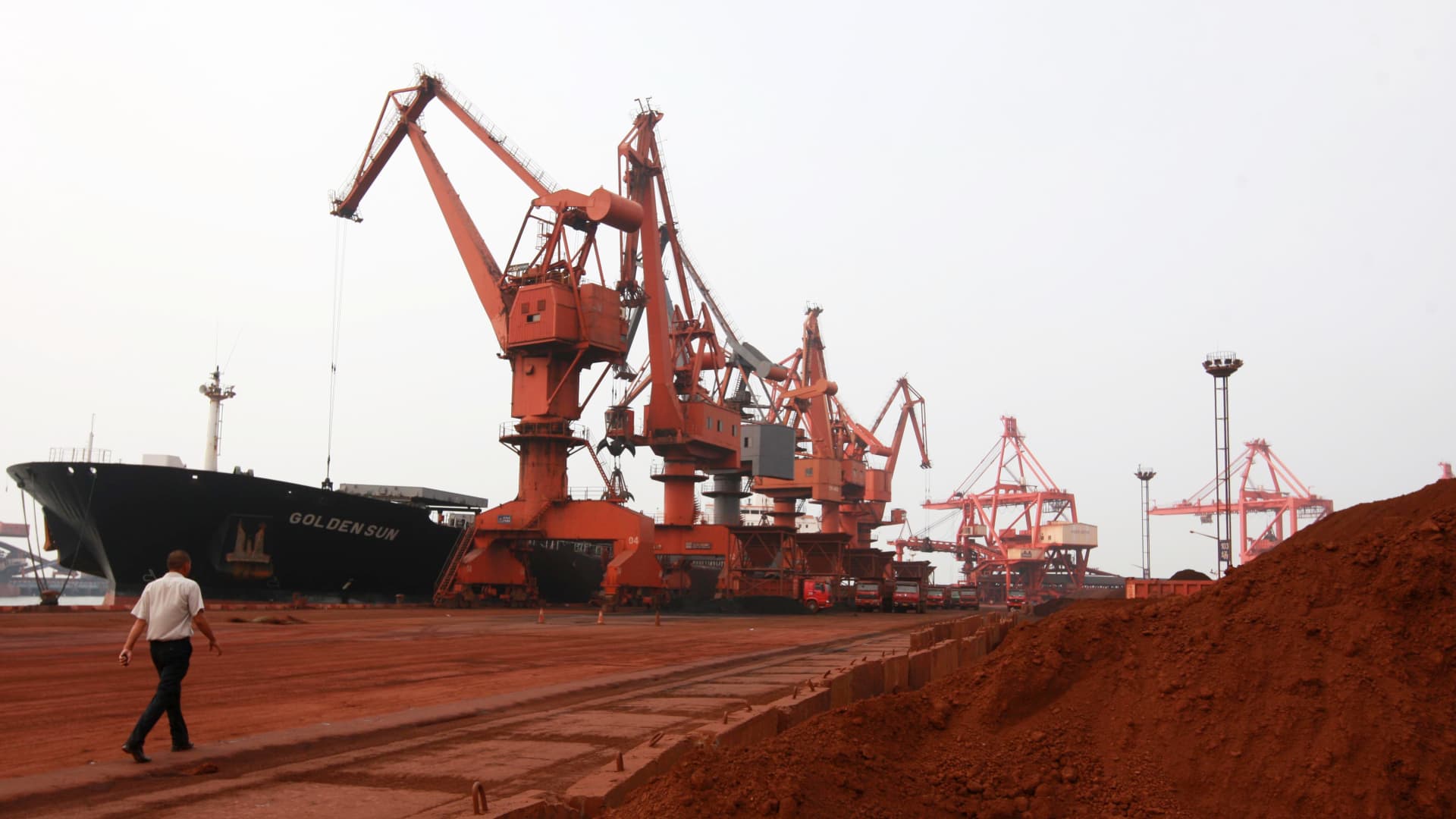
Bulldozer scoop soil containing various rare earth to be loaded on to a ship at a port in Lianyungang, east China’s Jiangsu province on September 5, 2010, for export to Japan.

Str | Afp | Getty Images

Japan has been quietly blazing a trail for supply chain resilience.

Long before China in early April imposed an export ban on several rare earth elements and magnets widely used in the automotive, robotics and defense sectors, Japan became something of a canary in the coal mine for Beijing’s mineral dominance.

The East Asian country was thrust into panic mode in 2010 when China implemented an export ban on rare earths that specifically targeted Tokyo following a heated territorial dispute.

The embargo only lasted for around two months, but it was enough to incentivize the world’s fourth-largest economy to change its approach to supply chain security.

Alongside stockpiling, recycling and promoting alternative technologies, Japan has since invested heavily into non-China rare-earth projects — notably Australia’s Lynas, the world’s largest rare earth producer outside of China.

As a result, Japan’s overall dependence on Chinese rare earths has dropped to below 60% from more than 90% at the time of the incident, according to data provided by Argus Media.

How has Japan reduced its dependence on China for rare earths?

Jonathan Rowntree — CEO of Niron Magnetics, which produces rare earth-free permanent magnets — said the U.S.-based company was born a decade ago following the world’s first rare earth crisis that “had a particularly significant impact on Japan, albeit less so on the rest of the world.”

“Because of that, Japan’s actually much more prepared this time around than most other countries,” Rowntree told CNBC by email.

“They’ve stockpiled more, invested in Lynas, and secured Western rare earth supply to meet some of that demand through a combination of Lynas, the Australian mines, and their Malaysian processing facility,” he added.

Japan reportedly plans to further reduce its reliance on Chinese rare earth imports to below 50% this year. CNBC has reached out to the Japanese government for comment.

A worker prepares to tie up the Japan Oil, Gas and Metals National Corp.’s (JOGMEC) marine resources research vessel, Hakurei, at a pier in Tokyo, Japan, on Wednesday, March 21, 2012.

Bloomberg | Bloomberg | Getty Images

China is the undisputed leader of the critical minerals supply chain, producing nearly 70% of the world’s supply of rare earths from mines and processing almost 90%, which means it is importing these materials from other countries and refining them.

Western officials have repeatedly flagged Beijing’s supply chain dominance as a strategic challenge, particularly given that critical mineral demand is expected to grow exponentially, as the clean energy transition picks up pace.

Japan’s supply chain transformation is seen as both a template for Western nations — and a stark reminder of just how difficult it is to escape China’s critical mineral orbit.

Further to go?

Japan has enjoyed success through Lynas and its international supply chains by not only investing in rare earth mining but also in the facilities needed to process and refine the materials into usable goods, according to Nils Backeberg, founder and director at consultancy Project Blue.

Still, the country has a long way to go to cut its dependency on China in some key areas, Backeberg told CNBC. This is especially true for heavy rare earth elements, which are generally less abundant in the Earth’s crust, elevating their value.

The Lynas Rare Earths Ltd. processing plant in Kalgoorlie, Australia, on Tuesday, Aug. 6, 2024. Lynas Rare Earths explores and mines for rare earth minerals such as cerium and neodymium.

Bloomberg | Bloomberg | Getty Images

“Not a lot of heavy rare earths come out of Lynas, and most of the ones that do actually get sent to China for further refinement,” Backeberg said, adding that China’s latest export ban underscores Beijing’s importance in heavy rare earths.

But Lynas has continued to make progress in this area. Over the past month or so, the company has announced breakthroughs in two heavy rare earths, claiming to have produced them outside China for the first time.

‘A real problem’

China’s latest rare earth export curbs were implemented as part of a response to U.S. President Donald Trump’s tariff increase on Beijing’s products.

“When the tariff war started and tariffs were put on China, the first thing that China did was say ‘we’re going to stop exporting rare earths.’ A few weeks later, we couldn’t manufacture a car in America or in Europe, so it is a real problem,” Eldur Olafsson, CEO of Greenland-focused mining company Amaroq, told CNBC’s “Europe Early Edition” on Thursday.

“No country in the Western world wants one country to corner the market,” Olafsson said.

Western auto industry groups have been hit particularly hard by the export curbs, with many increasingly concerned about production outages.

Ivan Espinosa, chief executive officer of Nissan Motor Co., speaks during an interview at the company’s headquarters in Yokohama, Japan, on Thursday, May 15, 2025.

Bloomberg | Bloomberg | Getty Images

The disruption also extended to Japanese automakers. Suzuki Motor suspended production of its popular Swift car model earlier this month, with local media attributing the step to China’s rare earth export restrictions. A Suzuki Motor spokesperson did not respond to a CNBC request for comment.

Meanwhile, Japanese car giant Nissan said it was exploring ways to minimize the impact of China’s export controls by working with Japan’s government and the Japan Automobile Manufacturers Association.

“We need to continue finding alternatives for the future, keeping flexibility and keeping our options open,” Nissan CEO Ivan Espinosa told CNBC earlier this month.

A push for alternatives

Looking ahead, Niron Magnetics’s Rowntree said an all-encompassing government and industry approach would be needed to tackle China’s mineral dominance, from accelerating permits for domestic mines to investing in new alternatives to provide sufficient magnet supplies.

“Everyone has seen that this supply bottleneck is an issue. We’ve all known for a long time that this could happen, but now it has actually happened,” Rowntree said.

“I think many customers share my view — that this issue is unlikely to disappear and that we need to have alternatives in the West to address it.”

Europe’s domestic production of rare earths is limited. Just like the U.S., the region heavily relies on imports, particularly from China, although plans are underway to develop domestic resources and processing capabilities.

For instance, Belgian chemical group Solvay, which operates the largest rare earths processing plant outside of China in La Rochelle, France, aims to supply 30% of Europe’s processed rare earths demand for permanent magnets by 2030.

Weekly analysis and insights from Asia’s largest economy in your inbox
Subscribe now

Gracelin Baskaran, director of the critical minerals security program at the Center for Strategic and International Studies (CSIS), a Washington-based think tank, said the U.S. and European Union will need to work together to create a market for non-Chinese rare earths.

“The West is creating a nascent rare earths industry outside of China at a time when prices are low and companies are grappling with profitability,” Baskaran told CNBC by email.

Tax credits and subsidies will be “essential” to ensure that non-Chinese projects can build and scale up, Baskaran said, noting that rare earths go into nearly every modern industry.


Source link

Share. Facebook Twitter Pinterest Bluesky Threads Tumblr Telegram Email
omc_admin
  • Website

Related Posts

Experts weigh potential scenarios for oil if Strait of Hormuz closes

March 1, 2026

How attack on Iran could impact global oil market and economy

February 28, 2026

Jack Dorsey made the loudest case yet AI is already replacing jobs

February 27, 2026
Add A Comment
Leave A Reply Cancel Reply

Top Posts

Federal Reserve cuts key rate for first time this year

September 17, 202513 Views

Inflation or jobs: Federal Reserve officials are divided over competing concerns

August 14, 20259 Views

Oil tanker rates to stay strong into 2026 as sanctions remove ships for hire – Oil & Gas 360

December 16, 20258 Views
Don't Miss

Global oil prices may spike in next few days but calm down in longer term

By omc_adminMarch 2, 2026

Kurt Abraham, Editor-in-Chief, World Oil Well, just when you thought that the global oil market…

Oil tankers attacked near Strait of Hormuz as Iran conflict disrupts shipping

March 1, 2026

OPEC+ to boost oil production 206,000 bpd as Iran conflict threatens supply

March 1, 2026

Oil prices forecast to jump despite Opec+ pledge to raise output

March 1, 2026
Top Trending

ESG Today: Week in Review

By omc_adminMarch 1, 2026

Winter getting shorter in 80% of major US cities, new data shows | US weather

By omc_adminFebruary 27, 2026

Trump officials move to kill system that protects US from chemical disasters | US Environmental Protection Agency

By omc_adminFebruary 27, 2026
Most Popular

The 5 Best 65-Inch TVs of 2025

July 3, 202515 Views

AI’s Next Bottleneck Isn’t Just Chips — It’s the Power Grid: Goldman

November 14, 202514 Views

The Layoffs List of 2025: Meta, Microsoft, Block, and More

May 9, 202510 Views
Our Picks

PDVSA, African Energy Chamber sign MoU to boost oil and gas investment

March 1, 2026

Talos Losses Deepen | Rigzone

March 1, 2026

Tankers Halt Near Hormuz After Attacks

February 28, 2026

Subscribe to Updates

Subscribe to our newsletter and never miss our latest news

Subscribe my Newsletter for New Posts & tips Let's stay updated!

Facebook X (Twitter) Instagram Pinterest
  • Home
  • About Us
  • Advertise With Us
  • Contact Us
  • DMCA
  • Privacy Policy
  • Terms & Conditions
© 2026 oilmarketcap. Designed by oilmarketcap.

Type above and press Enter to search. Press Esc to cancel.