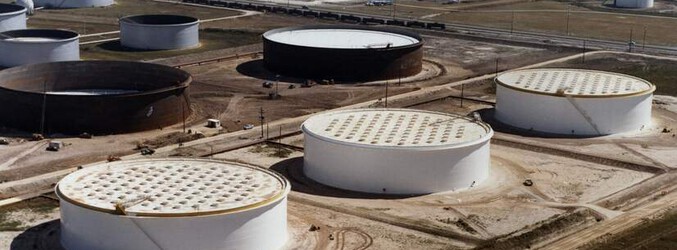
The global oil market is signaling a significant tightening in supply dynamics, underscored by the latest U.S. crude inventory data. Last week saw American crude stockpiles decline by an astounding 11.5 million barrels, marking the steepest draw in nearly a year. This substantial reduction, primarily concentrated in the crucial U.S. Gulf Coast region, indicates robust domestic demand and export activity, even as geopolitical tensions involving Israel and Iran continue to cast a long shadow over global supply stability. For investors, this creates a complex tapestry of market signals, where strong fundamental draws meet elevated geopolitical risk premiums and broader market volatility.
US Crude Stocks Plunge: A Deep Dive into Domestic Tightness
The U.S. Energy Information Administration (EIA) data revealed a dramatic 11.5 million barrel drop in crude inventories for the week ending June 13th. This figure represents the most significant slide since late June 2024, catching many market observers by surprise and firmly pointing to a tighter domestic market. The epicenter of this drawdown was the U.S. Gulf Coast, a pivotal hub for both refining and crude exports, where stockpiles have now reached their lowest levels since December 2023. This regional depletion highlights intense activity, suggesting that available crude is being rapidly processed or shipped out.
The primary drivers behind this massive inventory reduction are two-fold: a surge in demand from U.S. refiners and a noticeable drop in net crude imports. With the summer driving season now in full swing, refiners are ramping up operations to produce increasing amounts of gasoline, feeding a hungry consumer market. Indeed, crude inputs are reported to be just shy of 17 million barrels per day, a strong indicator of refining strength. Concurrently, lower crude imports mean less new supply entering the system, further exacerbating the draw. Robust exports, particularly from the Gulf Coast, have also played a critical role, effectively pulling crude out of storage and into the global market. This combination of strong domestic consumption, high refining activity, and healthy exports paints a bullish picture for U.S. crude fundamentals.
Geopolitical Headwinds and Divergent Price Action
Despite the compelling evidence of tighter U.S. supply, the broader oil market remains acutely focused on geopolitical developments in the Middle East. The escalating confrontation between Israel and Iran introduces an unpredictable layer of risk, with the potential to disrupt significant volumes of global oil supply. Concerns range from potential reductions in exports from Iran, OPEC’s third-largest producer, to threats against the vital Strait of Hormuz, through which a substantial portion of the world’s crude transits. This elevated geopolitical risk premium is a dominant factor influencing global price action.
As of today, Brent crude trades at $90.38 per barrel, reflecting a significant daily decline of 9.07% from its opening, with WTI crude standing at $82.59, down 9.41% over the same period. This sharp daily correction comes despite the strong U.S. inventory data, suggesting that broader risk-off sentiment and profit-taking in response to earlier geopolitical spikes are currently outweighing bullish fundamental signals. Looking at the past two weeks, Brent has seen a notable drop from $112.78 on March 30th to $91.87 yesterday, a decrease of over 18.5%. This price trajectory highlights the market’s extreme sensitivity to both supply fears and the swiftness with which sentiment can shift, making it imperative for investors to evaluate conflicting signals carefully.
Investor Focus: Decoding Future Oil Trajectories
Our proprietary reader intent data offers a clear window into the prevailing concerns of our investor community. This week, queries are heavily skewed towards future market direction, with investors keenly asking, “what do you predict the price of oil per barrel will be by end of 2026?” and “What are OPEC+ current production quotas?” These questions underscore the profound uncertainty that investors face amidst current volatility and the critical role of long-term forecasts and policy decisions in their strategies. While immediate inventory draws signal near-term tightness, investors are looking beyond the horizon, seeking clarity on the sustainability of current price levels and the influence of major producers.
The market’s persistent focus on OPEC+ production quotas is particularly telling. Any adjustments to these quotas, or even signals of compliance challenges, can dramatically alter supply expectations for the coming months and years. Furthermore, the interplay between U.S. shale production, which typically responds to sustained higher prices, and OPEC+’s strategic supply management will be key to shaping future price ceilings and floors. Understanding how these macro forces, alongside geopolitical risks and evolving demand patterns, will converge by the end of 2026 is a primary concern for those positioning their portfolios in the energy sector.
Upcoming Catalysts: Navigating the Next Fortnight of Energy Events
The immediate horizon presents several critical data points and events that could further shape market direction and offer answers to investor questions regarding future supply and pricing. This weekend, the market will be closely watching the OPEC+ Joint Ministerial Monitoring Committee (JMMC) meeting on April 18th, followed by the Full Ministerial meeting on April 19th. Any statements or decisions emerging from these sessions regarding production policy, compliance, or the group’s market outlook will be paramount, directly addressing reader concerns about current quotas and future supply management.
Next week brings renewed focus on U.S. inventory dynamics with the API Weekly Crude Inventory report on April 21st, followed by the official EIA Weekly Petroleum Status Report on April 22nd. These reports will be crucial for validating whether the recent massive 11.5 million barrel draw was an anomaly or the start of a sustained trend of tightening U.S. crude balances. Further insights into the supply side will come from the Baker Hughes Rig Count on April 24th and again on May 1st, providing a pulse on North American drilling activity. These scheduled events represent key watchpoints for investors, offering tangible data and policy signals that will either reinforce or challenge the current narrative of tightening supply amidst geopolitical flux, directly impacting short-to-medium term price discovery for both Brent and WTI crude.