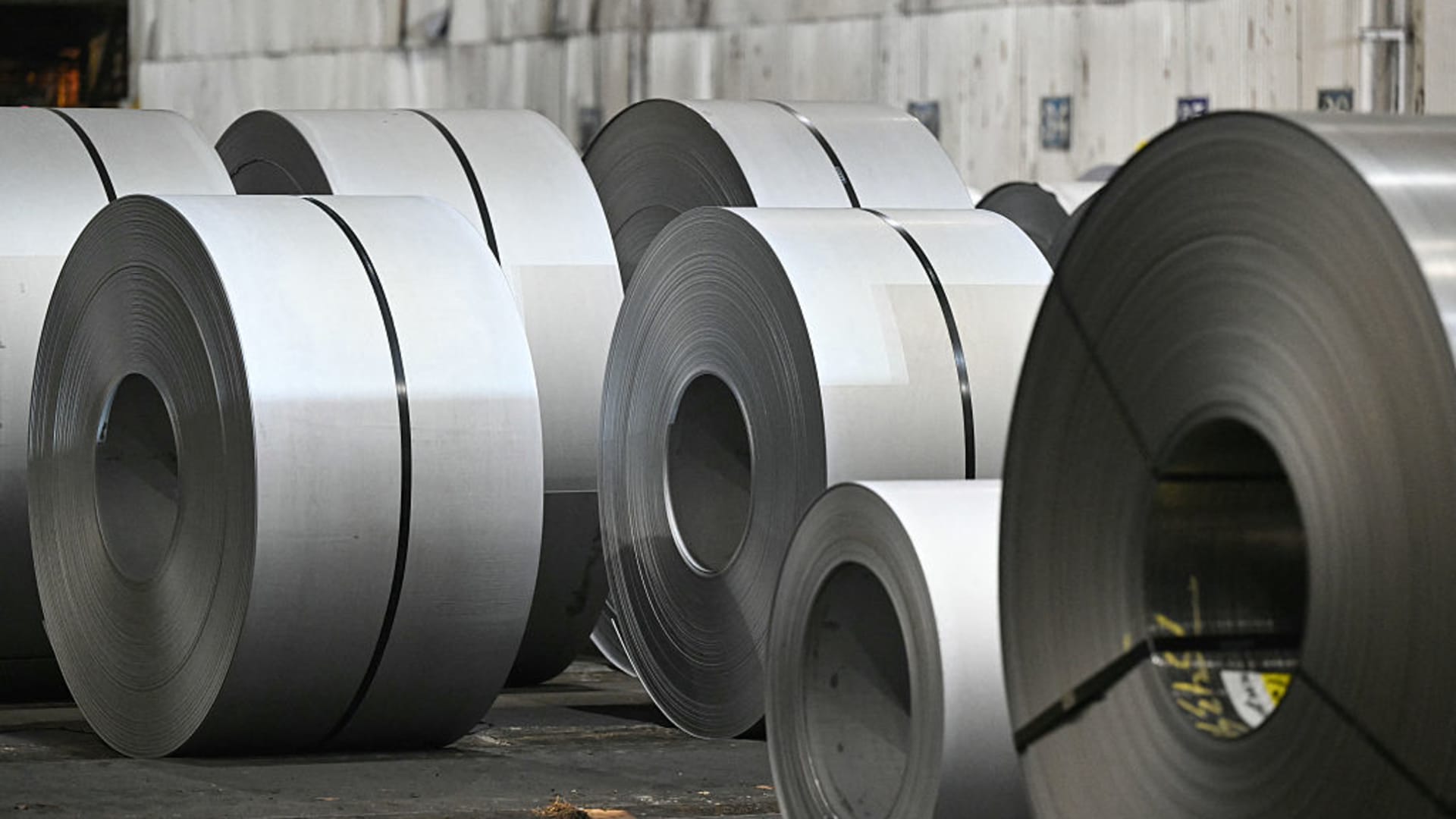
The finalization of Nippon Steel’s acquisition of U.S. Steel, culminating in the latter’s delisting from the New York Stock Exchange this Wednesday, marks a significant shift in the landscape of American heavy industry. While the headlines focus on steel, astute oil and gas investors recognize that such major industrial realignments have profound implications for the energy sector. This transaction, particularly with its unique “golden share” agreement, sets a precedent for government oversight in strategic industries, influencing everything from infrastructure development and material costs to the broader geopolitical considerations that directly impact global energy markets. For our readers, understanding the ripple effects of this deal on supply chains, capital flows, and policy risk is paramount to navigating the complex investment environment ahead.
The Industrial Backbone: Steel’s Role in Energy’s Future
The cessation of U.S. Steel shares trading on Wednesday, following its complete absorption into Nippon Steel North America, signifies more than just a corporate restructuring; it redefines a critical component of the global industrial supply chain. Steel is an indispensable material for the oil and gas industry, forming the backbone of pipelines, drilling rigs, refinery components, and even the structural elements of burgeoning renewable energy projects. Nippon’s commitment to invest $11 billion in U.S. Steel by 2028, including a $1 billion initial outlay for a greenfield project slated for completion post-2028, promises long-term stability and modernization for this essential commodity. This significant capital injection into U.S. steelmaking capacity could lead to more predictable pricing and availability for energy infrastructure projects, potentially mitigating some cost volatility in the coming years.
However, this long-term industrial stability contrasts sharply with the immediate volatility gripping energy markets. As of today, Brent Crude trades at $90.38 per barrel, reflecting a sharp daily downturn of 9.07%, having plunged from an intraday high of $98.97. Similarly, WTI Crude has fallen to $82.59, down 9.41% within the day, touching a low of $78.97. This significant price correction, following a 14-day trend where Brent shed over $20 per barrel from its $112.78 high on March 30th, underscores the dynamic and often unpredictable nature of energy commodity markets. Investors must weigh the benefits of a potentially more stable steel supply chain against the backdrop of fluctuating energy prices, which directly impact the economics of new industrial and energy projects alike.
Geopolitical Interventions and M&A Precedents
The most distinctive feature of this acquisition is the unprecedented “golden share” agreement, granting the U.S. President veto power over key decisions such as changing U.S. Steel’s name or headquarters, moving production or jobs outside the U.S., and certain capital investment reductions. This level of governmental oversight in a cross-border acquisition, particularly after initial opposition from former President Biden and subsequent political maneuvering by President Trump, establishes a powerful precedent. For oil and gas investors, this signals an environment where national security and domestic job protection can heavily influence M&A activities, especially for assets deemed strategically vital. Future cross-border energy deals, particularly those involving critical infrastructure, refining capacity, or advanced energy technologies, could face similar scrutiny and conditions. This added layer of geopolitical risk and potential governmental intervention must now be factored into investment theses for large-scale energy M&A.
Amidst this evolving geopolitical landscape, our proprietary reader intent data reveals a strong focus on understanding the future trajectory of crude oil prices, with many asking about predictions for late 2026. This desire for long-term clarity highlights investor sensitivity to factors that introduce uncertainty. The U.S. Steel deal, by demonstrating a willingness for significant governmental intervention in strategic industries, introduces a new variable into the energy investment equation. Investors must consider how such interventions could impact supply reliability, market access, and ultimately, the long-term price stability they are seeking in the oil and gas sector.
Navigating Supply and Demand: The Energy Market’s Pulse
While the U.S. Steel acquisition provides a long-term outlook for a key industrial input, the immediate focus for oil and gas investors remains firmly on global supply and demand dynamics. The coming fortnight presents several critical events that will shape market sentiment and price direction. The OPEC+ Joint Ministerial Monitoring Committee (JMMC) meeting on April 18th, followed by the full Ministerial Meeting on April 19th, will be closely watched for any signals regarding current production quotas. Investors are keenly asking about these quotas, recognizing their direct impact on global crude supply. Any decision to adjust production levels could significantly impact crude prices, influencing the operational costs for steel manufacturers and the broader industrial sector that relies on stable energy inputs.
Further insights into U.S. energy supply will come from the API Weekly Crude Inventory reports on April 21st and 28th, and the EIA Weekly Petroleum Status Reports on April 22nd and 29th. These releases provide crucial data on crude oil stocks, refinery activity, and product demand, offering a snapshot of domestic supply-demand balances. Additionally, the Baker Hughes Rig Count reports on April 24th and May 1st will indicate the pulse of U.S. drilling activity, a key determinant of future domestic production. For oil and gas investors, these events are not just about price movements; they are fundamental indicators of the health and direction of the energy sector that underpins global industry, including the modernized U.S. steel industry now under Nippon’s stewardship.
Investment Implications: Beyond the Headlines
The U.S. Steel delisting and its subsequent integration into Nippon Steel, buttressed by the U.S. government’s “golden share,” is a powerful signal to the investment community. It underscores the increasing interplay between industrial policy, national security, and global capital flows. For oil and gas investors, this means expanding the analytical framework beyond traditional supply-demand models to include geopolitical risk and governmental influence on M&A. The commitment of $11 billion into U.S. steelmaking capacity by Nippon, while ensuring a more robust domestic supply of a critical industrial material, also raises questions about the long-term demand for energy to fuel these operations. Investors should monitor how this capital translates into actual production, and what that means for natural gas consumption in steel furnaces or the broader industrial power grid.
Ultimately, the U.S. Steel acquisition is a microcosm of a larger trend: strategic industries are increasingly viewed through a lens of national interest, potentially leading to more complex deal structures and increased regulatory hurdles. While the immediate focus of energy investors remains on the daily price swings and upcoming OPEC+ decisions, the long-term implications of this steel deal for global supply chains, industrial policy, and cross-border investment flows are undeniable. Those who integrate these broader geopolitical and industrial shifts into their investment strategies will be best positioned to capitalize on the evolving energy landscape.