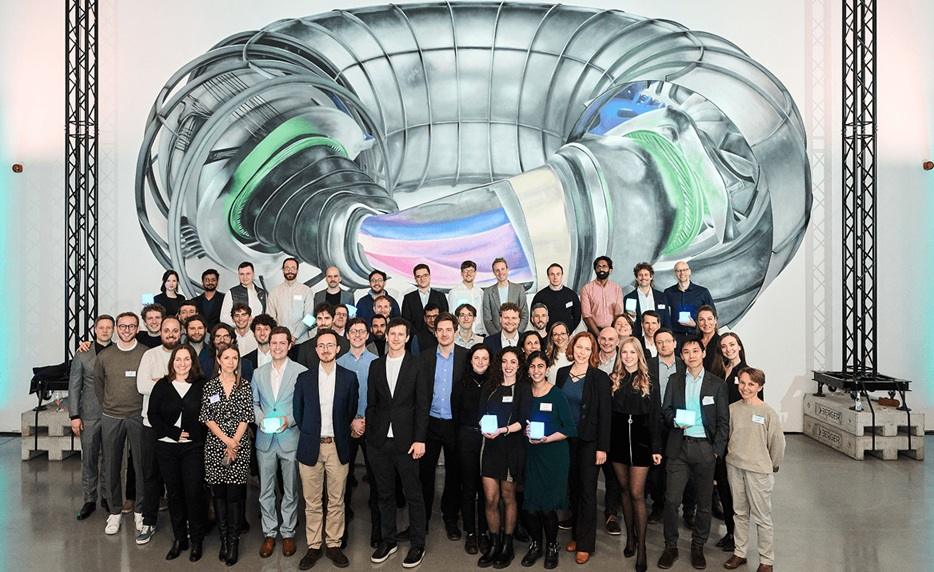
Proxima Fusion Secures Landmark $149 Million for Stellarator Development
The pursuit of limitless, clean energy just received a significant boost as German fusion technology innovator, Proxima Fusion, successfully closed a Series A funding round, raising an impressive €130 million (approximately USD$149 million). This capital injection represents the largest private fusion investment round witnessed in Europe to date, signaling a growing confidence among deep-tech investors in the long-term potential of fusion power. The funds are earmarked to accelerate the company’s ambitious mission: constructing the continent’s inaugural stellarator-based fusion power plant within the 2030s timeframe.
For decades, fusion energy has captivated the scientific and investment communities, often dubbed the “Holy Grail” of sustainable power generation. Unlike nuclear fission, which splits atoms and produces highly radioactive waste, fusion harnesses the power released when two light atomic nuclei combine to form a heavier one. This process, mirroring the energy generation within our sun, promises an energy source fueled by hydrogen – the most abundant element in the universe – without emitting carbon or producing long-lived radioactive byproducts. However, the immense challenge lies in replicating the sun’s conditions on Earth, requiring extraordinary temperatures and pressures to initiate and sustain the reaction.
The Vision: Redefining Global Energy Production
Francesco Sciortino, CEO and Co-founder of Proxima Fusion, articulated the profound implications of their work, stating, “Fusion stands as humanity’s ultimate source of clean energy. The moment we unlock this boundless wellspring of power, we possess the capacity to fundamentally transform the operational fabric of human civilization.” This bold vision resonates with a global energy landscape increasingly focused on decarbonization and energy security, making fusion an attractive, albeit long-dated, investment thesis for forward-thinking capital.
Established in early 2023 as a strategic spin-out from the renowned Max Planck Institute for Plasma Physics (IPP), Proxima Fusion is specifically focused on developing stellarators. These intricate, doughnut-shaped devices are engineered to magnetically confine and superheat ionized plasma to the extreme temperatures necessary for fusion reactions. Recent advancements in critical enabling technologies, particularly high-temperature superconductors (HTS) and sophisticated computational modeling, have propelled stellarator development from theoretical physics concepts into a tangible engineering endeavor, paving the way for commercially viable designs.
Innovative Stellarator Design: A Leap Forward
Proxima Fusion’s proprietary technology centers on quasi-isodynamic (QI) stellarators. This advanced magnetic confinement approach is designed to inherently mitigate current-driven instabilities and the disruptive events commonly associated with other fusion confinement methods. By eliminating these risks, QI stellarators offer a more stable and potentially more efficient pathway to sustained fusion. Earlier this year, the company, in collaboration with partners including IPP, unveiled its groundbreaking fusion power plant concept, Stellaris. This design reportedly achieves a higher power output per unit volume than any stellarator power plant conceived to date.
The Stellaris concept leverages significantly stronger magnetic fields, made possible by the integration of HTS magnet technology. This allows for a substantial reduction in the overall physical footprint compared to previous stellarator designs, enhancing its potential for industrial scalability and commercial deployment. For investors monitoring the energy transition, the efficiency gains and reduced physical size represent crucial steps towards making fusion power economically competitive and space-efficient.
Strategic Deployment of Capital: Milestones on the Horizon
The newly secured capital will be strategically deployed across several key initiatives critical to Proxima Fusion’s development roadmap. A significant portion will fund the completion of its Stellarator Model Coil (SMC), a full-scale demonstration of a superconducting magnet system. This pivotal component is anticipated for completion in 2027 and will serve as a foundational technology for future fusion devices.
Furthermore, the funding will expedite the finalization of a site for “Alpha,” the company’s first demonstration stellarator. Alpha is slated to utilize the SMC technology and is projected to commence operations by 2031, marking a monumental step towards proving the commercial viability of their stellarator design. Concurrently, Proxima Fusion plans to significantly expand its expert team across its operational hubs in Germany, Switzerland, and the UK, bolstering its engineering, scientific, and operational capabilities.
Investor Confidence in Deep Tech and Energy Transition
The Series A round saw strong participation from a syndicate of prominent investors, led by European venture capital firms Cherry Ventures and Balderton Capital. Additional support came from UVC Partners, DeepTech & Climate Fonds (DTCF), Plural, Leitmotif, Lightspeed, Bayern Kapital, and HTGF. This diverse group of investors, spanning deep tech, climate, and general venture funds, underscores the increasing appetite for high-impact, long-term investments in foundational technologies critical to the global energy transition. For oil and gas investors evaluating future energy landscapes, this record-setting round highlights the growing momentum and capital commitment behind alternative energy sources, signaling a future where fusion could play a pivotal role in the global energy mix. While the journey to commercial fusion remains challenging, Proxima Fusion’s financial milestone provides a clear indicator of the intensifying race to unlock this transformative power source.