US Oil Output Drop Signals Tighter Market
The global oil market is poised for a significant shift as the United States, for the first time since the Covid-19 pandemic, is projected to see a decline in its oil production next year. This forecast from the Energy Information Administration (EIA) marks a pivotal moment, challenging the narrative of relentless American energy dominance and introducing a fresh layer of complexity to the global supply outlook. As the US has served as a key swing producer, absorbing shocks and balancing supply, a contraction in its output carries substantial implications for crude prices, inventory levels, and the strategic decisions of major oil-producing nations. This analysis delves into the underlying drivers of this anticipated slowdown, examines current market conditions, and outlines critical forward-looking events that will shape the investment landscape for oil and gas.
The Shale Slowdown: Deeper Than Price Alone
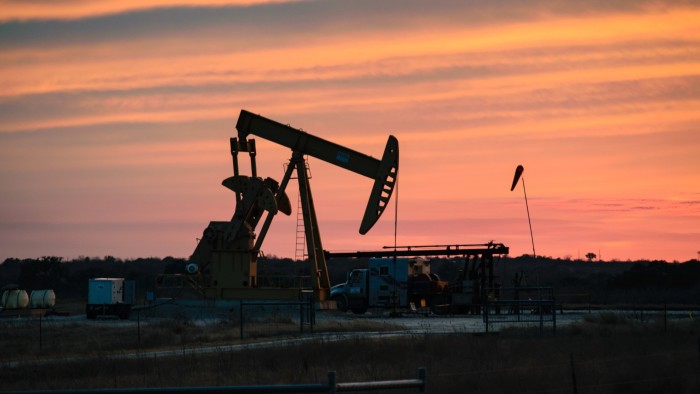
The EIA’s recent assessment paints a clear picture: US oil production, currently at a record high of 13.5 million barrels per day (b/d), is expected to fall to approximately 13.3 million b/d by the end of next year. This modest-sounding decline masks deeper structural challenges within the US shale patch. The primary culprit, according to the EIA, is a noticeable reduction in active drilling rigs and a subsequent drop in well completions, a trend projected to persist through 2026. Data from oilfield services provider Baker Hughes underscored this, reporting active US oil rigs at 442 last week, a notable decrease of nine in a single week and 50 fewer than a year ago. This contraction in activity indicates a broader retrenchment in capital expenditure and a more cautious approach from operators.
While the EIA’s initial forecast was made against a backdrop of slumping oil prices, with West Texas Intermediate (WTI) having settled around $64.98 a barrel, below the breakeven point for many shale drillers, the underlying factors extend beyond immediate price signals. Persistent cost inflation, exacerbated by tariffs on critical inputs like steel, has squeezed margins and made new drilling uneconomical for some players. Industry executives have voiced concerns over a perceived lack of strategic direction, further dampening investor confidence. Analysts at S&P Global Commodity Insights even anticipate a more substantial drop, projecting total US production could fall by 640,000 b/d from mid-2025 to the end of next year, a volume exceeding the total output of some OPEC member countries. This suggests that the slowdown is not merely cyclical but indicative of more profound adjustments in the American shale industry.
Market Reality Check: Prices Diverge, Investors Seek Clarity
The current market environment presents a compelling contrast to the price landscape that informed the EIA’s initial output forecast. As of today, Brent crude trades at $95.57, reflecting a +0.82% gain, with an intraday range of $91-$96.89. Similarly, WTI crude stands at $91.60, up +0.35%, having traded between $86.96 and $93.30. These robust price levels are significantly higher than the $64.98 WTI price reported earlier, which was cited as challenging for shale breakevens. This divergence highlights a critical lag between price recovery and investment response in the shale sector, suggesting that even higher prices are not immediately translating into accelerated drilling activity, likely due to investor demands for capital discipline and a focus on free cash flow rather than growth at any cost.
Our proprietary intent data reveals that investors are keenly focused on understanding these dynamics, with a significant volume of queries centered on building a base-case Brent price forecast for the next quarter and consensus 2026 Brent forecasts. The anticipated decline in US oil output directly impacts these projections, introducing a bullish pressure on prices that may not have been fully factored into earlier models. The 14-day Brent trend, which saw prices decline from $102.22 to $93.22, underscores the volatility in the market, but the current rebound above $95 suggests strong underlying demand or tightening supply fears. Investors are clearly seeking to reconcile the forward-looking production cuts with the current strong price environment, creating a complex analytical challenge for portfolio positioning.
Navigating the Future: Events to Watch and Supply Implications
The coming weeks will offer crucial insights into the evolving supply-demand balance and market sentiment, particularly as key industry events unfold. Investors should closely monitor the upcoming OPEC+ Joint Ministerial Monitoring Committee (JMMC) meeting on April 18th, followed by the full Ministerial Meeting on April 20th. With a projected decline in US output, OPEC+ nations will face strategic decisions regarding their current production cuts. A tightening global market, partly driven by reduced American supply, could provide OPEC+ with greater leverage or, conversely, prompt them to gradually ease restrictions to capture market share, though their historical discipline suggests a cautious approach.
Domestically, the Baker Hughes Rig Count, scheduled for release on April 17th and again on April 24th, will serve as an immediate barometer of drilling activity. A continued downward trend in rig numbers would reinforce the EIA’s forecast and signal a further deceleration in future production. Complementing this, the API Weekly Crude Inventory (April 21st and 28th) and the EIA Weekly Petroleum Status Report (April 22nd and 29th) will provide real-time data on US crude stock levels. Any sustained drawdowns in inventories, particularly in light of reduced domestic output, would strongly signal a tighter physical market, potentially pushing prices higher and impacting gasoline prices, which currently stand at $2.97 per gallon. These events collectively offer a roadmap for investors seeking to confirm or adjust their supply-side assumptions in light of the US production shift.
Investment Takeaways: Strategic Positioning in a Tighter Market
The projected decline in US oil output represents a fundamental shift in the global energy landscape, moving away from a period where American shale growth consistently outpaced expectations. For investors, this translates into a potentially tighter crude market, particularly if global demand remains robust. Companies with strong asset bases, efficient operations, and a focus on free cash flow generation, even at current higher prices, are likely to be rewarded. Oilfield services providers, while currently facing reduced drilling activity, could see a recovery in demand for specialized services as operators prioritize efficiency and enhanced recovery from existing wells. The long-term implications of reduced capital expenditure in shale could also lead to a more sustained period of higher prices, benefiting integrated oil majors with diversified portfolios.
Geopolitical factors, such as potential trade disputes or sanctions, could further exacerbate supply concerns, adding another layer of volatility. Given the projected output decline and the current robust price environment, investors should re-evaluate their exposure to crude oil and related equities, considering a more bullish outlook on price stability than previously assumed. Monitoring upcoming OPEC+ decisions and US inventory data will be paramount for strategic positioning. The era of easy, rapid US shale growth appears to be waning, ushering in a new phase where supply discipline and capital efficiency will dictate success in oil and gas investing.