In an era defined by intensifying resource scarcity and increasing environmental scrutiny, strategic resource management has rapidly ascended to the forefront of investor concerns across all industrial sectors. While the spotlight often shines on energy commodities, the critical role of water, a fundamental input for countless operations, is gaining equivalent prominence. A compelling case study in proactive resource stewardship comes from Amazon Web Services (AWS), the cloud computing behemoth, which has recently provided a significant update on its ambitious journey towards achieving “water positive” status by 2030.
For investors navigating the complexities of modern industrial capital allocation, AWS’s commitment and demonstrable progress offer crucial insights. The company aims to replenish more water than its global operations consume, a target set in 2022. This initiative is not merely an environmental endeavor; it represents a shrewd business strategy to de-risk future operations, enhance resilience, and manage long-term capital expenditure in a world where water availability is becoming as critical a factor as energy supply or raw material access. This approach holds profound implications for other capital-intensive industries, including the oil and gas sector, which grapples with its own unique set of water management challenges.
The Imperative of Water in Digital Infrastructure
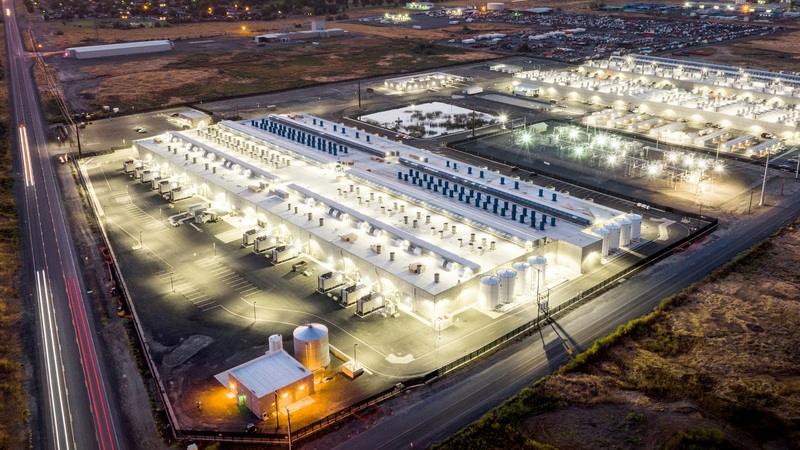
AWS’s operations, particularly its expansive network of data centers, are intrinsically linked to a reliable water supply. These facilities, the backbone of the digital economy, require substantial volumes of water primarily for cooling their sophisticated computing equipment. As global data demand continues its exponential ascent, so too does the operational footprint, placing ever-greater strain on local water resources. The broader context of water scarcity—driven by climate shifts, escalating pollution, and aging infrastructure—transforms this operational necessity into a significant strategic vulnerability for any large-scale industrial player. For energy investors, understanding how a tech giant addresses such a fundamental resource constraint offers valuable parallels to the challenges faced by hydrocarbon producers, who utilize water for processes ranging from enhanced oil recovery to hydraulic fracturing and produced water management.
Recognizing this escalating risk, AWS established a comprehensive four-pillar strategy to achieve its water positive goal: enhancing water efficiency across all facilities, transitioning to more sustainable water sources, facilitating community reuse of treated water, and investing in localized water replenishment projects. These strategic pillars underscore a holistic approach to resource management, moving beyond simple reduction to active contribution and circularity.
Tangible Progress: Hitting Key Milestones
The financial community continually seeks clear, measurable progress against stated strategic objectives. AWS’s latest disclosure provides just that: as of 2024, the company reports it is 53% of the way towards its 2030 water positive target. This marks a significant acceleration from the 41% progress reported at the close of 2023, indicating effective execution and a heightened focus on this critical environmental, social, and governance (ESG) metric. Such rapid advancement demonstrates a robust capital allocation strategy towards sustainable infrastructure and operational optimization.
This acceleration is driven, in large part, by a substantial expansion of AWS’s water recycling initiatives. The company announced plans to broaden its use of recycled water systems to more than 120 data center locations across the U.S. by 2030. This strategy involves a clever closed-loop system: water used by local communities is directed to wastewater treatment plants, then routed to AWS data centers for cooling purposes, effectively circumventing the need for fresh, potable water. This innovative approach not only minimizes the draw on pristine natural resources but also fosters a symbiotic relationship with local municipalities, transforming what would otherwise be a waste product into a valuable industrial input.
Driving Efficiency and Preserving Vital Resources
The expansion of these recycled water systems is already yielding impressive results and projections. Historically deployed in key operational hubs like Virginia and California, the initiative is now slated for further implementation in additional Virginia sites, alongside new deployments in Georgia and Mississippi. This strategic rollout is projected to conserve over 530 million gallons of community drinking water supply across U.S. communities annually by 2030. Such a substantial volume highlights the direct, quantifiable impact of these investments on vital public resources.
Furthermore, the technological advancements underpinning these efforts are notable. AWS reports that its integration of recycled water with direct evaporative cooling systems dramatically reduces water consumption by up to 85% compared to traditional cooling methodologies. This staggering efficiency gain translates directly into operational savings, reduced environmental footprint, and enhanced long-term operational resilience, providing a compelling business case for sustainable infrastructure investment.
Leadership and Broader Sector Implications
Kevin Miller, Vice President of Global Data Centers for AWS, articulated the company’s perspective, emphasizing their profound commitment to community welfare and the imperative of freshwater resource preservation. He underscored that the significant expansion of recycled water infrastructure is designed to propel technological innovation while simultaneously upholding rigorous environmental stewardship. This sentiment resonates across all industrial landscapes, particularly within the energy sector, where maintaining a social license to operate and managing community relations are paramount for project success and investor confidence.
For investors focused on the oil and gas sector, AWS’s proactive stance on water management offers a powerful blueprint. Energy companies face increasing pressure regarding their water footprint, from sourcing water for drilling and completion activities to managing vast quantities of produced water and ensuring responsible discharge or reuse. The strategies deployed by AWS—investing in efficiency, exploring alternative water sources, engaging in community partnerships, and leveraging advanced treatment technologies—provide actionable insights for oil and gas operators seeking to mitigate environmental risks, optimize operational costs, and enhance their ESG credentials. Proactive capital expenditure in water infrastructure and innovation can significantly de-risk future projects, improve regulatory standing, and ultimately bolster long-term shareholder value.
Conclusion: Resource Management as a Core Investment Thesis
AWS’s ongoing progress towards its water positive goal is more than a corporate sustainability announcement; it serves as a robust indicator of how leading industrial players are strategically deploying capital to address fundamental resource constraints. For savvy investors on OilMarketCap.com, this narrative extends beyond the cloud computing sector, offering critical lessons for evaluating companies across the entire industrial spectrum, including energy. The ability to manage essential resources like water efficiently, innovatively, and responsibly is rapidly becoming a non-negotiable component of operational excellence and a key determinant of long-term financial health and investor appeal. As global resource pressures mount, companies that proactively invest in sustainable resource management strategies are not merely engaging in ‘green’ initiatives; they are building more resilient, efficient, and ultimately more profitable enterprises for the future.


