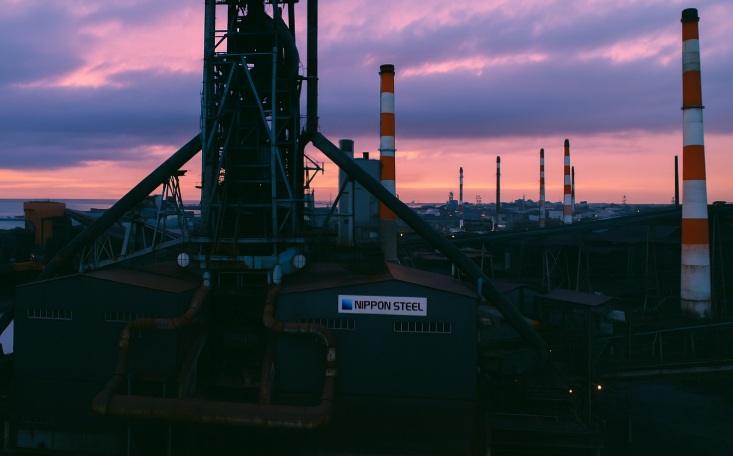
Nippon Steel’s recent ¥870 billion (USD$6.05 billion) investment to transform its steelmaking operations marks a pivotal moment in industrial decarbonization. This substantial capital, targeting a shift from traditional blast furnaces to Electric Arc Furnace (EAF) technology across three Japanese plants, underscores the immense effort required to abate emissions from one of the world’s most carbon-intensive sectors. For oil and gas investors, this move signals a broader trend of industrial electrification and the nascent, yet rapidly growing, demand for new energy vectors like hydrogen, fundamentally altering the long-term energy demand landscape.
The Decarbonization Imperative and New Energy Demands
Nippon Steel’s commitment directly supports its “Carbon Neutral Vision,” aiming for a 30% reduction in CO2 by 2030 and full carbon neutrality by 2050. This strategy centers on EAF technology, replacing coal-fired heat with electric currents. The plan includes a new EAF at Kyushu Works and revitalizing two other facilities, projected to produce 2.9 million tonnes of steel annually by fiscal 2029. While EAFs significantly cut direct carbon emissions, they dramatically increase electricity demand and production costs. Recognizing these hurdles, the Japanese government’s Green Transformation (GX) Promotion Act commits subsidies up to $1.75 billion by 2029 to ease economic complexities.
This strategic pivot has profound implications for the energy sector. As heavy industries electrify, demand for reliable, cost-effective electricity will surge, shifting focus towards lower-carbon power generation. Crucially, while EAFs are electricity-intensive, the industry’s ultimate goal for deep decarbonization often involves green hydrogen as a reducing agent for direct reduced iron (DRI). Nippon Steel’s proactive EAF stance could be a stepping stone towards more advanced, hydrogen-intensive steelmaking methods, thereby creating a significant new demand vector for hydrogen producers in the coming decades.
Navigating Market Dynamics and Transition Costs
Against this ambitious industrial transformation, global energy market volatility remains a critical factor. As of today, Brent crude trades at $95.92, up 1.19%, while WTI sits at $92.37, also up 1.19%. This rebound follows a notable softening in Brent, which saw an 8.8% decline (approximately $9) from $102.22 on March 25th to $93.22 just yesterday. Such price swings directly influence


