US Oil Production: Peak Oil Is A Mirage
The specter of “peak oil” resurfaces periodically, often driven by headlines suggesting an irreversible decline in American crude production. This narrative, predicting the point at which a nation’s oil output hits its maximum and begins an irreversible descent, has haunted energy markets for decades. However, an in-depth look at the historical record, coupled with the dynamic forces shaping today’s energy landscape, reveals that such predictions consistently fall short. Rather than a static geological limit, US oil production is a testament to human ingenuity, economic incentives, and a responsive regulatory environment, making the concept of an imminent, irreversible peak largely a mirage for investors.
The Persistent Myth and Shale’s Rebuttal
The notion of peak oil gained prominence with geophysicist M. King Hubbert’s 1956 forecast of a US production peak in the early 1970s. While he was temporarily correct, with output declining for several decades post-1970, the story didn’t end there. The “shale revolution,” kicking off around 2008, dramatically altered the trajectory. Innovations like horizontal drilling and hydraulic fracturing unlocked vast reserves previously deemed inaccessible, fundamentally reshaping the global energy map. This technological leap propelled the United States from an energy importer to a net exporter, defying decades of expert consensus and proving that oil production is far more than a geological constant; it’s a dynamic interplay of technology, policy, and market forces. The repeated failure of peak oil forecasts serves as a crucial reminder for investors to scrutinize long-term projections that assume linear progression in a non-linear industry.
Texas: The Engine Driving US Resilience Amidst Market Volatility
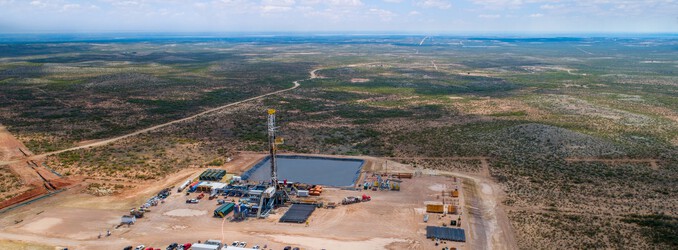
A significant portion of this American energy renaissance has been centered in Texas, particularly the Permian Basin, which stands as one of the world’s most prolific oil fields. Its unique combination of rich geology, extensive privately-owned land, a pragmatic regulatory framework, and robust infrastructure has created an environment uniquely suited for rapid adaptation to market shifts and technological advancements. This resilience is particularly relevant in the current market climate. As of today, Brent crude trades at $96.08 per barrel, marking a 1.36% gain on the day, with a range between $91 and $96.89. WTI crude follows suit at $92.70, up 1.56% within an $86.96-$93.30 range. This rebound comes after a notable 14-day trend where Brent shed nearly 9%, falling from $102.22 on March 25th to $93.22 just yesterday. The ability of US producers, especially those in Texas, to respond to these price signals, whether through optimizing existing wells or planning new drilling, contributes significantly to global supply stability and underscores why peak oil remains a distant, if not impossible, target.
Innovation: The Unaccounted Variable in Production Forecasts
One of the primary pitfalls in historical peak oil predictions has been the failure to adequately account for disruptive innovation. Forecasts often extrapolate current trends without recognizing the potential for dramatic shifts brought about by new technologies or evolving market dynamics. The shale revolution is a prime example, where advancements in drilling and completion techniques completely upended conventional wisdom regarding extractable reserves. For investors grappling with questions like building a base-case Brent price forecast for the next quarter or the consensus 2026 Brent forecast, understanding this inherent unpredictability is paramount. While current market consensus for 2026 Brent prices often hovers around the upper $80s to low $90s, these figures are built on assumptions of supply-demand equilibrium that could easily be disrupted by unforeseen technological breakthroughs, efficiency gains, or even geopolitical events. The continuous drive for efficiency and new recovery methods within the industry means that the resource base itself remains a moving target, rather than a fixed limit.
Forward Outlook: Upcoming Catalysts and Investor Focus
Looking ahead, the interplay of US production capabilities and global market dynamics will continue to shape investor sentiment. We have a series of critical events on the horizon that warrant close attention. This Friday, April 17th, the Baker Hughes Rig Count will offer a snapshot of drilling activity, providing an early indicator of future production trends. This will be followed swiftly by key OPEC+ meetings – the JMMC on Saturday, April 18th, and the Full Ministerial session on Monday, April 20th. Decisions from these gatherings on production quotas could significantly influence global supply and, consequently, crude prices. Further insights into supply and demand balances will come from the API and EIA Weekly Crude Inventory reports on April 21st/22nd and April 28th/29th, respectively. These data points are crucial for investors seeking to refine their short-term price outlooks. As our readers frequently inquire about factors driving Brent forecasts, the collective outcome of these events, combined with the proven agility of US shale, will determine the market’s trajectory, reinforcing the argument that US oil production’s capacity for adaptation makes the ‘peak oil’ narrative an increasingly untenable proposition for serious investors.