Transatlantic Trade Tensions Cast Shadow on Global Oil Demand Outlook
The persistent threat of trade hostilities between the United States and the European Union continues to inject a significant degree of uncertainty into the global economic landscape, creating potential headwinds for the energy sector. While a direct escalation of tariffs has been temporarily averted, the underlying friction signals ongoing instability that could suppress future crude demand and impact investor sentiment across the petroleum industry.
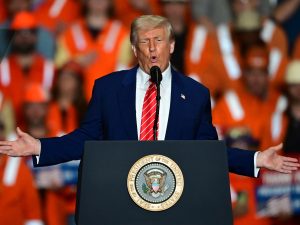
In a recent development, former President Donald Trump, after initially threatening a substantial 50% levy on European imports, agreed to a crucial extension for trade negotiations. The initial deadline of June 1 for imposing these tariffs has now been pushed back to July 9. This reprieve followed an urgent appeal from European Commission President Ursula von der Leyen, who communicated the bloc’s need for additional time to work towards a comprehensive agreement. Ms. von der Leyen reportedly conveyed this request during a direct phone call, seeking a delay until July, a timeline Mr. Trump had previously indicated when he first unveiled his “reciprocal” tariff policy targeting numerous nations in April.
Mr. Trump confirmed his decision to grant the extension, noting Ms. von der Leyen’s commitment to “rapidly get together to see if we can work something out.” Ms. von der Leyen herself affirmed the EU’s readiness to accelerate trade discussions via social media. Adding to the dialogue, French President Emmanuel Macron, during a visit to Vietnam, expressed optimism that Washington and Brussels could achieve a resolution involving the lowest possible tariffs, indicating that “the discussions are advancing.”
The Core of the Standoff: Divergent Trade Philosophies
This latest episode is part of a broader, intermittent global trade dispute initiated by Washington in April, which has routinely unsettled financial markets, businesses, and consumers alike, fueling concerns about a potential global economic downturn. While progress has been noted in various other negotiations, including a trade agreement with the United Kingdom and ongoing discussions with countries like India, Vietnam, and Japan, securing a deal with the EU faces distinct challenges.
The White House’s recent aggressive posture towards the EU stemmed from a perception that negotiations were not progressing swiftly enough. Mr. Trump publicly articulated his frustration, stating on Truth Social that discussions with the bloc were “going nowhere!” He subsequently recommended a “straight 50% Tariff on the European Union, starting on June 1, 2025,” explicitly adding that no tariff would apply if the product was manufactured or built in the United States. However, by Sunday, his stance had softened, welcoming Ms. von der Leyen’s willingness to negotiate further and describing it as his “privilege” to delay the increased tariffs.
A fundamental sticking point in these negotiations revolves around the concept of tariff elimination. The EU has proposed a framework for mutually cutting tariffs to zero, an idea Mr. Trump appears to oppose. He has consistently advocated for maintaining a baseline 10% tax on most imports from America’s trading partners. This approach was evident in the trade agreement reached with the United Kingdom on May 8, which preserved Mr. Trump’s 10% reciprocal tariff rate, establishing a precedent for his negotiation strategy.
Economic Implications and the Oil Demand Equation
The recurring cycles of trade threats, negotiations, and postponements originating from Washington exert a tangible influence on global financial markets, corporate investment, and consumer spending patterns. Such pervasive uncertainty inherently carries significant negative implications for the energy sector. Elevated trade barriers, or even the prolonged specter of their imposition, can disrupt complex global supply chains, drive up manufacturing costs, and ultimately depress overall economic growth projections. For investors in the oil and gas realm, this translates directly into a more ambiguous and potentially weaker demand outlook.
A global economic slowdown, even a moderate one, can significantly alter the trajectory of worldwide oil demand. Reduced economic activity across major industrial powerhouses like the European Union directly leads to decreased consumption of critical transportation fuels, industrial feedstocks, and inputs for power generation. This demand-side pressure, exacerbated by potential disruptions to supply chains and logistical networks, creates a complex and challenging environment for crude prices and the broader energy market. Investors must meticulously factor in the potential for increased market volatility as these geopolitical and trade-related risks continue to unfold.
Should these transatlantic trade tensions escalate into a full-blown tariff war, the impact on global trade flows would be profound. Less international commerce means fewer ships traversing oceans, reduced air cargo traffic, and a contraction in manufacturing output – all direct drivers of demand for crude oil, refined petroleum products, and natural gas. Such a scenario could trigger what is often referred to as “demand destruction,” where higher costs and economic malaise lead to a sustained reduction in energy consumption, inevitably placing downward pressure on global crude benchmarks and energy equity valuations.
Navigating the Path Forward for Energy Investors
For those invested in the oil and gas space, the current trade environment necessitates vigilant monitoring. While the immediate threat of punitive 50% tariffs has been temporarily deferred, the fundamental disagreements persist. The July 9 deadline now stands as the next critical juncture for assessing progress. Any failure to move constructively towards an agreement could swiftly reignite fears of a trade war, carrying significant implications for global GDP growth and, consequently, global petroleum consumption.
Energy investors should closely track not only the official statements from trade negotiators but also broader economic indicators, such as manufacturing indices, shipping volumes, and consumer confidence surveys, particularly in the US and EU. These metrics will offer crucial insights into the real-world impact of trade friction on economic activity and, by extension, energy demand. The resolution – or exacerbation – of these transatlantic trade tensions will undoubtedly be a primary driver of market sentiment and investment strategies across the entire energy value chain, from upstream exploration and production to midstream infrastructure and downstream refining operations.