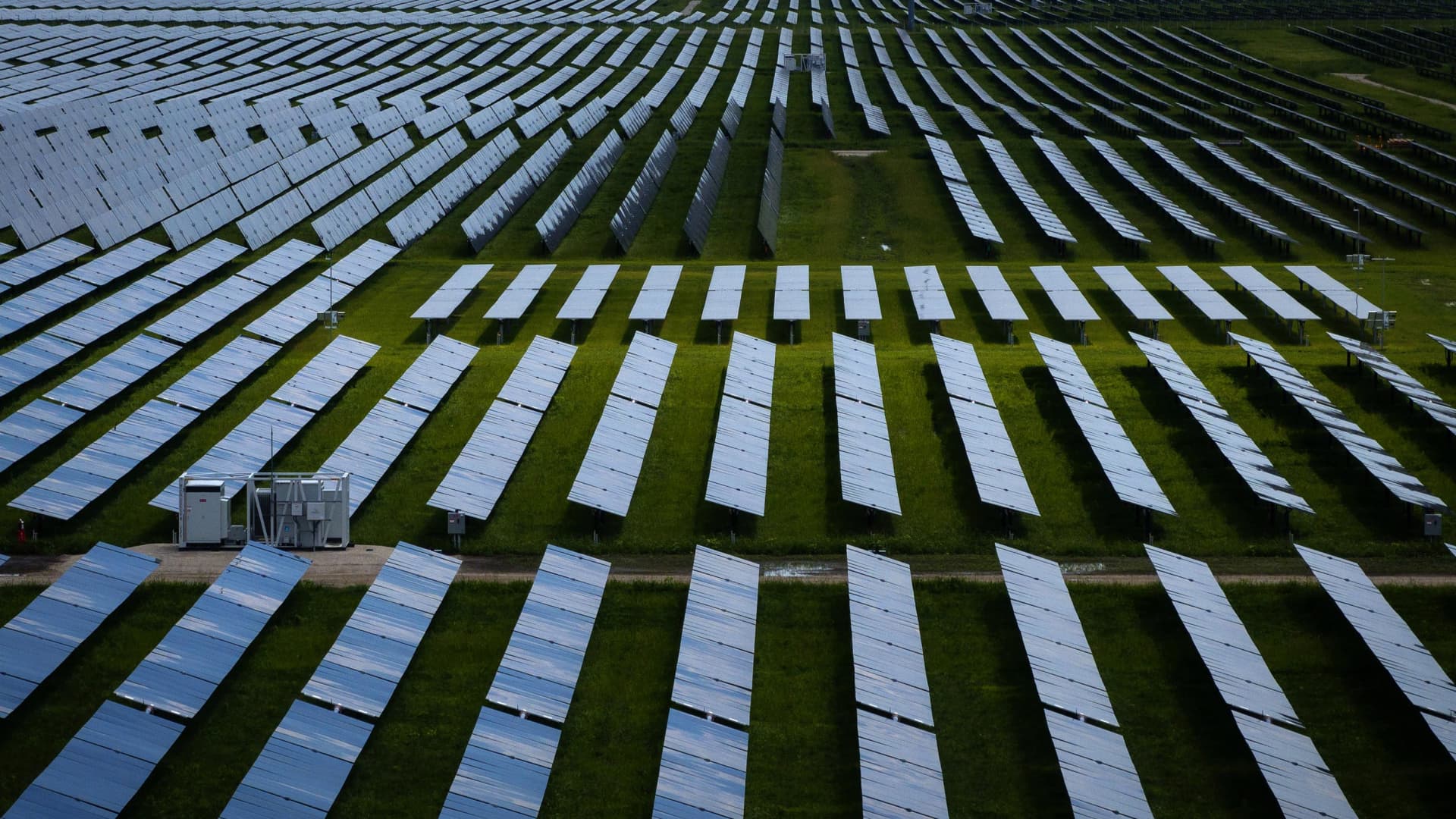
The landscape of energy investment witnessed a significant tremor this week as a new tax bill, aimed at clean energy credits, sent solar stocks into a precipitous decline. For oil and gas investors, this development, while seemingly confined to the renewable sector, carries profound implications for capital allocation, risk assessment, and the broader trajectory of the energy transition. Understanding the nuances of this legislative shock and its potential ripple effects is crucial for navigating a rapidly evolving energy market.
Immediate Fallout for the Solar Sector
The proposed legislation, passed by House Republicans, delivered what many analysts describe as a “worse than feared” scenario for clean energy, taking a “sledgehammer” to key provisions of existing climate policy. The impact on publicly traded solar companies was immediate and severe. Residential solar installer Sunrun, which heavily relies on lease arrangements for its equipment – a model representing some 70% of the rooftop solar industry – saw its shares plummet over 35%. The bill specifically targets and terminates tax credits for such leasing structures, directly undermining a core business model.
The pain extended to inverter manufacturers like Enphase and SolarEdge, which experienced declines of approximately 18% each, on expectations of significantly reduced demand for rooftop installations. Utility-scale solar projects also face substantial headwinds, with the bill ending investment and electricity production credits for facilities beginning construction 60 days after enactment or entering service after December 31, 2028. Companies supplying this segment, such as Array and Nextracker, which provide solar panel tracking devices, saw their stocks fall 14% and 5% respectively. Notably, First Solar, the largest U.S. producer of solar panels with a strong domestic manufacturing base, proved more resilient, dipping only 1%, as the bill left manufacturing tax credits largely untouched. This selective impact highlights the critical importance of specific policy details in determining investor exposure within the clean energy space.
Navigating Divergent Energy Markets Amid Policy Uncertainty
This legislative blow to solar subsidies arrives amidst a dynamic period for the broader energy market, creating a stark contrast for investors. As of today, Brent crude trades at $96.06 per barrel, marking a 1.34% gain, with WTI crude similarly buoyant at $92.46. This upward movement in crude prices, following a 14-day trend that saw Brent recover from $93.22 to current levels, underscores ongoing supply concerns and robust demand, particularly as global economies continue to expand. Gasoline prices also saw a modest uptick to $2.98. The resilience and recent strength in traditional oil markets provide a compelling counterpoint to the dramatic collapse in solar equities, forcing investors to re-evaluate their energy portfolio allocations.
Indeed, investor sentiment, as evidenced by proprietary intent data, reveals a strong focus on traditional energy fundamentals. Many investors are actively seeking a base-case Brent price forecast for the next quarter and the consensus 2026 Brent forecast. While the solar tax bill does not directly influence crude supply, the significant policy uncertainty it introduces for clean energy could subtly shift capital flows. If the pathway for renewable energy deployment becomes more challenging and less financially attractive due to reduced subsidies, investor appetite for established, cash-generating oil and gas assets might strengthen, potentially underpinning demand for oil equities in the medium term. This dynamic interplay between policy, market sentiment, and commodity prices is a critical element in forecasting future energy market trajectories.
Forward Outlook and Key Calendar Catalysts
The immediate future for solar investors remains clouded by legislative uncertainty. While the House has passed the bill, analysts widely anticipate that the Senate will introduce changes, creating a period of limbo for companies and investors alike. This legislative back-and-forth will be a dominant theme in the coming weeks and months, shaping the investment thesis for the entire clean energy complex.
For the broader energy market, the next fortnight is packed with critical events that will continue to drive price action and investor focus. The upcoming OPEC+ meetings, including the Joint Ministerial Monitoring Committee (JMMC) on April 18 and the Full Ministerial meeting on April 20, are paramount. These gatherings will determine the group’s production policy, directly influencing global crude supply and offering clarity on the market’s delicate balance. Furthermore, the regular cadence of inventory data, with API Weekly Crude Inventory reports on April 21 and 28, and EIA Weekly Petroleum Status Reports on April 22 and 29, will provide crucial insights into U.S. supply and demand dynamics. As the clean energy sector grapples with policy-induced volatility, these fundamental drivers in the traditional oil market will remain front and center for investors, offering tangible data points against a backdrop of shifting policy landscapes.
Strategic Re-evaluation for Diversified Energy Portfolios
The “Clean Energy Tax Hit” represents more than just a bad day for solar stocks; it signals a potential pivot in U.S. clean energy policy support that demands a strategic re-evaluation from all energy investors. Is this a temporary legislative skirmish, or does it herald a more fundamental shift away from the expansive subsidies seen in recent years? For investors with diversified energy portfolios, this event underscores the need for meticulous due diligence on policy exposure across all sub-sectors.
The relative resilience of companies like First Solar, which benefit from manufacturing tax credits, highlights a potential safe haven within renewables: those with strong domestic production capabilities less reliant on demand-side subsidies. For traditional oil and gas companies, this development could, in the short to medium term, alleviate some competitive pressure from rapidly expanding subsidized renewables, potentially extending the investment runway for fossil fuel assets. However, the long-term imperative of the energy transition remains. Investors must carefully weigh the near-term policy risks in renewables against the enduring global demand for energy and the evolving regulatory environment. Monitoring legislative developments in Washington, alongside the fundamental supply-demand dynamics communicated by OPEC+ and inventory reports, will be critical for making informed capital allocation decisions in this complex energy investment landscape.