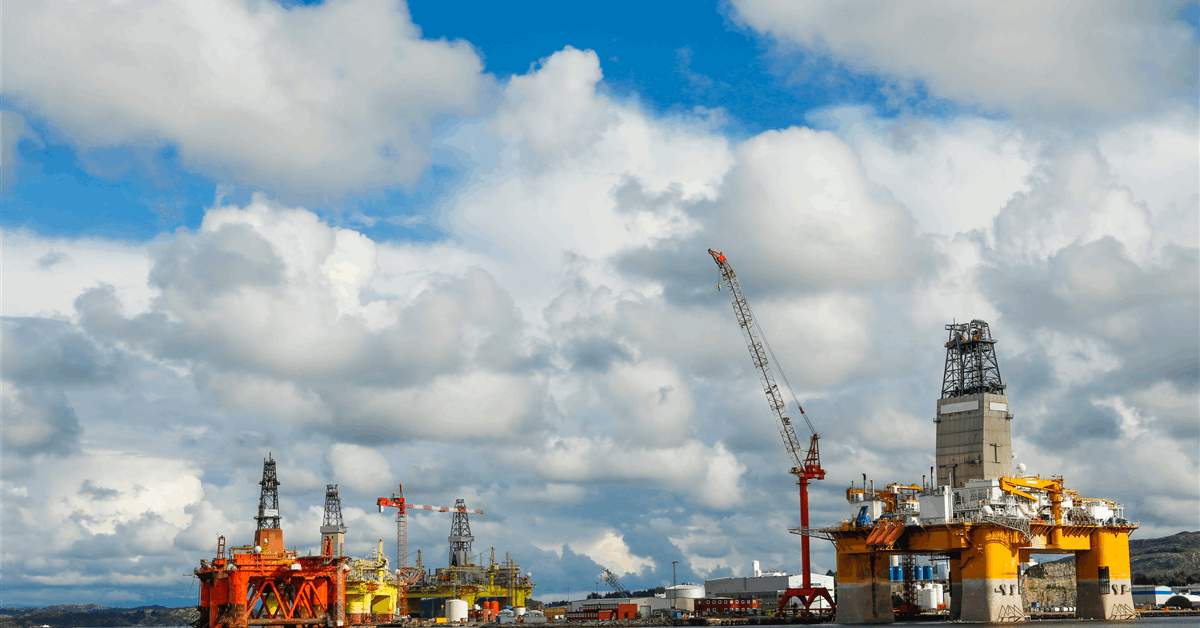
Equinor’s recent appraisal well successes in the North Sea mark a significant milestone in the burgeoning carbon capture and storage (CCS) sector, solidifying Norway’s ambition to become a leading hub for CO2 sequestration. These developments are not merely technical feats; they represent a strategic pivot for major energy players and present a compelling new investment frontier for those tracking the evolving energy landscape. As traditional hydrocarbon markets navigate volatility, the long-term, policy-backed stability of CCS projects like Equinor’s ‘Smeaheia’ offers a differentiated value proposition for investors.
Equinor’s Strategic De-risking of North Sea CO2 Storage
The drilling of appraisal wells 32/4-4 and 32/7-1 in the Alpha and Gamma areas, respectively, east of the Troll A platform, has yielded positive preliminary results, confirming suitable reservoir characteristics for CO2 storage. These wells, the first under exploration license EXL002 awarded in June 2022, are critical steps in de-risking the Smeaheia project. Specifically, the investigation targeted Lower and Middle Jurassic reservoir rocks, with well 32/4-4 reaching a vertical depth of 1,879 meters and 32/7-1 extending to 2,036 meters. Data acquired, including extensive samples and multiple injection tests in both wells, suggests promising storage potential. Notably, formation pressure data indicates that rocks in the Cook and Johansen formations are somewhat depleted, with greater depletion in the Sognefjord Formation. This geological characteristic could be advantageous, potentially facilitating CO2 injection and reducing the risk of pressure build-up over the project’s lifespan, thereby enhancing operational efficiency and long-term viability for investors.
This isn’t Equinor’s first foray into Norwegian CO2 storage, building on the insights from well 32/4-3 S drilled in 2019. The consistent exploration efforts highlight a strategic commitment to developing large-scale CCS solutions, aligning with Norway’s national ambition to leverage its vast theoretical CO2 storage capacity of 80 billion metric tons. This capacity alone could accommodate Norway’s current CO2 emissions for an astonishing 1,600 years, underscoring the immense long-term potential for this sector.
Market Dynamics: CCS as a Counterpoint to Crude Volatility
In the broader energy market, traditional commodity prices continue to exhibit dynamic shifts. As of today, Brent crude trades at $96.04 per barrel, marking a 1.32% gain within a daily range of $91 to $96.26. This modest daily uptick follows a more significant decline over the past 14 days, where Brent shed nearly 8.8%, moving from $102.22 on March 25th to $93.22 on April 14th. Similarly, WTI crude sits at $92.4, up 1.23%, with gasoline prices at $2.98, showing a 0.34% increase. This inherent volatility in the upstream oil and gas sector makes the strategic diversification into CCS increasingly attractive for integrated energy majors like Equinor.
While the immediate drivers of crude prices are well-understood, the long-term, policy-backed revenue streams from CCS projects offer a distinct investment profile. These projects are less susceptible to geopolitical shocks or short-term supply-demand imbalances that frequently impact crude benchmarks. Instead, their value is tied to carbon pricing mechanisms, regulatory support, and long-term contracts for emission reduction, providing a degree of stability that can act as a natural hedge against the cyclical nature of hydrocarbon markets. For investors seeking portfolio diversification beyond traditional exploration and production, the growth of CCS offers a compelling alternative.
Policy Tailwinds and Upcoming Catalysts for Norwegian CCS
Norway’s proactive regulatory environment is a major catalyst for the growth of its CCS industry. Regulations enacted in December 2014 laid the groundwork for CO2 storage, and the nation has consistently expanded opportunities, awarding 13 CO2 storage licenses to date – 12 for exploration and one for exploitation. A recent demonstration of this commitment was the Energy Ministry’s designation of a new North Sea area for CO2 storage license applications in early March, with the application window closing on April 23rd. This continuous expansion of available acreage, including recent awards to consortiums involving Equinor and Harbour Energy PLC, signals strong governmental support and a clear roadmap for future development.
Looking ahead, while the upcoming Baker Hughes Rig Count on April 17th and 24th will provide insights into conventional upstream activity, and the API and EIA Weekly Crude Inventory reports on April 21st/22nd and April 28th/29th will inform short-term supply dynamics, it’s the broader policy and regulatory environment that will most profoundly shape the CCS investment landscape. The outcomes of the OPEC+ Ministerial Meetings on April 18th and 20th will certainly influence global crude markets. However, a sustained higher oil price environment could paradoxically accelerate energy transition investments as companies seek to “green” their portfolios and diversify revenue streams, making projects like Smeaheia even more strategically significant. The ongoing analysis of data from Equinor’s appraisal wells will form the basis for future investment decisions, with a final investment decision expected to be a key future catalyst.
Addressing Investor Focus: Valuing the Carbon Capture Opportunity
Our proprietary reader intent data reveals that investors are keenly focused on traditional metrics, with frequent inquiries about base-case Brent price forecasts for the next quarter and the consensus 2026 Brent forecast. While crucial for evaluating conventional oil and gas plays, sophisticated investors are increasingly looking beyond these short-term commodity price signals. They are asking how companies like Equinor are strategically positioning themselves for the energy transition, hedging against future carbon liabilities, and creating new, sustainable revenue streams.
The successful appraisal of the Smeaheia project provides a clear answer: CCS is becoming a core component of energy majors’ long-term strategies. Investors should evaluate these projects based on their contracted capacity, the stability of carbon pricing mechanisms, and the potential for regulatory incentives. Unlike traditional upstream assets, which carry significant geological and commodity price risk, de-risked CCS projects offer a blend of infrastructure-like predictability and environmental benefit. The preliminary positive results from Equinor’s wells indicate that the geological risk at Smeaheia is diminishing, paving the way for detailed analysis and subsequent investment decisions. For investors, understanding the long-term contractual frameworks and the trajectory of carbon markets will be as vital as forecasting crude prices in assessing the value of these pioneering ventures.


