The Geopolitical Crucible: Middle East Tensions Redefine Oil Risk Premiums
The global oil market is once again confronting a severe geopolitical premium, as escalating tensions in the Middle East drive crude prices significantly higher. What began as a cautious re-evaluation of regional stability has rapidly intensified into a profound re-pricing of supply risk, with investors now bracing for a potentially protracted conflict. This shift reflects a growing realization that the current situation is fundamentally different from previous regional flare-ups, impacting core production and crucial transit routes. The market’s initial subdued reaction earlier in the week, fueled by a perceived pattern of short-lived spikes, has given way to a more urgent assessment of sustained disruption. Arne Rasmussen, chief analyst at Global Risk Management, aptly described a “snowball effect” as traders fully awaken to the profound implications.
Supply Under Siege: The Imminent Threat to Global Production
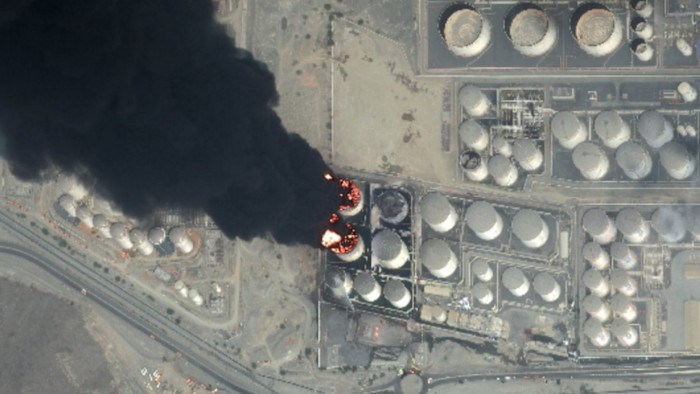
The immediate impact on crude supply is both significant and expanding. Reports indicate that Iraq has already suspended the majority of its oil production, with Kuwait anticipated to follow suit in the coming days as storage capacities near saturation. This represents a substantial hit to regional output. Beyond these immediate disruptions, analysts are increasingly concerned that even Saudi Arabia, the Gulf’s preeminent producer, could be compelled to curtail its output in the weeks ahead if the conflict expands or logistical challenges mount. Amrita Sen, founder of consultancy Energy Aspects, highlights the critical difference this time: an estimated 10 million barrels per day (bpd) of global supply are directly affected or at severe risk. Furthermore, the strategic Strait of Hormuz, through which 20% of the world’s crude flows, remains effectively blockaded, forcing refiners to scramble for alternative cargoes that bypass this constricted waterway. One Middle Eastern oil benchmark has already climbed above $100 a barrel, underscoring the acute regional supply squeeze.
Market Snapshot: Prices Surge Amidst Investor Scrutiny
As of today, April 22nd, Brent crude is trading at $93.31, reflecting a modest daily increase of 0.08% within a range of $92.57-$94.21. Similarly, WTI crude stands at $89.70, up 0.03%, oscillating between $88.76 and $90.71. These figures mark a substantial surge from pre-conflict levels, despite Brent having experienced a 7% decline from $101.16 on April 1st to $94.09 on April 21st, indicating that the recent rally is a sharp reversal of a prior downward trend. Our analysis of investor queries reveals a keen focus on immediate price trajectories, with many asking whether WTI is poised for further gains or corrections. This reflects a broader concern about oil’s price ceiling, as evidenced by questions regarding predictions for oil per barrel by the end of 2026. Qatar’s energy minister has already forecasted oil could reach $150 a barrel without a swift resolution, a sentiment echoed by some senior energy executives who view triple-digit oil prices as not just likely, but “inevitable” the longer the conflict persists. The market, previously “jaded” by the short-lived spike following Russia’s invasion of Ukraine, is now internalizing that the current situation presents a more severe and sustained threat to global supply.
Forward Outlook: Navigating Key Data and Upcoming Catalysts
For investors charting the course of the oil market, upcoming data releases will be critical in assessing the evolving supply-demand landscape and potential for further price volatility. The EIA Weekly Petroleum Status Reports, scheduled for April 22nd and April 29th, will provide crucial insights into U.S. crude oil, gasoline, and distillate inventories, offering a barometer of domestic demand and refining activity. These reports will be particularly scrutinized for any signs of inventory draws that could exacerbate global supply concerns. Complementing this, the Baker Hughes Rig Count, due on April 24th and May 1st, will signal shifts in North American drilling activity, an important indicator of future production capacity. Furthermore, the API Weekly Crude Inventory updates on April 28th and May 5th will offer an early glimpse into U.S. stock movements. Perhaps most impactful for the longer-term perspective that investors are seeking, the EIA Short-Term Energy Outlook on May 2nd will provide updated forecasts for supply, demand, and prices through 2026, directly addressing the prevalent investor question about end-of-year price predictions. These events, against the backdrop of an uncertain geopolitical situation, will serve as pivotal market catalysts, influencing trading strategies and investment decisions across the energy sector.
Investment Implications: Strategic Positioning in a Volatile Landscape
The current Middle East crisis has fundamentally altered the risk-reward calculus for oil and gas investments. For portfolio managers, this environment demands a re-evaluation of exposure to energy commodities and related equities. The “snowball effect” described by analysts suggests that prices could continue their upward trajectory as the market fully prices in extended disruption and the substantial volume of affected supply. Companies with robust upstream assets outside of high-risk regions, or those with strong refining capabilities that can adapt to shifting crude streams, may present compelling opportunities. Conversely, firms heavily reliant on Middle Eastern crude for their operations or those with significant exposure to volatile shipping routes through the Strait of Hormuz will face heightened scrutiny. Investors should consider the potential for sustained higher operating costs, increased geopolitical risk premiums, and the broader inflationary pressures that rising oil prices could trigger across the global economy. This is not merely a short-term trading opportunity; it represents a structural shift that demands strategic, long-term positioning and a deep understanding of the intricate interplay between geopolitics, supply fundamentals, and market sentiment.