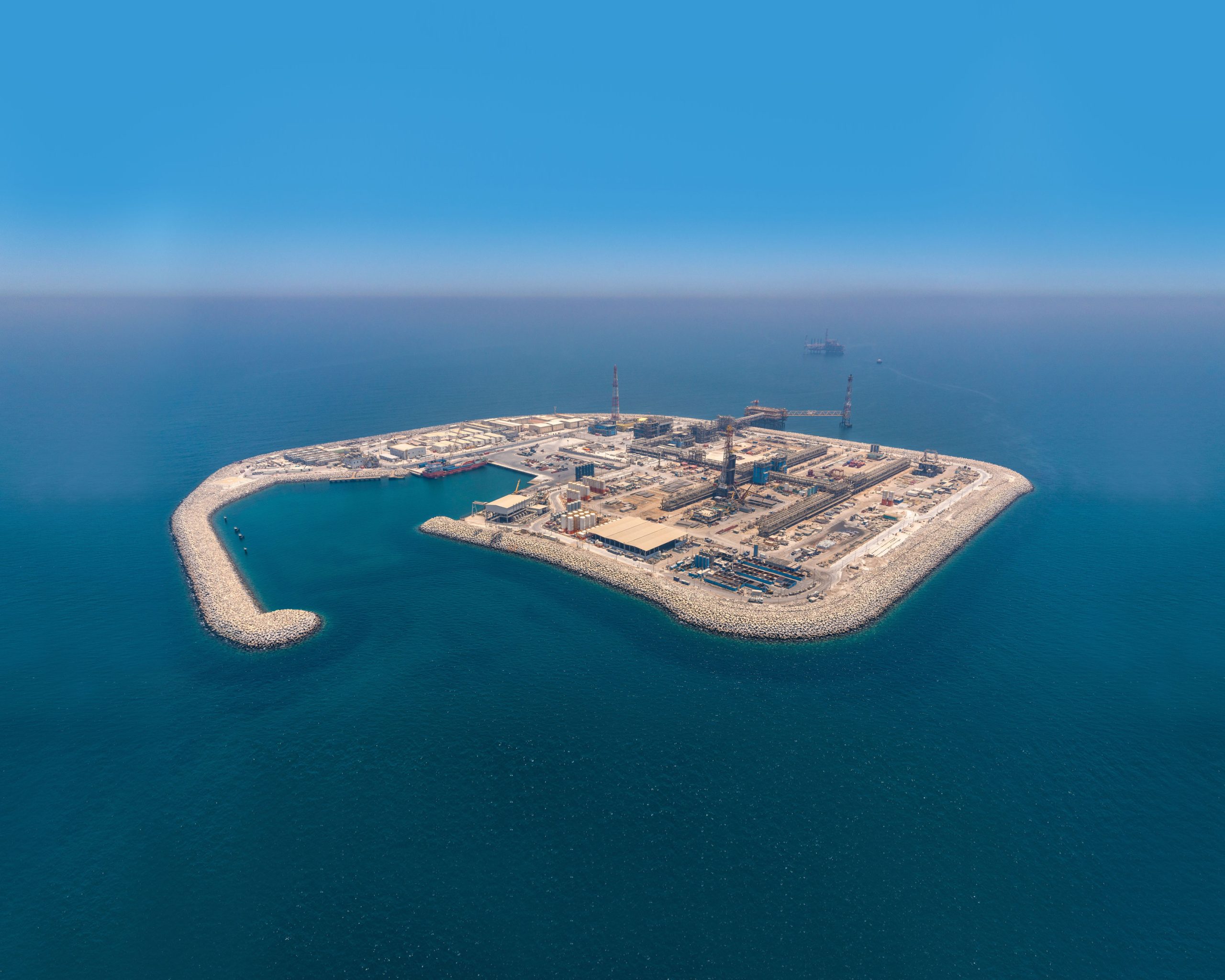
ExxonMobil’s Chief Executive Officer, Darren Woods, has indicated that the ambitious expansion of Abu Dhabi’s Upper Zakum offshore oil field is on track to achieve its production capacity target significantly ahead of schedule. This revelation, made during an interview in Abu Dhabi, underscores a critical development for one of the world’s largest oil fields and offers a compelling narrative for investors tracking global energy supply and the strategic moves of supermajors. Currently boasting a capacity of 1 million barrels per day (MMbpd), the project, developed in partnership with Abu Dhabi’s government-owned ADNOC and Japan’s Inpex Corp., aims to reach 1.5 MMbpd by 2030. Woods’ confidence in an early completion highlights the operational efficiency and strategic intent behind these multi-billion dollar investments, setting the stage for increased output from a key OPEC+ member while global markets navigate persistent volatility.
The Upper Zakum Acceleration: A Strategic Win for XOM and ADNOC
The Upper Zakum field stands as a cornerstone of the UAE’s oil production capabilities, and ExxonMobil’s pivotal role in its development through the Zakum Development Company (ZADCO) partnership emphasizes its importance to the company’s long-term upstream portfolio. Woods’ statement that “the team is working hard to drive production up” and that they “can do better than” the 2030 target for 1.5 MMbpd capacity is a strong signal of operational momentum. This accelerated timeline is not merely a technical achievement; it represents a significant strategic advantage for both ExxonMobil and ADNOC. For ExxonMobil, it solidifies its position in a resource-rich region and contributes to a robust “pipeline of investment opportunities” that Woods asserts will drive growth well beyond the current decade. For ADNOC, bringing additional capacity online sooner bolsters its national revenue streams and enhances its leverage in future market dynamics, aligning with its broader ambition to increase total oil production capacity to 5 MMbpd by 2027, up from approximately 4.85 MMbpd currently.
Navigating a Volatile Market: UAE’s Ambitions Amidst Price Swings
The push for increased capacity at Upper Zakum occurs against a backdrop of considerable market flux. As of today, Brent crude trades at $90.38 per barrel, marking a significant 9.07% decline in a single day, with its day range stretching from $86.08 to $98.97. This recent dip is part of a broader trend, reflecting a nearly 20% drop over the past two weeks from its $112.78 perch on March 30th. Similarly, WTI crude sits at $82.59, down 9.41% today. This price volatility underscores the complexity faced by producers. While the UAE’s current production is capped by OPEC+ at around 3.4 MMbpd, limiting immediate output increases, the development of additional capacity is crucial for long-term strategic flexibility. It provides the United Arab Emirates with greater influence in the oil market, ensuring that when quotas eventually ease, or global demand necessitates it, the infrastructure is ready to meet those needs. This long-term view contrasts sharply with short-term market reactions, highlighting the strategic foresight of these massive capital projects.
OPEC+ Dynamics and Forward-Looking Supply Implications
The prospect of an early output boost from Upper Zakum carries significant weight, especially considering the upcoming energy calendar. With the OPEC+ Joint Ministerial Monitoring Committee (JMMC) and Ministerial Meetings scheduled for April 19th and 20th respectively, the timing of this announcement adds a layer of complexity to ongoing quota discussions. Many investors are keenly focused on understanding OPEC+’s current production quotas and how they might evolve. An accelerated capacity expansion in a key member state like the UAE could influence future deliberations. While current restrictions leave billions of dollars in developed resources idle, the continuous addition of new capacity, alongside ADNOC’s broader goal of 5 MMbpd by 2027, positions the UAE for a stronger negotiating stance within the alliance. This forward-looking analysis suggests that the UAE is strategically preparing to maximize its production potential, potentially creating further internal pressure within OPEC+ should demand falter or if other members continue to expand their own capabilities. The weekly API and EIA inventory reports on April 21st and 22nd, along with the Baker Hughes Rig Count on April 24th, will provide immediate market context for these long-term capacity plays.
Investor Outlook: Unpacking Long-Term Value Amidst Market Questions
For investors, ExxonMobil’s commitment to accelerating Upper Zakum’s capacity is a strong indicator of its confidence in long-term oil demand and its disciplined capital allocation strategy. Many of our readers are actively asking what the price of oil per barrel will be by the end of 2026, and developments like this provide crucial data points for such projections. A sustained pipeline of upstream investments, as mentioned by Woods, suggests that ExxonMobil is strategically positioning itself for continued growth in its core E&P segment, even as it navigates energy transition pressures. The partnership structure with ADNOC and Inpex also diversifies risk and leverages regional expertise. While the current market sees a significant daily downturn in Brent and WTI, the long-term investment horizon for projects like Upper Zakum often transcends short-term price fluctuations. Investors should view this as a commitment to maintaining a robust production base, ensuring future cash flows, and strengthening ExxonMobil’s competitive standing. The focus on efficiency and early delivery also speaks to strong project management, a key factor in evaluating E&P investments.