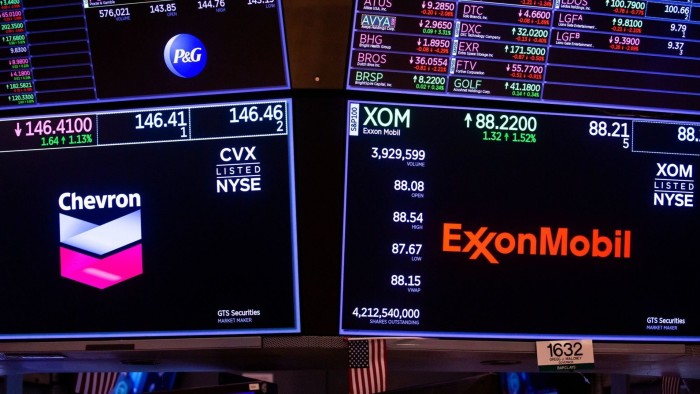
A monumental legal showdown is poised to unfold in London, capturing the attention of global energy investors. At its heart lies a colossal prize: the future ownership of a significant stake in Guyana’s Stabroek oilfield, a prolific asset estimated to hold up to $1 trillion in recoverable reserves. This dispute pits two American energy titans, ExxonMobil and Chevron, against each other, with the outcome set to reverberate across the industry and potentially redefine contractual norms for joint ventures.
The Anatomy of a High-Stakes Legal Battle
The International Chamber of Commerce arbitration, convening this week, focuses on a 30 percent interest in Stabroek currently held by Hess Corporation. This stake became central to Chevron’s ambitious $53 billion acquisition of Hess, initially announced in September 2023. However, ExxonMobil, which already controls a dominant 45 percent share of the Stabroek block, asserts a “right of first refusal” over Hess’s interest. This contractual provision, embedded within the joint operating agreement (JOA) governing the partnership, grants existing partners the priority to purchase an asset before it can be sold to an external party.
Adding another layer of complexity, CNOOC, the Chinese state-owned energy giant holding the remaining 25 percent of Stabroek, has independently filed a similar claim, also seeking to exercise its pre-emptive rights over Hess’s share. Legal experts are closely monitoring these proceedings, recognizing that the court’s decision could necessitate a re-evaluation and potential revision of pre-emptive clauses in future JOAs across the global energy landscape, impacting how energy companies structure their international partnerships and acquisitions.
Stabroek: A Trillion-Dollar Asset
The fervor surrounding this legal battle is entirely justified given the extraordinary value of the Stabroek block. Discovered in 2015, this offshore treasure trove has been instrumental in transforming ExxonMobil’s market standing, allowing it to reclaim its position as the most valuable U.S. oil company after a brief period where Chevron surpassed it in October 2020. With an estimated 11 billion barrels of oil equivalent reserves already identified and significant upside potential from ongoing exploration, Stabroek stands as one of the most impactful oil discoveries of recent decades.
Industry analysis from Wood Mackenzie projects astounding financial returns from this asset. Over the next decade and a half, ExxonMobil and its partners are forecast to generate a staggering $182 billion in profits from crude oil and natural gas sales originating from the Guyanese fields. The impact on Guyana itself is equally profound; a nation once considered among South America’s poorest is now projected to receive over $190 billion in revenue, a transformative sum for its national development and economic future.
Unparalleled Profitability and Strategic Importance
What makes Stabroek particularly coveted is its exceptional economic viability. Luiz Hayum, a seasoned analyst at Wood Mackenzie, highlights its unique attributes: “Guyana represents one of the most valuable oil and gas developments globally. Its rapid development timeline, coupled with the production of comparatively low-emissions crude oil and a remarkably low break-even price of under $30 per barrel, solidifies its status as an exceptionally profitable venture.” This combination of low operational costs, substantial reserves, and a favorable emissions profile makes the Guyanese assets a crown jewel in any energy portfolio, underscoring why both ExxonMobil and Chevron are so vigorously pursuing control.
Investors recognize that securing a significant stake in such a low-cost, high-return project offers not only immediate financial upside but also long-term strategic advantages in a volatile global energy market. The ability to produce crude oil at a sub-$30 breakeven price provides a substantial competitive edge, ensuring profitability even during periods of lower commodity prices and offering a robust hedge against market downturns.
Chevron’s Drive for Growth
For Chevron, successfully integrating Hess’s Guyanese operations is not merely an opportunistic move but a strategic imperative. The company has been actively seeking to bolster its long-term reserve base. Last year, Chevron reported a notable decline in its oil and gas reserves, dropping to 9.8 billion barrels from 11.1 billion barrels in 2023. This marks its lowest reserve level in over a decade, signaling a clear need for significant new resource additions to sustain future production and growth.
Accessing Hess’s 30 percent stake in Stabroek would provide an immediate and substantial boost to Chevron’s reserve figures, aligning with its long-term strategic objectives for portfolio expansion and shareholder value creation. The acquisition of proven, high-quality assets like those in Stabroek is crucial for supermajors looking to maintain their production profiles and ensure a robust pipeline of future projects in a world increasingly focused on energy transition, yet still reliant on traditional hydrocarbons.
Confidence Amidst Uncertainty
Despite the formidable legal challenge mounted by ExxonMobil and CNOOC, Chevron’s leadership remains outwardly confident in its position. Mike Wirth, Chevron’s Chief Executive, expressed his conviction at a Goldman Sachs conference in January, stating, “This has been studied extensively, and we feel like they clearly have the right side of this argument.” This assurance was further underscored by an unusual move in March, when Chevron disclosed it had acquired nearly 5 percent of Hess’s shares in the open market.
Analysts widely interpreted this significant investment as a powerful signal of Chevron’s unwavering belief that the protracted acquisition will ultimately proceed as planned, granting them access to the coveted Guyanese assets and solidifying their future growth trajectory in the global energy market. This aggressive stance demonstrates Chevron’s determination to overcome contractual hurdles and secure the valuable Stabroek stake, highlighting the immense strategic value they place on Hess’s Guyanese portfolio.
The Investor’s Outlook
As the arbitration proceeds in London, the eyes of the global energy sector are fixed on the outcome. This is more than a simple corporate dispute; it is a battle for control over one of the world’s most valuable hydrocarbon basins, with implications for the strategic direction of two supermajors and the future interpretation of complex joint venture agreements. The resolution will not only determine which company secures a vital share of future Guyanese profits but also set a precedent for how pre-emptive rights are exercised in high-value energy transactions globally.
Investors should closely monitor developments as the resolution of this high-stakes legal drama will undoubtedly shape the competitive landscape of the oil and gas industry for years to come, influencing mergers and acquisitions strategies and potentially impacting the market valuations of major energy players.