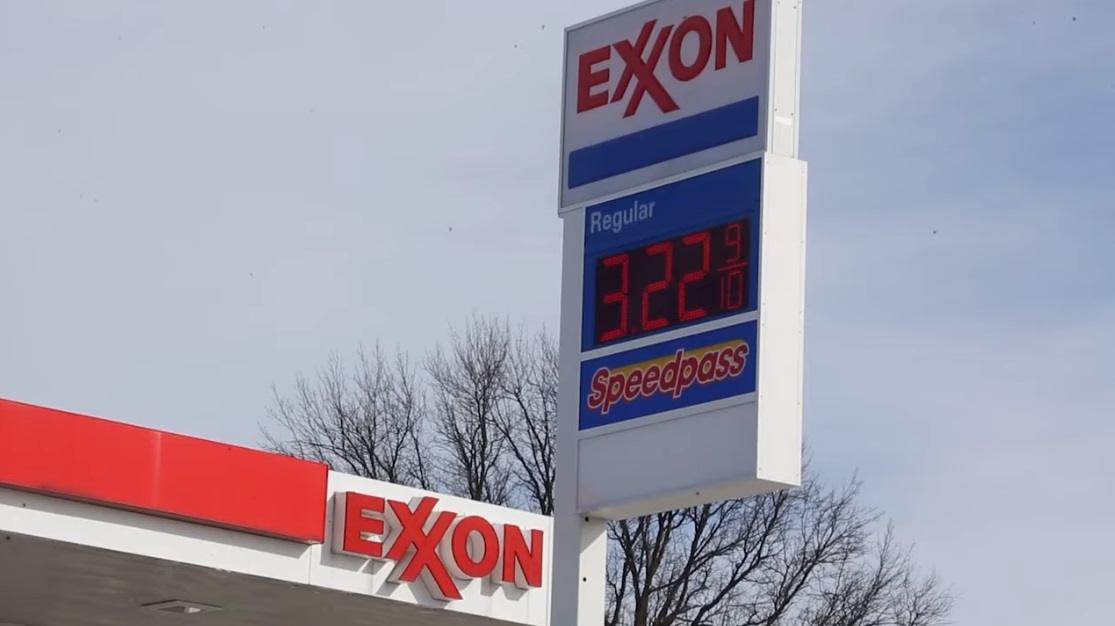
The energy sector is once again at the crossroads of operational imperative and regulatory pressure, as ExxonMobil has initiated a federal lawsuit challenging California’s stringent new climate-related disclosure laws. This legal action underscores a growing tension between major energy producers and states pushing aggressive climate agendas. For investors, this isn’t merely a legal skirmish; it’s a significant development that could reshape compliance costs, reporting burdens, and ultimately, the valuation landscape for companies operating within or doing business with the Golden State. We delve into what this means for your portfolio, dissecting the regulatory landscape, Exxon’s strategic challenge, and the broader market implications amidst ongoing volatility.
The Regulatory Gauntlet: California’s Ambitious Climate Disclosure Laws
California, often a trendsetter in environmental policy, has enacted two landmark pieces of legislation, SB 253 and SB 261, signed into law in October 2024. These laws impose expansive climate-related reporting requirements that extend far beyond the state’s borders. SB 253 targets companies with over $1 billion in annual revenue doing business in California, mandating annual disclosures of their direct (Scope 1), indirect (Scope 2), and crucially, value chain (Scope 3) greenhouse gas emissions. Scope 3 emissions are notoriously complex, encompassing everything from supply chains and business travel to employee commuting and waste. The initial wave of Scope 1 and 2 reporting is set to commence in 2026, covering the 2025 fiscal year, with Scope 3 following in 2027.
Complementing this, SB 261 applies to U.S. companies generating over $500 million in revenue and operating in California, requiring them to prepare detailed reports on climate-related financial risks and outline measures for mitigation and adaptation. The first of these risk reports are due by January 1, 2026. These mandates are particularly impactful given that federal climate disclosure efforts, such as the SEC’s proposed rule, appear to be facing significant delays or even abandonment. The California Air Resources Board (CARB) has already identified over 4,000 U.S. companies likely to fall under these new regulations, signaling a substantial compliance burden across numerous sectors, not just energy.
ExxonMobil’s Legal Offensive: Free Speech vs. State Mandate
ExxonMobil’s lawsuit frames California’s laws as a violation of First Amendment free speech rights, arguing that the statutes are designed to “embarrass” large corporations and compel speech that aligns with the state’s “ideological goals.” The company claims it already provides extensive disclosures on its emissions and climate risks but contends that the specific frameworks mandated by SB 253 and SB 261 force them to “speak in service” of California’s premise that “large companies are uniquely responsible for climate change.” Specifically, Exxon points to SB 253’s reliance on GHG Protocol standards, which it suggests prioritize absolute emissions over efficiency improvements in energy production. This isn’t the first legal challenge; previous attempts by the U.S. Chamber of Commerce to block enforcement on free speech grounds were denied, though that case proceeds to trial in October 2026. Exxon’s separate action signals a prolonged and costly legal battle, with significant implications for how states can regulate corporate speech and environmental reporting.
Navigating Market Volatility Amidst Regulatory Headwinds
The timing of Exxon’s lawsuit coincides with a period of significant market turbulence, adding another layer of complexity for energy investors. As of today, Brent Crude trades at $90.38, reflecting a sharp decline of 9.07% within the day, having ranged from $86.08 to $98.97. Similarly, WTI Crude has fallen to $82.59, down 9.41%, with its daily range spanning $78.97 to $90.34. This immediate price pressure extends a broader trend; Brent has shed $22.40, or nearly 20%, since March 30th, dropping from $112.78. Gasoline prices have also dipped to $2.93, a 5.18% decrease, staying within a $2.82-$3.10 range.
This steep correction in crude prices, driven by a confluence of macroeconomic concerns and supply/demand dynamics, underscores the financial pressures already facing oil and gas majors. Against this backdrop, the prospect of substantial new compliance costs and ongoing legal battles over California’s climate laws creates a challenging environment. Investors must consider that while daily price swings dominate headlines, these long-term regulatory disputes will bake in additional operational expenditures and legal fees, potentially impacting profitability and shareholder returns over several years. The dual challenge of volatile commodity markets and escalating regulatory burdens demands a nuanced investment strategy.
Investor Outlook: Weighing Long-Term Risk and Opportunity
Investors are keenly focused on understanding the future trajectory of the energy market. We’ve observed heightened interest this week in questions like “what do you predict the price of oil per barrel will be by end of 2026?” and inquiries into “OPEC+ current production quotas?” These questions highlight the immediate drivers of market sentiment, which will be heavily influenced by upcoming events. The OPEC+ Joint Ministerial Monitoring Committee (JMMC) Meeting on April 19th, followed by the full OPEC+ Ministerial Meeting on April 20th, are critical dates that could dictate short-to-medium term supply strategies and directly impact crude prices. Further insights into supply and demand will come from the API Weekly Crude Inventory reports on April 21st and 28th, and the EIA Weekly Petroleum Status Reports on April 22nd and 29th, alongside the Baker Hughes Rig Count on April 24th and May 1st.
However, the ExxonMobil lawsuit introduces a distinct long-term risk factor. While the market reacts to immediate supply data and OPEC+ pronouncements, this legal challenge represents a multi-year entanglement that could set precedents for corporate climate disclosures nationwide. For investors asking about the performance of individual companies, such as “How well do you think Repsol will end in April 2026?”, understanding a company’s exposure to such regulatory frameworks and its preparedness for increased reporting requirements is paramount. The potential for higher compliance costs, increased litigation risk, and the ongoing debate over the “social license to operate” in states like California will be key determinants of long-term valuation in the energy sector. Investors should monitor these legal developments closely, as they will shape the operating environment for energy majors well beyond the immediate market fluctuations.


