

Geopolitical Shifts Influence Crude Prices as Hormuz Tensions Briefly Ebb
Oil markets reacted sharply on Friday, seeing notable declines in key benchmarks after a significant announcement regarding maritime activity in the Strait of Hormuz. President Donald Trump indicated a potential, albeit tentative, de-escalation of tensions with Iran, revealing that ten oil tankers had successfully transited the critical waterway this week, characterizing it as a “present” to the United States.
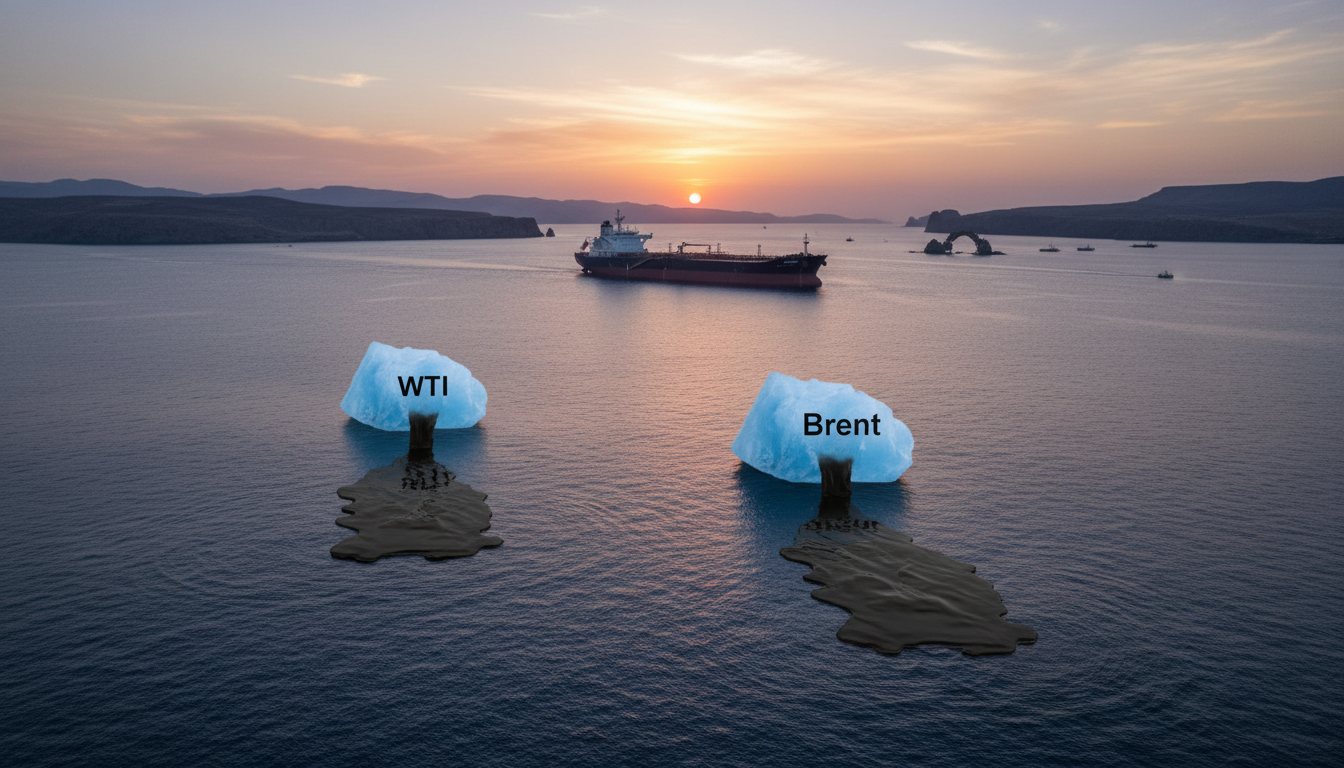
International benchmark Brent crude futures experienced a downturn of 1.92%, settling at $105.94 per barrel. Concurrently, U.S. West Texas Intermediate (WTI) futures slipped by 1.76%, closing the session at $92.82 per barrel. These price movements underscore the market’s acute sensitivity to geopolitical developments in the Middle East, particularly concerning the flow of crude through vital maritime arteries.
Strait of Hormuz: A Lifeline Under Scrutiny
The Strait of Hormuz, a narrow passage connecting the Persian Gulf to the open ocean, remains arguably the world’s most strategically important chokepoint for global oil shipments. An estimated one-fifth of the world’s total petroleum liquids transit this strait daily, making any disruption or even the threat of one a major catalyst for price volatility. Investors closely monitor the geopolitical temperature in this region, understanding that stable transit is paramount for global energy security and predictable market pricing.
For weeks, heightened tensions between Washington and Tehran have kept energy traders on edge. Reports of naval encounters, sanctions, and rhetorical exchanges have consistently injected uncertainty into the supply outlook, often leading to speculative upward pressure on crude benchmarks. Therefore, any signal of easing friction, however minor, tends to be met with a swift market reaction, as evidenced by Friday’s price adjustment.
President Trump’s “Goodwill Gesture” Disclosure
President Trump’s remarks, delivered during a Cabinet meeting on Thursday, provided crucial context to earlier, more cryptic statements. He elaborated on what he previously referred to as a “present” from Iran concerning oil and gas, clarifying that Tehran had facilitated the passage of several oil-laden vessels. “They said, ‘To show you the fact that we’re real and solid and we’re there, we’re going to let you have eight boats of oil … and they’ll sail up tomorrow,'” Trump recounted, referencing Iran’s communication.
The president further explained that the initial commitment expanded. “They then apologized for something they said, and they said, ‘We’re going to send two more boats.’ And [it] ended up being 10 boats,” he added. This revelation suggests an ongoing, albeit delicate, diplomatic engagement behind the scenes, potentially offering a temporary respite from the immediate fears of a complete shutdown or major disruption in the strait.
Market Absorbs News Amidst Underlying Fragility
While the news of unimpeded tanker movement offered some immediate relief to crude prices, market analysts are quick to caution against overinterpreting this as a definitive shift towards stability. The broader energy landscape remains exceptionally delicate. Paola Rodriguez-Masiu, chief oil analyst at Rystad Energy, articulated this sentiment, stating, “The oil market did not underreact to the disruption in the Strait of Hormuz; it absorbed it.”
Rodriguez-Masiu highlighted that for nearly four weeks, crude markets demonstrated remarkable resilience in the face of escalating tensions. This absorption capacity, she explained, stemmed from a combination of factors: existing pre-war surplus inventories, crude stored on water, and strategic policy barrels. These elements collectively provided a temporary buffer, successfully preventing prices from spiraling out of control. However, Rystad Energy warns that “That phase is now ending.”
Global System Shifts from ‘Buffered to Fragile’
According to Rystad’s analysis, the global oil system has transitioned from a “buffered” state to one of acute “fragility.” Weeks of cumulative supply losses and significant inventory drawdowns have depleted the market’s shock absorbers, leaving very little margin to absorb any further disruptions. This precarious balance means that while isolated shipments through Hormuz are positive, the underlying vulnerability of the global supply chain remains a profound concern for investors.
The firm estimates that nearly 17.8 million barrels per day of oil and fuel flows through the Strait of Hormuz have been disrupted or impacted during the recent period of heightened tension. Furthermore, Rystad calculates a staggering loss of close to 500 million barrels of total liquids from the market so far due to various supply challenges. These figures underscore the immense pressure the global energy system has been under, even as prices showed temporary containment.
Investor Outlook: Vigilance Remains Key
For investors navigating the complex energy landscape, Friday’s price dip should be viewed through the lens of short-term relief rather than long-term resolution. The fundamental tightness in global oil supply, combined with dwindling strategic inventories, implies that the market is highly susceptible to future shocks. Geopolitical developments, particularly those involving critical chokepoints like the Strait of Hormuz, will continue to dictate short-term price movements.
Active monitoring of diplomatic engagements, regional stability, and inventory data will be crucial for making informed investment decisions. The shift from a “buffered” to a “fragile” market environment signals that future supply disruptions, even minor ones, could have disproportionately larger impacts on crude prices. Investors should brace for continued volatility and prioritize strategies that account for both geopolitical risk and the evolving dynamics of global supply and demand.
