

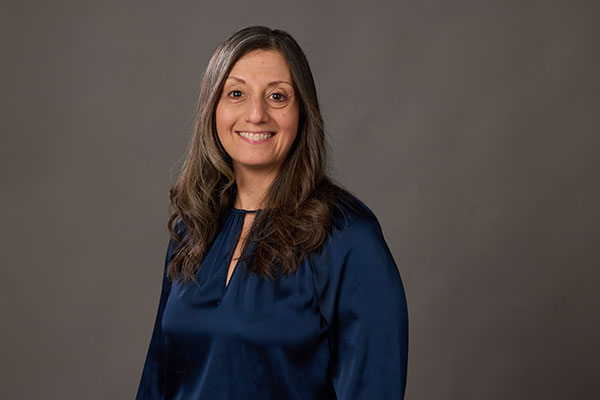
Barb Reasinger didn’t plan on building a 30-year career in supply chain. She started at Finish Line as an assistant store manager, earning $17 an hour. Over time, she moved from the store floor to corporate, taught herself the technical skills she needed, and worked her way into senior leadership.
What’s Related
Today, she serves as Senior Director of Supply Chain at Finish Line, now part of JD Sports. In this installment of Women in Supply Chain, Reasinger reflects on her upbringing in Pittsburgh, her time as a college athlete, her transition into supply chain, and the lessons she’s learned along the way.
SC247: Let’s start at the beginning. What was it like growing up in Pittsburgh?
BR: I grew up in Pittsburgh, Pennsylvania. My dad was a chemist with a doctorate, and my mom worked in medical technology. It was a very science-oriented household.
I have a younger brother who’s eight years younger than me, so for a long time I felt like an only child. When he came along, I definitely took on the older sister role. I was protective of him. He wanted to go everywhere I went.
Academically, I was a solid B student. Things didn’t come naturally to me. I had friends who could get easy A’s without studying. That wasn’t me. I had to put the time in.
SC247: Were sports a big influence in your life?
BR: Very much so. I played soccer and volleyball in high school and then at a Division III college, Elizabethtown College. I did two years of each because they overlapped seasons.
Being a college athlete forces you to manage your time. Your days are already mapped out with workouts, games, travel, and classes. There’s not much room for excuses.
I still dabble in soccer. That competitive side never really leaves.
SC247: What did you study in college, and did you think supply chain was in your future?
BR: I majored in communications with a business minor. I had high hopes of going into advertising design. Supply chain wasn’t on my radar at all.
I went to a job fair and found Finish Line. It matched up with my athletic background. At that point, I was just looking for a job and trying to figure things out.

Reasinger poses at the summit of Mount Kilimanjaro.
SC247: How did you land at Finish Line?
BR: I joined their retail management training program as an assistant manager. I remember making $17 an hour and being pretty proud of it.
I ended up moving to Buffalo, New York, to help open a 25,000-square-foot superstore at Walden Galleria. I hired the entire hourly staff. It was all paper back then. Applications, copies, filing. It was a lot.
I was 23.I also learned that Buffalo has snowplows with massive tires. That’s what I used to tell people when I went home to Pittsburgh.
SC247: You met your husband there, too, right?
BR: I did. We both worked at Finish Line. He was a little intimidated by me at first, I think.
We used to share rides from Buffalo to Pittsburgh since we were both from there. He eventually proposed on top of a roller coaster at Cedar Point. Very on brand for us at the time.
SC247: How did you transition from stores to corporate?
“I didn’t have a master plan when I started. I was on a store floor making $17 an hour. I didn’t know Excel, and I didn’t know what a pallet jack was.”
BR: When I was managing a store in Indianapolis, we were close to headquarters, so people from corporate would come through pretty regularly. They’d walk the floor, look at the assortment, and ask questions. Over time, you naturally build relationships that way.
I think there was an internal posting, or someone suggested I look at it. I don’t remember exactly how it happened, but I applied and transferred into merchandising in 1999.
I remember getting into the corporate office and realizing pretty quickly that I didn’t really know Excel. I had used it a little, but not at the level everyone else had. It was intimidating. There weren’t online tutorials back then. I had to teach myself formulas, pivot tables, all of it. I felt overwhelmed at first, but you just keep working at it, and eventually it starts to click.
SC247: When did supply chain really become your path?
BR: It wasn’t something I set out to do from the beginning. I stayed in merchandising for quite a while. I moved into planning, worked on forecasting and markdowns, and learned the financial side of the business.
At one point, I was part of a warehouse management system project. I was on the merchandising side as the SME for allocations because those allocations had to feed the warehouse correctly. That project went on longer than anyone expected, and while I was on it, they backfilled some of our roles.
When it wrapped up, instead of going back to what I had been doing, they found a role for me in the supply chain. I landed on the distribution center floor managing operations for Running Specialty Group, which was about 50 stores at the time.
I had never worked in a distribution center before. I didn’t know what a pallet jack was. I remember looking at one and thinking, do I push this or pull it? It was definitely a learning experience, but I was willing to jump in and figure it out.
SC247: What’s your role today?
BR: I’m Senior Director in Supply Chain. I oversee order management, so that includes routing and KPIs like out-of-stock rates, same-day shipping, and cancel rates. I also oversee supply chain planning, where we plan inbound and outbound units by week.
For direct-to-consumer, we plan fulfillment by the hour so our operations teams can plan labor appropriately. I also oversee vendor compliance and vendor relations.
Over the years, my responsibilities have expanded. For a period of time I even had reverse logistics. Sometimes opportunities come up that aren’t necessarily in your lane, and you take them on and learn something new.
SC247: Did you have mentors along the way?
“One thing I tell them is that sometimes you have to say what feels obvious. I’ve been in meetings where I had a thought in my head and didn’t say it, and then someone else did and the whole room agreed. It’s not about being the loudest person, but you do have to speak up.”
BR: I don’t really have a textbook mentor story. I’ve had managers and peers who influenced me at different points and gave me guidance, but it wasn’t one single person the whole way through.
Now I do mentor younger professionals. One thing I tell them is that sometimes you have to say what feels obvious. I’ve been in meetings where I had a thought in my head and didn’t say it, and then someone else did and the whole room agreed. It’s not about being the loudest person, but you do have to speak up.
SC247: What has your experience been like as a woman in supply chain?
BR: There are definitely times when it can be harder to be heard. I think sometimes women wait until they feel completely confident before they speak, and not everyone operates that way.
That said, I’ve also been fortunate to work with male leaders and peers who respect my opinion and value my input, even if I’m not the loudest person in the room.
SC247: Looking back on 30 years, what are you most proud of?
BR: I didn’t have a master plan when I started. I was on a store floor making $17 an hour. I didn’t know Excel, and I didn’t know what a pallet jack was.
I just kept taking the next opportunity and learning along the way. When I look back, I’m proud that I kept stepping forward and didn’t talk myself out of trying something new.
