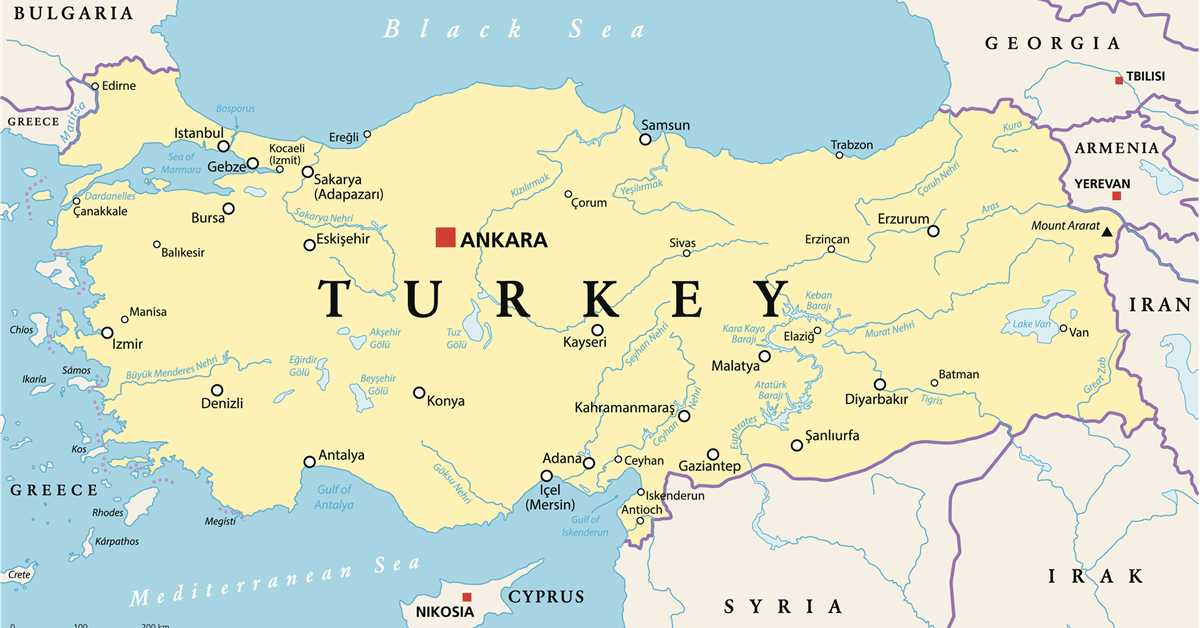
Türkiye’s ambitious drive for energy independence took a significant step forward with the recent announcement of an Engineering, Procurement, Construction, Installation, and Commissioning (EPCIC) contract award to Wison New Energies by Turkish Petroleum Corporation (TPAO). This pivotal agreement targets the floating production unit (FPU) for Phase 3 of the Sakarya Gas Field, a cornerstone project in the Black Sea. For investors, this development signals not only the continued maturation of a critical national energy asset but also highlights the expanding capabilities of deepwater infrastructure providers in challenging operational environments. As global energy dynamics remain in flux, understanding the strategic implications of such large-scale gas projects is essential for navigating the investment landscape.
Sakarya Phase 3: Bolstering Türkiye’s Energy Sovereignty
The Sakarya Gas Field represents Türkiye’s most substantial natural gas discovery to date, boasting proven reserves of 14.3 trillion cubic feet (405 billion cubic meters). Located approximately 105.6 miles (170 kilometers) offshore in the Black Sea, at a formidable water depth of 2,150 meters, its development is central to the nation’s strategy to reduce reliance on imported natural gas and enhance domestic supply capacity. The FPU, as the centerpiece of Phase 3, is engineered for a robust gas export rate of 883 million standard cubic feet per day. Designed for a minimum 30-year operational life, it also incorporates significant capacities for produced water treatment (1,350 cubic meters per day) and monoethylene glycol (MEG) regeneration and injection (2,503 cubic meters per day) for hydrate inhibition. Navigating the Black Sea’s challenging conditions, including the 56-meter air draft restriction of the Bosphorus Strait, underscores the project’s technical complexity and TPAO’s commitment to unlocking this strategic resource.
Wison’s Deepwater Prowess and Project Execution for Investors
The selection of Wison New Energies for this critical EPCIC contract speaks volumes about their growing reputation in complex floating energy solutions. Wison’s Chairman, Liu Hongjun, emphasized this collaboration as a significant milestone in the company’s internationalization strategy and a breakthrough in deepwater engineering. This isn’t an isolated success; Wison recently marked the launch of the Nguya floating liquefied natural gas (FLNG) unit for Eni SpA’s Congo LNG project. That facility, measuring 376 meters in length, integrates Chart Industries’ IPSMR liquefaction technology and SPB tank design, showcasing Wison’s innovative approach and capacity for delivering large-scale, technically advanced floating infrastructure. For investors evaluating the deepwater segment, Wison’s expanding portfolio and demonstrated ability to execute projects under stringent technical and environmental requirements offer a compelling case for operational excellence and reliability in a high-stakes sector.
Navigating Macro Headwinds: Sakarya’s Strategic Value Amidst Market Volatility
While the Sakarya project focuses on long-term gas supply, it operates within a dynamic global energy market that investors must constantly monitor. As of today, Brent crude trades at $98.17, reflecting a 1.23% decrease, with its daily range between $97.92 and $98.58. Similarly, WTI crude stands at $89.78, down 1.52%, fluctuating between $89.57 and $90.21. This recent snapshot follows a more pronounced trend, with Brent crude having declined by approximately $14, or 12.4%, from $112.57 on March 27th to $98.57 on April 16th. Gasoline prices are also feeling the pressure, currently at $3.08, down 0.32% for the day. These figures highlight ongoing volatility in the crude and refined products markets. However, the strategic imperative of projects like Sakarya, aimed at national energy security and import substitution, often insulates them from some of the short-term price fluctuations affecting global crude. Investors looking for stability in their energy portfolios might find gas projects with strong national backing and long-term supply agreements to be relatively resilient assets, offering a hedge against broader market uncertainties.
Forward Outlook: Upcoming Catalysts and Investor Concerns
The immediate horizon holds several key events that will shape investor sentiment in the broader energy sector. Investors will be keenly observing the OPEC+ Joint Ministerial Monitoring Committee (JMMC) meeting on April 18th, followed by the full OPEC+ Ministerial Meeting on April 20th. These gatherings are critical for insights into potential production policy adjustments, which can significantly influence global crude supply and price expectations. Furthermore, the regular cadence of industry data, including the Baker Hughes Rig Count on April 17th and 24th, along with the API and EIA Weekly Crude Inventory reports on April 21st/22nd and April 28th/29th, will provide continuous indicators of supply, demand, and storage dynamics. Our proprietary reader intent data underscores a strong investor focus on these very areas. We’ve observed a consistent surge in queries regarding current OPEC+ production quotas and the real-time Brent crude price, reflecting a desire for immediate, accurate market intelligence to inform positioning. The Sakarya Gas Field, while a long-term strategic play, will inevitably be evaluated by investors against the backdrop of these ongoing market movements and policy decisions, highlighting the interconnectedness of national energy strategies with global supply-demand fundamentals.


