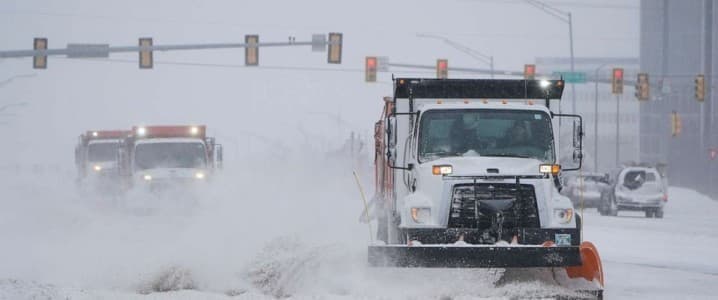
A severe winter storm has delivered a significant blow to the U.S. Northeast, triggering widespread power outages and an immediate surge in regional energy demand. This event underscores the critical vulnerabilities within energy infrastructure during extreme weather, creating both challenges for utility operators and nuanced opportunities for investors. While the immediate impact is localized to power and natural gas markets, the broader energy complex, including crude oil, experiences ripple effects from such demand shocks, albeit with varying degrees of significance. Investors tracking the energy sector must dissect the immediate operational disruptions from the long-term supply and demand fundamentals that truly drive market movements.
Northeast Power Grid Under Extreme Stress
The recent winter storm brought “near impossible” travel conditions and left over half a million homes and businesses across seven states without power. Winds gusting over 70 mph, combined with over 22 inches of snow in some areas and life-threatening wind chills as low as -50°F in the Northern Plains, created a perfect storm of operational challenges. Massachusetts-based Eversource Energy (NYSE:ES) was particularly hard-hit, reporting 135,797 of its 3.3 million customers in the dark, while Ohio’s FirstEnergy Corp. (NYSE:FE) saw 81,257 of its 6.2 million U.S. customers affected. Utility companies like Eversource have had to activate mutual assistance agreements, bringing in outside crews and suspending non-critical capital work to prioritize outage response. This operational shift inevitably increases short-term operating expenses, which can weigh on quarterly earnings. For investors, monitoring these additional costs and the timeline for full restoration is crucial for assessing the near-term financial health of affected utility stocks. The sheer scale of disruption, with New York City’s Central Park recording over 15 inches of snow and officials warning it could rank among the city’s 10 worst storms in 150 years, highlights the severity.
Natural Gas Demand Spikes Amidst Heating Crisis
This storm arrives precisely during peak winter heating demand, which naturally elevates electric load and natural gas consumption across the affected region. With blizzard warnings issued for over 40 million people from Maryland to Maine, the need for heating has skyrocketed. Gas-fired power plants, which are critical for electricity generation in the Northeast, have been operating at high utilization rates to meet this demand, putting immense pressure on local distribution reliability. The localized surge in natural gas prices reflects this immediate demand shock, contrasting with the more globally influenced crude oil markets. Investors focused on natural gas and related infrastructure should note the short-term bullish pressure this creates for regional gas hubs, even if the national or international impact is less pronounced. The ability of pipeline operators and storage facilities to respond to such acute, rapid increases in consumption is a key factor in mitigating price volatility and ensuring energy security in these events.
Crude Markets Show Resilience Despite Regional Event
While the Northeast storm creates significant regional energy stress, the global crude oil market operates on a different set of fundamentals, often showing resilience to localized demand shocks. As of today, Brent crude trades at $93.91, marking a notable 3.85% increase, with WTI crude standing at $90.38, up 3.39% for the day. Gasoline prices have also seen a bump, reaching $3.13 per gallon, a 2.96% rise. This upward movement for crude prices comes after a period of recent volatility; Brent, for instance, trended downwards from $118.35 on March 31 to $94.86 on April 20. The current rebound suggests underlying bullish sentiment or a reaction to broader geopolitical factors rather than a direct, sustained impact from the regional weather event itself. Investors frequently ask whether WTI is going up or down, and while short-term events can cause minor fluctuations, the broader trajectory for crude is typically determined by global supply-demand balances, inventory levels, and macroeconomic indicators. This regional storm is a blip on the radar for global crude, yet it reinforces the inherent volatility that defines energy markets.
Navigating Future Volatility: Key Investor Catalysts
For investors looking beyond the immediate weather-driven spikes and seeking to understand the longer-term trajectory of oil prices, a careful watch on upcoming global and domestic catalysts is paramount. Many of our readers are asking about the predicted price of oil per barrel by the end of 2026, underscoring the demand for forward-looking analysis. The fundamental drivers influencing crude prices will emerge from a series of scheduled events over the next few weeks. The **OPEC+ JMMC Meeting** on April 21 is a critical date, as any signals regarding production policy will directly impact global supply. Following this, the **EIA Weekly Petroleum Status Reports** on April 22 and April 29 will provide crucial insights into U.S. crude inventories, refinery utilization, and demand metrics, which are often major price movers. The **Baker Hughes Rig Count** on April 24 and May 1 offers a forward-looking indicator of future drilling activity and potential supply. Finally, the **EIA Short-Term Energy Outlook** on May 2 will deliver official forecasts that can significantly shape market expectations. These events, combined with ongoing geopolitical developments and global economic health, will dictate the price of crude far more than transient regional weather patterns, providing the real directional signals for energy investors.


