

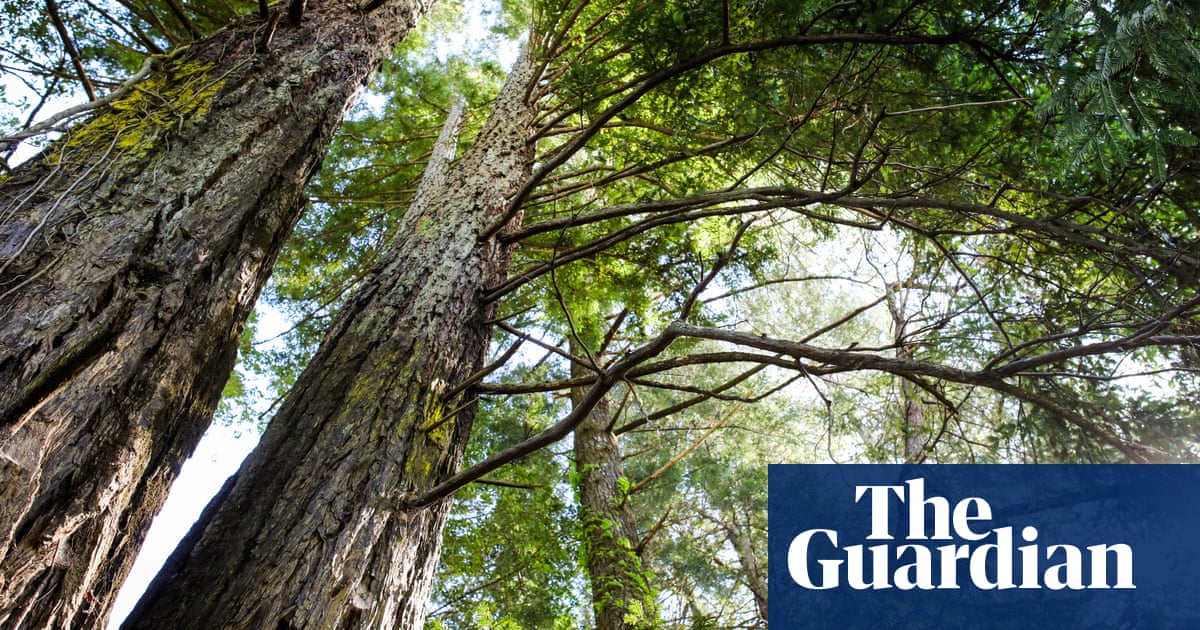
New maps have revealed the best “win-win” opportunities across the world to regrow forests and tackle the climate crisis, without harming people or wildlife.
The places range from the eastern US and western Canada, to Brazil and Columbia, and across Europe, adding up to 195 million hectares (482 million acres). If reforested, this would remove 2.2bn tonnes of carbon dioxide a year, about the same as all the nations in the European Union.
Previous maps have suggested much larger areas have the potential for regrowing trees but were criticised for including important ecosystems like savannahs and not considering the impact on the millions of people who live in or depend on forests.
The researchers behind the new maps built on previous work but employed a deliberately conservative approach in order to shine a spotlight on those places with the highest potential and the fewest problems.
They focused only on dense, closed-canopy forests and excluded areas that had suffered recent wildfires. The result was a map showing 195 million hectares of reforestation opportunity, an area equivalent to the size of Mexico but up to 90% smaller than previous maps. They provided further options that, for example, avoid the risk of social conflict with forest peoples, which reduced the potential CO2 removal to 1.5bn tonnes a year.
Reforestation opportunity maps are crucial because regrowing trees is the largest and cheapest option for taking CO2 out of the atmosphere, but tree initiatives need to focus on the most suitable areas to maximise their impact.
“Reforestation is not a substitute for cutting fossil fuel emissions, but even if we were to drive down emissions tomorrow, we still need to remove excess CO2 from the atmosphere,” said Dr Susan Cook-Patton, at The Nature Conservancy (TNC) and a senior author of the new study, published in the journal Nature Communications. “Many, many years of evolution have gone into trees figuring out how to suck CO2 from the atmosphere and lock it into carbon stores, so it’s ready to scale now.”
“As the number of climate-fuelled disasters stack up worldwide, it’s increasingly obvious that we can’t waste time on well-meaning but hazily-understood interventions,” she said. “We must fast-track our focus toward the places with greatest benefits for people and nature and the fewest downsides, the places most likely to be win-win. This study will help leaders and investors do just that.”
Prof Simon Lewis, at University College London and not part of the study team, said: “There have been a series of well-known studies of global reforestation potential that have come up with wildly high numbers. This new study is the antidote to such hyperbole. New forests in the lowest risk areas globally would remove about 5% of humans’ CO2 emissions each year – important, but not a silver bullet.”
The options the scientists created beyond their 195mHa base map prioritised three broad criteria: avoiding social conflicts, improving biodiversity and water quality, and highlighting places where governments already had reforestation goals, making action more politically possible.
“There’s always a set of values or motivations that goes into the way you produce the map, and the answer that you get,” said Kurt Fesenmyer, also at TNC and lead author of the new analysis. The area of land that met every criteria was small – 15mHa – so the researchers hope governments and NGOs will use their interactive maps to highlight the most suitable solutions in their own countries.
The planet’s most important stories. Get all the week’s environment news – the good, the bad and the essential
Privacy Notice: Newsletters may contain info about charities, online ads, and content funded by outside parties. For more information see our Privacy Policy. We use Google reCaptcha to protect our website and the Google Privacy Policy and Terms of Service apply.
after newsletter promotion
The focus on social conflicts was crucial, as almost 100 million people live in the 195mHa area. “Previous studies often failed to address how reforestation could have negative effects on human well-being, especially for poor people living in the remote rural areas often targeted for reforestation,” says Dr Forrest Fleischman, at the University of Minnesota and a co-author of the study.
“These negative effects are more likely when people lack secure land rights, are highly dependent on natural resources for food and fuel, and live in countries where political rights are not respected,” he said.
Removing such places from the map cut the area of reforestation opportunity by about a third but the remaining land would still remove about 1.5bn tonnes of CO2 a year. These regions were particularly focused in the US, Canada, Europe and Australia, as well as Brazil, which is hosting the UN’s Cop30 climate summit in November.
Lewis said the approach taken in the new study made sense: “Who wants to see the natural grasslands like the Serengeti covered in trees and not lions, elephants and other wildlife? And planting trees in places that burn isn’t going to store carbon long-term, and so of course these areas should be excluded.”
However, he added: “The most conservative map removes potential forest restoration across almost all of Africa and Southeast Asia, due to fears of [land rights] conflict. This risks perpetuating poverty, if investments in nature avoid poor countries with limited governance. Plans to invest in nature to improve local livelihoods and also benefit the climate and biodiversity should be seized, as these often go hand-in-hand.”
