


(By Oil & Gas 360) – This week, energy markets moved from cautious to volatile. Escalating tensions involving Iran pushed oil prices sharply higher, disrupted shipping routes, and sent LNG freight rates surging. At the same time, capital continued flowing into shale and infrastructure assets, reminding investors that even during geopolitical shocks, the long-term energy investment cycle keeps moving.
This Week’s Five Headlines That Mattered
1. Oil surges as Iran crisis disrupts shipping and supply
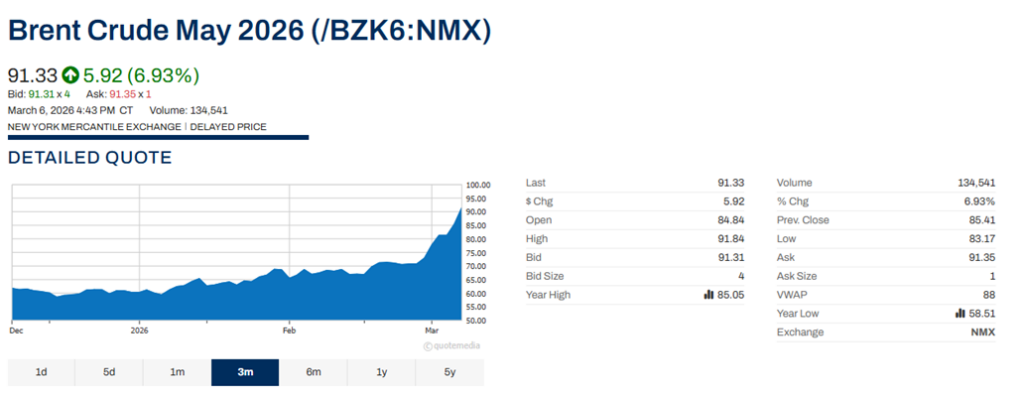
Oil prices climbed roughly 5% this week as tensions involving Iran widened and concerns grew about potential disruptions to shipping and production in the region. Brent crude briefly traded above $90 per barrel as markets priced in escalating supply risk.
Why it matters:
When geopolitical flashpoints threaten major shipping lanes or production hubs, the market quickly adds a risk premium. The Strait of Hormuz remains one of the world’s most critical oil chokepoints.
2. LNG shipping rates surge 650%
Spot LNG shipping rates jumped to roughly $300,000 per day, a dramatic increase driven by tightening vessel availability and heightened demand for cargo flexibility.
Why it matters:
Shipping costs can quickly reshape LNG economics. When freight spikes, the cost of moving gas can rival the value of the cargo itself, tightening supply chains and amplifying regional price volatility.
3. Energy infrastructure attacks raise fears of broader supply disruption
Analysts warned that attacks on energy infrastructure and potential closure risks around the Strait of Hormuz could further accelerate oil prices if disruptions spread.
Why it matters:
Energy infrastructure has increasingly become a geopolitical pressure point. Even isolated incidents can ripple through global markets by raising uncertainty about supply security.
4. Investors remain active in shale despite volatility
The proposed Devon–Coterra combination reinforced a familiar theme: investors continue to prioritize disciplined capital deployment in shale.
Why it matters:
After years of capital restraint, investors still control the pace of shale expansion. Growth remains measured, even when commodity prices spike.
5. Argentina pushes incentives to expand Vaca Muerta development
Argentina expanded investment incentives to accelerate development of the Vaca Muerta shale formation, one of the largest unconventional resources outside North America.
Why it matters:
Global capital is increasingly looking beyond U.S. shale for long-term growth opportunities, particularly in basins with large undeveloped resources.
Capital Move of the Week
Capital continued flowing into upstream and infrastructure assets even as geopolitical volatility dominated headlines.
BlackRock and EQT announced plans to acquire AES Corp. in a $33.4 billion transaction, highlighting continued institutional appetite for large-scale energy infrastructure and power generation assets.
In the upstream sector, Parex Resources made a roughly $500 million bid for Colombia-focused assets owned by Frontera Energy, underscoring continued interest in Latin American production opportunities as companies look to expand reserves and diversify portfolios.
Natural gas assets also remain in demand. WhiteHawk Energy agreed to acquire a Haynesville mineral portfolio tied to approximately 500 producing wells, reinforcing investor confidence in long-term LNG-linked gas demand.
Meanwhile, smaller operators continued positioning for growth. Battalion Oil Corporation announced plans to raise approximately $15 million, and Prairie Operating Co. introduced leadership changes aimed at strengthening its strategic direction.
Across the sector, the message is consistent: even amid geopolitical shocks and price volatility, capital continues to seek high-quality production and infrastructure assets.
Policy & Power Watch
Even as oil markets dominated headlines, structural challenges in the power sector remained in focus.
Barclays warned that grid constraints could strand renewable assets despite record global investment in clean energy. The issue highlights a growing gap between project development and the infrastructure needed to deliver power to markets.
The message is increasingly clear: energy transition investment alone is not enough. Transmission capacity, grid reliability, and permitting timelines are becoming critical bottlenecks.
Friday Takeaway
This week underscored how quickly geopolitical events can tighten energy markets. But beneath the volatility, the longer-term story remains intact. Capital continues to move into shale, natural gas, and power infrastructure while governments push to secure supply.
Energy markets may surge and retreat with headlines, but the investment cycle behind them keeps advancing.
About Oil & Gas 360
Oil & Gas 360 is an energy-focused news and market intelligence platform delivering analysis, industry developments, and capital markets coverage across the global oil and gas sector. The publication provides timely insight for executives, investors, and energy professionals.
Disclaimer
This opinion article is provided for informational purposes only and does not constitute investment, legal, or financial advice. The views expressed are based on publicly available information and market conditions at the time of publication and are subject to change without notice.
