In the dynamic world of oil and gas investing, fundamental supply-demand dynamics and geopolitical shifts typically dominate the discourse. Yet, we are increasingly observing how tangential, seemingly unrelated policy statements and underlying political philosophies can cast long shadows over market stability and investor confidence. The recent public commentary surrounding critical environmental resources, particularly water management in regions like Southern California, serves as a stark reminder that a disconnect from factual reality in policy-making can introduce profound, unquantifiable risks for energy markets.
As senior analysts, our role extends beyond tracking barrels and rigs; it involves discerning the broader ecosystem of policy, regulation, and political will that shapes future energy landscapes. The potential for national energy and environmental policies to be guided by fundamentally flawed understandings of resource allocation or climate science necessitates a robust re-evaluation of how we price in political risk. This piece delves into these emerging uncertainties, leveraging our proprietary market insights and forward calendar to guide investor strategy.
Policy Disconnect and Market Volatility
The credibility of policy statements holds significant weight in global markets. When high-level commentary on critical infrastructure and environmental science deviates sharply from established facts, it injects a layer of unpredictability that sophisticated investors must scrutinize. Consider the recent public discourse around Southern California’s water supply, where a prominent political figure suggested an ability to divert water from the Pacific Northwest — a hydrological impossibility given the existing infrastructure and natural divides. Such statements, while perhaps framed as localized concerns, signal a broader approach to resource management that could profoundly impact energy sectors.
The market’s sensitivity to perceived policy shifts is evident in recent price movements. As of today, Brent crude trades at $99.75, marking a robust 5.08% surge from its opening, pushing past the day’s low of $94.42. WTI crude similarly saw strong gains, reaching $91.68, up 4.03%. However, this strong daily performance comes on the heels of a significant downturn, with Brent having fallen from $108.01 on March 26th to $94.58 as recently as April 15th, representing a 12.4% decline in just over two weeks. This volatility underscores how quickly market sentiment can pivot, influenced not just by fundamental supply-demand balances but also by the perception of political stability and rational policy direction. When policy pronouncements challenge scientific consensus, whether on water, climate, or renewable energy economics, the market’s ability to forecast regulatory environments accurately diminishes, leading to increased risk premiums and wider price swings.
The Water-Energy Nexus: Unseen Risks for Upstream and Downstream
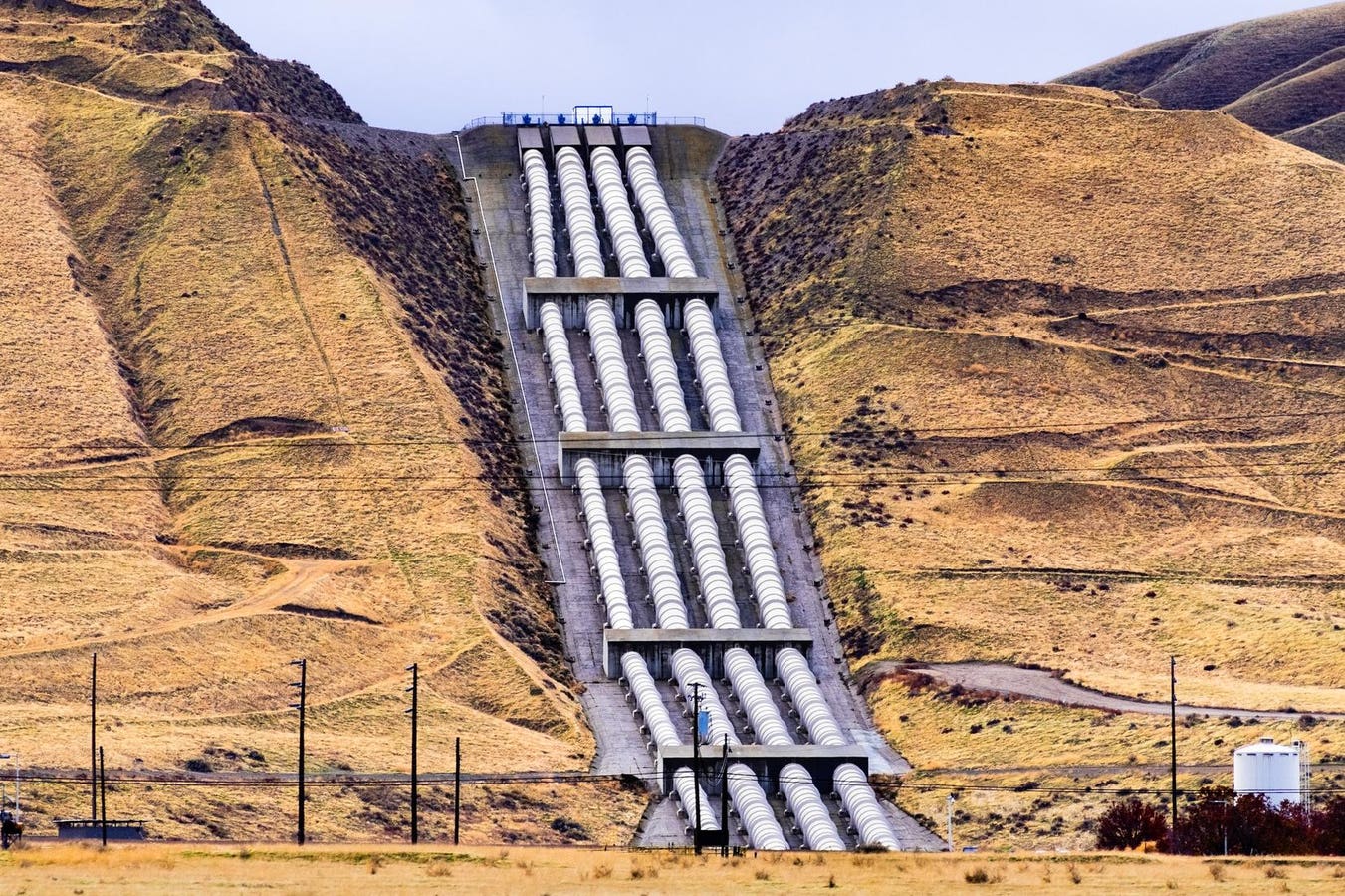
The seemingly local issue of water management in California, particularly the factual inaccuracies presented regarding its sources and allocation, holds deeper implications for the broader energy sector. Southern California primarily draws its water from the Sierra Nevada mountains via the Owens Valley Aqueduct and the Colorado River, not the distant Pacific Northwest. Moreover, past policy decisions, such as the release of billions of gallons of water from Central Valley dams outside of planting season, were deemed “hydrologic insanity” by experts, offering no relief to drought-stricken Los Angeles or agricultural needs.
This illustrates a critical point for energy investors: water is an indispensable, yet often overlooked, input for both upstream and downstream operations. Hydraulic fracturing, power generation, refining processes, and even carbon capture technologies are all water-intensive. A national or regional policy framework built on a misunderstanding of water availability, distribution, or environmental impact could lead to arbitrary restrictions, increased operational costs, or project delays for energy companies. For instance, if policies conflate environmental protections (like those for endangered species in the Sacramento-San Joaquin Delta) with unrelated water allocation issues, it creates an unpredictable regulatory landscape. Investors must consider how such policy misalignments could impact permitting for new projects, necessitate costly water treatment solutions, or even lead to curtailments in operations, particularly in water-stressed regions. The long-term viability of energy assets, especially those in regions reliant on complex water rights and infrastructure, is intrinsically linked to sensible, fact-based water policy.
Navigating Future Events Amidst Policy Uncertainty
Looking ahead, the energy calendar is packed with events that typically drive market analysis, but their impact must now be viewed through the lens of potential policy shifts. We anticipate key insights from the Baker Hughes Rig Count reports on April 17th and April 24th, which will signal North American production trends. Crucially, the OPEC+ Joint Ministerial Monitoring Committee (JMMC) meeting on April 18th, followed by the Full Ministerial meeting on April 20th, will determine global supply quotas. These events are fundamental to our base-case Brent price forecasts for the next quarter.
However, the overlay of an unpredictable domestic policy environment complicates these traditional analyses. If a future administration pursues policies that actively castigate renewable energy, for instance, based on unsubstantiated claims about cost or environmental impact, it could distort investment signals. Conversely, a roll-back of federal climate science research or a denial of rapid climate change harms could create a false sense of security for fossil fuel investments, ignoring long-term systemic risks. Investors need to weigh the immediate impacts of OPEC+ decisions and inventory reports (like the API and EIA Weekly Petroleum Status Reports on April 21st/22nd and April 28th/29th) against the potential for significant, possibly irrational, shifts in regulatory frameworks that could alter the very demand curves and operational costs for years to come. This necessitates a more robust scenario planning approach, accounting for a wider spectrum of political outcomes.
Investor Focus: Beyond Barrels to Policy Credibility
Our proprietary reader intent data reveals that investors are actively seeking clarity on the future. Top inquiries this week include building a base-case Brent price forecast for the next quarter, understanding the performance of Chinese tea-pot refineries, and assessing the consensus 2026 Brent forecast. These questions underscore a desire for stability and predictability in a complex market.
Yet, achieving that predictability becomes increasingly challenging when policy credibility is under strain. While market participants diligently analyze global demand drivers, such as refinery runs in Asia or LNG spot prices, they must also grapple with the added layer of domestic policy risk. How does one accurately forecast Brent for 2026 when the foundational scientific understanding guiding potential environmental and energy regulations is openly questioned? The ability of a government to effectively manage critical resources like water, or to articulate a coherent and fact-based energy strategy, directly impacts investor confidence in long-term capital deployment. This means investment decisions in the oil and gas sector must now incorporate a higher premium for policy uncertainty, moving beyond traditional geopolitical and economic factors to include the fundamental credibility of scientific and resource management principles underpinning national governance. Smart investors will prioritize companies and regions demonstrating resilience against, or even capitalizing on, such policy volatility through strong governance, diversified portfolios, and an unwavering commitment to operational excellence grounded in scientific reality.