The global energy landscape is undergoing a profound transformation, driven by an insatiable demand for electricity from rapidly expanding Artificial Intelligence (AI) data centers and the accelerating adoption of electric vehicles (EVs). This surge in power consumption is exposing critical vulnerabilities in the existing grid infrastructure, a system largely designed for a different era. However, this challenge also presents a unique opportunity for the oil and gas sector to cement its foundational role in the energy future. As AI’s computational appetite grows, the inherent inefficiencies of our Alternating Current (AC) dominant grid are becoming strikingly clear, paving the way for a resurgence of Direct Current (DC) technology – a shift that could significantly enhance the strategic importance and investment potential of traditional energy producers.
AI’s Unprecedented Power Demands and Grid Realities
The sheer scale of energy required to fuel the AI revolution is staggering. Modern AI data centers are veritable energy sponges, demanding massive, concentrated power to operate server racks that inherently run on direct current. The current utility grid, however, delivers alternating current, necessitating repeated power conversions that introduce significant energy loss, add complexity, and drive up operational costs. This fundamental mismatch between power supply architecture and digital demand is creating an urgent need for more efficient power delivery solutions. The question is no longer just about generating more power, but about generating and delivering it in a way that economically supports this next era of electrification. For oil and gas, this translates into a sustained and even growing demand for reliable, scalable primary energy sources to feed these power-hungry digital ecosystems, whether through natural gas-fired power plants or other on-site generation solutions capable of providing the necessary base load.
Navigating Market Dynamics Amidst Shifting Demand
The evolving energy demand picture from AI and EVs is playing out against a backdrop of complex market dynamics. As of today, Brent Crude trades at $93.52, reflecting a modest increase of 0.3% within a tight day range of $93.52 to $93.72. Similarly, WTI Crude stands at $90.25, up 0.65% from its opening, having navigated a day range of $89.71 to $90.30. These figures mark a significant shift from recent weeks; our proprietary data reveals Brent crude experienced a notable decline of nearly 19.8% over the past fortnight, falling from $118.35 on March 31st to $94.86 just yesterday, April 20th. This downward trend, while influenced by various factors, underscores the market’s sensitivity to global economic indicators and supply-demand perceptions. Gasoline prices, currently at $3.12, reflect a slight dip of 0.32%, remaining stable within their daily range. Investors are closely watching how this volatility is balanced by the long-term, structural demand increases anticipated from AI and data center expansion, creating a nuanced outlook for crude and refined products.
The DC Revival: A Strategic Opportunity for O&G Infrastructure
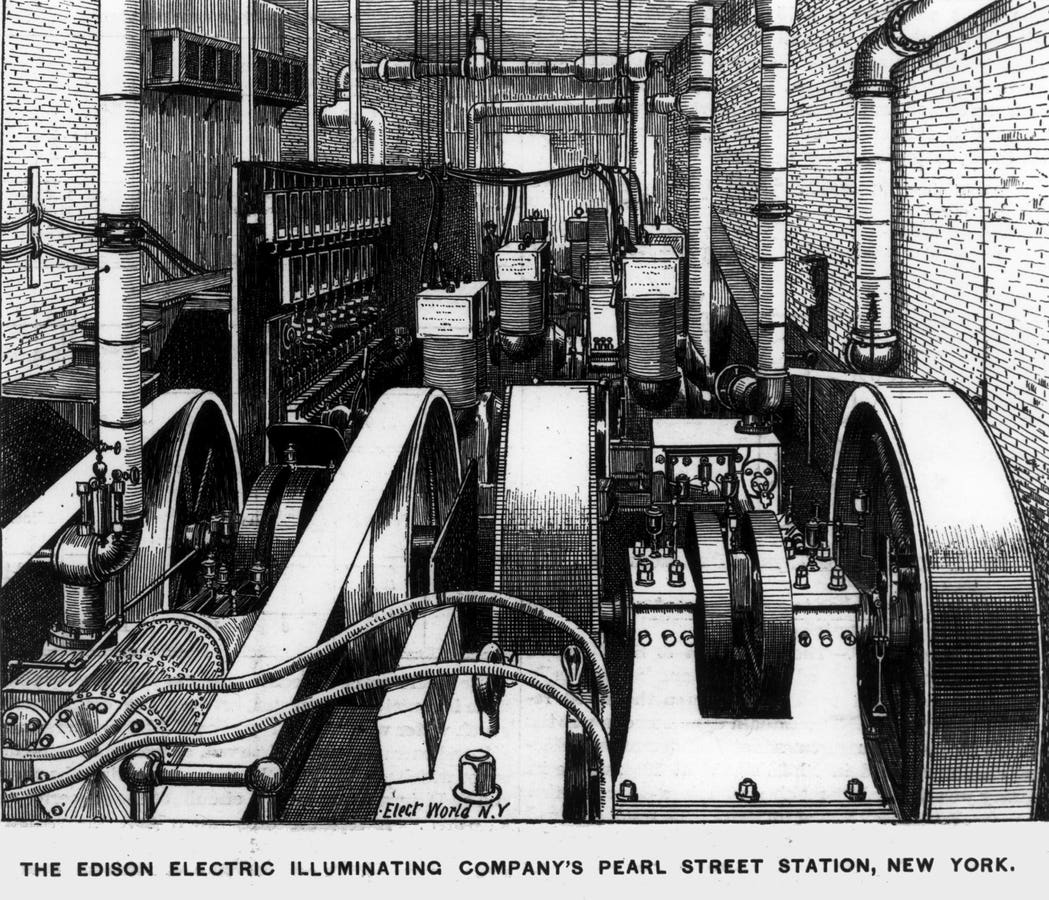
The historical “Current Wars” between Thomas Edison’s direct current and George Westinghouse’s alternating current ultimately saw AC emerge victorious for its ability to transmit power over long distances. However, the digital age has quietly ushered in a DC renaissance. Modern electronics, from data center servers to electric vehicles, operate on DC. The inefficiencies of converting AC to DC multiple times for end-use are becoming economically unsustainable given the scale of AI power requirements. This creates a compelling argument for localized DC microgrids and direct DC power generation. For the oil and gas sector, this presents a strategic advantage. Companies that can develop and deploy efficient, on-site power generation solutions – particularly those leveraging natural gas for its reliability and lower emissions profile compared to coal – can directly feed DC-centric data centers and EV charging hubs. This isn’t just about supplying the fuel; it’s about integrating into the next generation of power infrastructure, minimizing transmission losses, and offering a more resilient, direct power solution that bypasses the limitations of the legacy AC grid.
Investor Focus: Anticipating Future Volatility and Opportunity
Our proprietary reader intent data highlights a clear investor appetite for clarity amidst uncertainty, with many asking about the future trajectory of oil prices, particularly “what do you predict the price of oil per barrel will be by end of 2026?” and the direction of WTI. This sentiment underscores the critical importance of upcoming market catalysts. Investors should closely monitor the OPEC+ JMMC Meeting scheduled for today, April 21st, which could provide crucial insights into supply adjustments and production quotas. The subsequent EIA Weekly Petroleum Status Reports on April 22nd and April 29th, alongside API Weekly Crude Inventory data on April 28th and May 5th, will offer vital statistics on inventory levels and demand trends. Furthermore, the Baker Hughes Rig Count on April 24th and May 1st will indicate future drilling activity, while the EIA Short-Term Energy Outlook on May 2nd will provide a broader forecast for global energy markets. These events, taken together, will significantly shape investor confidence and provide key indicators for the oil price outlook throughout 2026, especially as the market grapples with balancing traditional supply-side factors against the burgeoning, yet potentially volatile, demand from AI and EVs.
Strategic Investment Pathways in the AI-Driven Energy Era
For discerning investors, the convergence of AI’s energy demands and the evolving grid architecture opens up distinct investment pathways within the oil and gas sector. Companies that are proactively investing in gas-to-power projects, particularly those co-located with or strategically positioned near major data center hubs, stand to benefit significantly. Furthermore, firms developing advanced microgrid solutions, leveraging natural gas generators for resilient, efficient DC power delivery, are poised for growth. The operational efficiencies gained by integrating AI into exploration, production, and refining processes also cannot be overstated, driving down costs and enhancing productivity across the value chain. As the world increasingly acknowledges the foundational role of reliable, dispatchable energy in powering the digital economy, the oil and gas industry is not merely a supplier of raw materials; it is an indispensable architect of the energy solutions required for the AI age. This positions the sector as a critical, long-term investment for those looking to capitalize on the next wave of technological advancement.