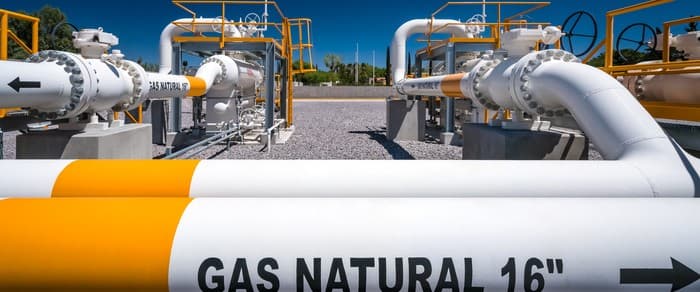
The Permian Basin, a cornerstone of U.S. energy production, is once again grappling with significant natural gas takeaway constraints, leading to widening discounts at the Waha hub in West Texas. The latest catalyst for this pressure comes from unexpected export curtailments to Mexico, exacerbating an already fragile supply-demand balance. This development, coupled with broader market volatility in crude prices, presents a complex landscape for investors closely monitoring the North American energy sector. Our analysis delves into the immediate impacts, the structural challenges, and the forward-looking indicators that will shape natural gas valuations in the coming months.
Waha’s Discount Deepens Amidst Export Snags
The immediate and most pressing issue for Permian natural gas producers is the sudden reduction in pipeline flows to Mexico. Proprietary data indicates that certain volumes are failing to meet critical compositional specifications, specifically related to nitrogen, sulfur, and moisture content. These quality control issues have triggered curtailments, effectively stranding additional gas within the Permian basin. For the Waha hub, which has long been susceptible to takeaway capacity bottlenecks, this means an influx of supply without a corresponding outlet, inevitably leading to wider price discounts relative to benchmark Henry Hub.
Mexico’s substantial reliance on U.S. natural gas imports—covering over 70% of its domestic demand for power generation and industrial consumption—magnifies the impact of these disruptions. When cross-border flows are hindered by quality or capacity problems, Mexican buyers face shortages, while Permian producers are left with an oversupply that weighs heavily on local pricing. This dynamic highlights the interconnectedness of North American energy infrastructure and the significant financial implications of seemingly technical compliance issues.
Broader Market Headwinds and Investor Sentiment
The challenges at Waha are unfolding against a backdrop of notable volatility in the broader energy markets. As of today, Brent crude trades at $90.38 per barrel, marking a substantial 9.07% decline in a single day, with its range fluctuating between $86.08 and $98.97. Similarly, WTI crude has experienced a sharp drop, now priced at $82.59, down 9.41% for the day. This recent price action follows a significant bearish trend over the past two weeks, with Brent having fallen from $112.78 on March 30 to its current level, representing a nearly 20% contraction. Gasoline prices have also seen downward pressure, trading at $2.93, a 5.18% decrease today.
This widespread weakness in crude markets naturally prompts investors to question the stability of the energy complex. Our internal data shows a heightened interest among investors regarding future oil prices, with many asking about predictions for crude per barrel by the end of 2026, and specifically, “What are OPEC+ current production quotas?” These inquiries underscore a general market apprehension and a search for clarity amidst fluctuating supply-demand signals. While Waha’s issues are specific to natural gas, the overarching bearish sentiment in crude can indirectly influence associated gas production decisions, adding another layer of complexity for Permian operators.
Pipeline Bottlenecks and the Long Road to Relief
The recent export curbs merely intensify a long-standing structural problem in the Permian: takeaway capacity has consistently lagged behind the basin’s surging associated gas production. History has shown the fragility of Waha pricing, with even planned maintenance outages sending spot trades into negative territory earlier this year as local inventories ballooned beyond absorption capacity. The current situation is a stark reminder that infrastructure limitations remain the primary bottleneck for Permian gas value.
Unfortunately, significant relief on the pipeline front is not imminent. Major projects designed to alleviate these constraints, such as expansions linked to the Blackcomb and Brinson systems, are not projected to come online until late next year. In the interim, Permian gas will continue to face intense competition for available pipeline space, particularly from the growing demand of Gulf Coast LNG export plants. This ongoing competition ensures that Waha remains exposed to considerable price volatility, making strategic hedging and robust operational efficiency paramount for producers.
Navigating Upcoming Catalysts and Data Risks
The coming weeks are packed with critical energy events that could further shape market dynamics. This Sunday, April 19th, marks a full Ministerial OPEC+ Meeting, where discussions around production quotas will directly impact global crude supply and, by extension, associated gas output in regions like the Permian. Investors are keenly awaiting signals from this meeting, given the recent slide in crude prices, as evidenced by the frequent questions surrounding OPEC+ policies.
Beyond OPEC+, the market will closely monitor the API Weekly Crude Inventory report on April 21st and the EIA Weekly Petroleum Status Report on April 22nd, followed by the Baker Hughes Rig Count on April 24th. These regular data releases are crucial for market transparency and price discovery. However, a looming risk tied to a potential government shutdown could disrupt the publication of key federal energy data, including storage and production reports. If these vital information streams are delayed or suspended, traders and investors would be forced to navigate markets “in the dark,” significantly increasing exposure to price swings and amplifying uncertainty, especially for a sensitive hub like Waha.


